Science is structured as a relationship between formal theoretical frameworks on the one hand and actual ‘reality’ on the other. A refinement of this idea will involve a separate ‘measurement domain’ for the Theory of Objectivity whilst classical science is careful to draw distinctions between matter, energy and information.
Here is Robert Rosen’s diagram of the relationship between the two separate worlds of Natural (biological) systems and Formal (theoretical) systems. The two are not the same but operate in parallel and an assumption is made that the structure of one reflects the nature of the other.
So we have:
The Real World
A formal system, a ‘model’ of reality
A proposed relationship between the two (here referred to as encoding and decoding)
Proofs in the Formal System (here referred to as Implication) are assumed to correspond with events (causation) in the Natural System
Calculations are made within the theoretical system and these are translated to predictions in the real world. Experiments are performed and the results are then translated back to the the formal system to see if they agree with theory.
If results disagree with theory then either the theory or the proposed relationships are inappropriate. I don’t say the theory itself is ‘wrong’ because it is within a mathematical framework and will hopefully be mathematically (theoretically) correct. The problem will be that it simply does not correspond to reality.
The New Biology movement. Many members of the New Biology movement have trouble with this and want to discard the whole left hand side of this diagram. They don’t understand scientific modelling and so they don’t understand science and therefore try to re-define it as they see fit.
They complain that there is no ‘proof’ within formal systems but this is just not true. The idea of ‘proof’ has a very specific definition within mathematics and this is the only place where the idea of ‘proof’ does make any sense. There is no ‘proof’ within actual reality, only (subjective) observations. Moreover, you can never really ‘prove’ that you have the correct model as there may always be an alternative yet to be discovered.
The introduction of a ‘measurement domain’
This diagram shows a clear separation of theory and reality and introduces a conceptually separate ‘measurement domain’
Observations are made of real events and are translated to quantitative measurements which are then plugged into some interpretive system (theoretical model) where calculations are made, the results of which are translated back to the measurement domain to make predictions concerning future ‘real’ events.
Note that space, time, gravity etc. are purely theoretical constructs and never directly observed and yet many will still think of these as ‘fundamentals’ of reality.
Scientists working with these constructs have come to think of them as real and somehow immutable and that has hampered progress for a hundred years. According to the Theory of Objectivity of Konstantin Meyl, all of time, space and gravity are ’emergent’ properties of the theory and do not ‘exist’ as independent variables.
Think about what we actually observe, we cannot ever observe time directly, nor speed, force or temperature. all we can ever do is look at the position of something whether it be clock hands, a dial on a speedometer or the trajectory of a falling apple.
None of these give us a good idea of how to predict future events nor do they confer any ‘understanding’ of nature until they are interpreted within the model as ‘everyday’ concepts such as time, weight, speed etc.
The reality of our perceptions is tied more closely to the theoretical domain than it is to actual reality. Consciousness provides us with a working model that is good enough for survival and reproduction but insufficient for the endeavours of contemporary science. The ‘inner’ task of the scientist is to use the developed theoretical model to create a new intuitive structure with which to investigate the world.
Top down causality – bottom up emergence.
A diagram adapted from the Baverstock paper gives an overview of the patterns of causality in biological systems.
From the bottom: An electromagnetic bio-field guides molecular organisation in the form of ‘gene expression’ and protein construction. Information from here is organised via attractor patterns into a cellular phenotype and thence to an entire organism.
Feedback from the emergent behaviour is funnelled back down through the attractor to instigate meaningful changes at the sub-molecular level. Information ‘persists’ in the bio-field and can be passed on to the next generation.
Most important to note is that top-down influence is predictable and so can reasonably be described as ‘causal’ whereas bottom-up influence is via emergent properties whose behaviours are not derivable from their component parts and therefore cannot be classed as such.
Summary:
All the ‘work’ in science takes place within a strictly theoretical framework
The idea of ‘existence’ is not addressed as it is not necessary for scientific enquiry
Causality in biology is via attractor patterns, emergent properties
The ‘fundamentals’ of physics such as space and time are purely theoretical constructs – they do not ‘exist’ as usually understood
The most reliable representation we have of Reality is a set a ‘measurements’ but this confers no meaning or understanding which is why the theoretical constructs are necessary.
Nervous impulses seem to carry a great deal of information very efficiently with very little power supply and often from point to point as opposed to forming a complete circuit. This is inconsistent with electricity as being the transport medium but is instead characteristic of magnetic scalar waves as described by Konstantin Meyl,
Scalar waves can transmit information in parallel instead of in series, will conduct easier in an insulator than a conductive medium, need no complete circuitry and form self-stabilising vortices needing no error correction.
They are used in nervous conduction, vision and the sense of smell.
Shown right is an image of ‘standing waves’ similar to those on a plucked guitar. The waves shown are transverse but the same principle applies to longitudinal (scalar) waves. The wave system forms natural ‘nodes’ of zero amplitude whose position and spacing remain fixed and are a function of the frequency of the wave.
Konstantin Meyl is claiming that the neurons are conduits for magnetic scalar waves which are propagated through the myelin sheath as opposed to the interior of the axon. The spacing of the nodes on the axon thereby acting as a signals filter to ensure that only waves of a specific wavelength can be transmitted.
Noise is thus reduced and since the filter works both ways, a ‘mental workspace’ is created which insulates the brain from all but a selected subset of information.
Information is transmitted but no energy really flows as the wave never moves but slight modulations of the waveform are what carries the necessary information. This arrangement transmits signals from A to B with no need for a complete circuit or ‘earth’.
The idea of nervous impulses as electric currents is just horrible. Electricity needs a complete circuit, voltage to push it, creates heat, loses energy and needs a coding scheme for modulation. The idea of chemical reactions is no better as being much too slow to account for the observed effects and too crude to carry sufficient information.
In the case of scalar waves, the modulations ‘are’ the required information. These type of structures form a universal language for all living systems.
If the nerve is damaged it is easy to imagine that the remaining signal is instrumental in effecting repair for the system. The resonance determines the shape and the shape strengthens the resonance.
Many papers find that there is a relationship between the speed of propagation of nerve impulses and the thickness of the insulating sheath surrounding a nerve; the thicker the myelin sheath, the faster the signal propagation:
Local modulation of neurofilament phosphorylation, axonal caliber, and slow axonal transport by myelinating Schwann cells – de Waegh, Brady https://pubmed.ncbi.nlm.nih.gov/1371237/
Thinner myelin sheaths around nerve fibres result in slower propagation of electrical signals whilst thicker sheaths result in faster propagation.
This is because electrical currents are really movement of magnetic ring vortices where the large proportion of energy is carried in the vortex movement in the insulating sheath with the ‘electrical’ current in the conductive interior showing an interesting side effect necessitated by the laws of field physics.
The distance between the nodes is related to the diameter of the nerve and the thickness of the sheath. This is because the whole nerve is a physical manifestation of an electrical phenomenon having certain field properties, resonant frequencies etc.
The template for the nerve is precisely the scalar wave structure that it will eventually host. The field precedes the physical nerve which is optimised to carry a current with similar properties.
The activities of the various bio-molecules involved are a reflection of the electromagnetic environment rather than being the primal cause of it.
Vision. Konstantin Meyl has identified the nerves as being transmitters of Scalar Waves via the myelin sheath so now Herzian waves (photons) must be rolled up into vortex shaped Tesla waves at some point for transmission to the brain.
“A good example is the human eye, the rods and cones of which merely can pick up potential vortices and pass them on to the nerves as so-called reaction potentials. Incident waves can only be detected, if they first have rolled up to vortices in the corpus vitreum of the eye.” – Meyl (Scalar Waves p. 475)
Note that nerve cells work via action ‘potentials’. A ‘potential’ is a ‘voltage ‘in electronics language and scalar waves contain their own ‘potential’. They are ‘mobile voltages’, a means of building up a potential difference and then transmitting it via a nerve and merging it into the field structure of general cognition.
Sense of Smell. “Molecules of odorants passing through the nasal passages dissolve in the mucus .. and are detected by olfactory receptors on the olfactory sensory neurons. ” – Wikipedia So some sort of information is being passed from molecule to neuron. What form does this information take? How is it stored, ‘detected’ and transmitted?
Konstantin Meyl: “Does the bloodhound for instance interpret the vortical oscillations of chemical substances like lattice oscillations or the movements of the electrons in the atomic hull?” – Scalar Waves p. 189
Meyl is asking if the information representing smell is somehow stored in the physical structures of the molecule and is this the data that is somehow transformed to a neural impulse. Is there some kind of encylopaedia used to look up a set of molecular features (how would that even happen?) and translate them into electrical signals and are these signals again converted into some unique cognitive symbol before reaching the brain?
This all sounds very unlikely. The simplest explanation is that electromagnetic scalar waves are emitted by the odorant and are picked up directly by the olfactory neurons which already are instruments for the transmission of such waves. The scalar waves are transmitted unmodified to the brain where they can be amalgamated into the global cognitive system.
So a smell ‘is’ the information on a scalar wave.
No encyclopaedia is necessary and no conversion of signal from one format to another is needed. The scent itself proceeds unmodulated from flower directly to consciousness via the neurons.
We can’t have this system with electrical impulses as we would need a coding system from smell to signal and then back again when we reach the brain. The signal itself would need to be modulated somehow to carry the information which would need to be transmitted one ‘bit’ at a time. Electricity need a voltage supply and a complete circuit to work properly.
The structure of a scalar wave is suitable for use as an information carrier between and within all parts of biological systems.
Plato had the basic idea 2500 years ago: “As water (the potential vortex) turns into air (waves) or air (the wave) into water (potential vortices), the smells are formed during this transition, and smells are smoke or fog. But fog is the transition of air (waves) into water (vortices), the transition of water (vortex) into air (waves) however smoke“
Meyl: “Plato here provides an indisputable and conclusive interpretation of the fundamental field equation. In this equation the potential vortex acts as damping term in the wave equation, what in the case of waves rolling up to vortices will show to the observer in the way that the electromagnetic waves and therefore also the light will be damped. We say, the visibility gets worse and speak of fog. If the damping phenomenon disappears again, as the potential vortices break up, then Plato speaks of smoke.” Scalar waves p. 187
Sense of taste
The sense of taste is likewise provided for by a direct absorption of information-carrying field vortices. Small hairs at the surface of the tongue act as antennae for the electrical emissions and being contiguous with the nerves will convey the signals directly to the brain. Both smell and taste then are essentially the same sense and can easily be confused with each other.
Scalar waves: Konstantin Meyl
“If the tongue while tasking responds to dissolved substances, then it not by all means needs to be a chemical excitation. Instead fine hairs, the taste hairs resp. sense pins, serve as receiver like in the case of the nose. The similar structure of the receptors and the circumstance that for most invertebrates sense of taste and sense of smell can’t be distinguished of each other at all and consist of the same primary sense cells, suggest that the tongue doesn’t analyse the chemistry as such, but only the molecular oscillation patterns, that also the taste is nothing else but vortex information!” – Konstantin Meyl (Scalar waves..)
Various researchers have given up on determining how blood flows around the circulatory system and have decided that whatever energetic motivation there is from the heart is insufficient to describe the total flow and that there must be some other forces at work.
“The widely accepted pressure-propulsion circulation model fails to explain an increasing number of observed circulatory phenomena”
“Experimental and phenomenological evidence suggest the opposite, namely that the blood possesses autonomous movement sustained by the metabolic demands of the tissues at the level of microcirculation.“ – Branko Furst
So the blood appears to move by itself. This contradicts the laws of physics, so we must look to some other source of energy to explain the blood flow and some physical mechanism by which this energy is harnessed and converted to kinetic energy.
Assertions:
Blood flow is organised into scalar waves
Scalar waves exist within red blood cells
Scalar waves form within the blood plasma
Scalar magnetic waves may exist as an etheric blood flow
These waves are energised by solar neutrinos
These structures are instrumental in circulation of the blood
Start with a drawing from Viktor Schauberger of water flow in a pipe.
The flow of water is largely spiral and almost friction free. The main body of the water has separated from the walls of the pipe (observed by Schauberger) thereby reducing friction even more and toroidal ring structures (scalar waves) exist at intervals to act as bearings to further help reduce friction and propel the main flow.
Such flow was measured by Schauberger (here) to demonstrate a sinusoidal response to increasing pressure and to actually develop negative resistance at certain flow rates. This result was reproduced by independent researchers and implies that some extra input of energy is coming from somewhere.
An image from Charlie Peskin’s PhD thesis shows fluid flow (top to bottom) through a valve structure such as may be found in the heart or veins. Vortices can be seen forming around the valve outlet and they will, when fully formed, close the valve behind them.
Another image from the paper by Merab Beraia showing spiral structures everywhere in the arterial system with even supposedly ‘turbulent’ blood flow being comprised of highly organised helical flow. The suggestion is that the blood is not behaving as a simple Newtonian fluid at all but that its movement is largely determined by electromagnetic forces, with spiral formations being typical of the interaction between charged particles and magnetic fields.
So the blood is forming toroidal structures known as ‘scalar waves’ which are electrically structured and largely self-sustaining and highly energy-efficient. The performance of such structures allows for the blood to actually accelerate as it comes out of the heart and to propel itself along the arteries.
Short video shows similar structures in sea water.
Here we see luminescence in sea water that is attributed to plankton. Maybe, but waterfalls have demonstrated the same phenomenon and Viktor Schauberger claims to have reproduced the phenomenon in a laboratory.
Konstantin Meyl gives the following hypothesis: Small vortices created in the water act as receivers for solar neutrinos and then release the energy as photons. Neutrinos are already in the form of a charge-vortex (right), making their absorption into similar structures highly plausible.
This would be a good explanation then for Schauberger’s observation of ‘negative resistance’; the water flow is already friction free and is absorbing additional energy through neutrino transduction.
Time to consider the possibility that vortical eddy currents in arterial blood will also absorb neutrino energy thereby magnifying their own action and helping propel the blood cells through the capillaries.
The Influence of the Golden Ratio on the Erythrocyte
This paper from Purcell and Ramsey claims that red blood cells are constructed according to the Golden Ratio.
If in addition we have an electric current flowing around the blood cell, we have precisely the conditions for the generation of stable scalar waves. The blood is energised by an electric field in the heart and toroidal currents are maintained by input from neutrinos.
The capillary problem. Fluid flow at small scales is profoundly different from that of macro scale flow. Here, viscous forces completely dominate the flow dynamics, making even distilled water seem, not so much like honey, but thick warm tar.
Scott Turner explains:
Intuitive ideas of fluid flow arise from observations at the macro level and do not translate well to the micro-cosmos. Any explanation of capillary flow emerging from such intuitions must be considered invalid.
So how are blood cells squeezing through capillaries that are smaller than themselves? The idea that pressure generated a billion cells away can do this without exploding the intermediate arteries is a very big stretch of the imagination.
If our new toy is toroidal waves fuelled by neutrinos then it is time to consider this surely?
Scalar waves were described above as created from physical matter (water) but with some electrical properties which help organise the matter into spiral flows and toroidal rings. Meyl, however, in his book Scalar Waves, describes them as stable dynamic states within the electromagnetic field itself with no need for any supporting material substance.
These waves can exist by themselves and carry energy and information around biological systems. One German scientist documents how they can apparently organise physical conduits within the cells in order to facilitate communication and then dismantle them when no longer necessary.
If blood is observed by competent scientists to ‘propel itself’ around the capillaries then maybe such field waves are implicated here, after all: what else is there?
Capillary flow (Pollack) The video clip from Gerald Pollack of water flowing autonomously through a tube (left to right) can be found here. “Unending flow through the tube; it can go on for a full day” – Pollack
We see water with no discernible source of power flowing steadily into a tube. The phenomenon only works with hydrophilic tubes and is enhanced by application of infra-red or ultra-violet light.
The whole phenomenon is self-organising, with the ability to absorb external energy in the form of electromagnetic radiation and to use it as ‘fuel’
From chaos to order in active fluids – Morozov. Wu et al
In this paper, some biological substances including ATP were mixed with water and the resulting solution placed in small tubes and cylinders.
The fluid spontaneously organised itself into vortices, the vortices oriented themselves with respect to each other and then the whole thing started to move in a single unidirectional flow.
The diameter of the tubes determined the speed of flow and small notches made in the cylinder walls could be used to control the direction of the flow.
The flow then is not driven by a pressure gradient and the author asks if the idea of ‘pressure’ even makes sense in such liquids.
We know that the heart creates vortices of blood at the scale of centimetres but this paper now suggests that at lower scales, i.e. in the capillaries, there is scarcely a need to mechanically shape the blood flow as it seems quite capable of organising its own affairs.
In dogs whose heart has been stopped, the blood continues to flow for up to a hour. This blood is clearly not being driven by the heart but by some residual energy left in the bloodstream that continues to organise and implement flow independently of whatever catastrophe may have occurred elsewhere.
The venous problem. If the blood is pumped around by pressure alone then the rather slow flow emerging from the capillaries will speed up into the veins and eventually emerge as a flow into the heart that seems as fast and vigorous as the flow exiting the heart after being pumped.
Venous flow is claimed to be by muscular contraction, with the valves preventing return flow, but if the flow into the heart is a fast as claimed then there is surely no return flow to mitigate against? And what happens when we are asleep or bedridden?
The valves may well prevent return flow but they also serve the purpose of restoring vortices to the blood which in turn can now transmute ambient vortex energy to kinetic propulsion of the blood.
In addition, the construction of scalar waves will give the blood flow a specific direction. It is no good postulating some sort of energetic input to the bloodstream without both a description of a mechanism of how flow is generated and a way of determining the direction of that flow. The idea that scalar waves are produced by venous valves fits these requirements precisely.
Branko Furst: “Experimental and phenomenological evidence suggest .. that the blood possesses autonomous movement sustained by the metabolic demands of the tissues at the level of microcirculation”. So the blood flow is regulated and physically caused by the actual demand for the blood flow and this happens at the capillary level!
What are we to make of this? The body is making its own requests for blood flow at the cellular level, with each portion of capillary making a small contribution to the overall blood flow. We can suppose that requests for extra blood are made by the transfer of scalar waves somehow from organ to capillary and that these waves will then absorb neutrinos and maybe actually help drive the blood through the capillary to the required degree.
So running upstairs leads to surplus heat ‘waste’ (vortex energy) in the muscles which spirals inwards towards the capillaries, becoming more concentrated as it does so. This energy passes through the capillary walls and has an effect similar to the application of infrared light. The overall blood flow increases with this extra energy and the heart beats faster as an end result of the increased blood flow, not as an initial cause of it.
The blood enters the heart as fast as it exits (this must be the case anyhow) – so is the heart causing the blood to flow or is the flow causing the heart to pump? The speed of the blood entering the heart cannot be caused by blood that was pumped out of the heart and around the body as the two flows are decoupled from each other causally by both the capillary and venous blood flow, neither of which are dependent upon arterial blood pressure.
Is the heart sucking up the venous blood (opinions seem to differ on this) or is the blood simply moving by itself with the beating heart simply interpolated in the middle and acting as some sort of regulator?
“Pulmonary circulation is the system of transportation that shunts de-oxygenated blood from the heart to the lungs to be re-saturated with oxygenbefore being dispersed into the systemic circulation.” – NIH So blood flow out of the lungs is via dispersal. This really is avoiding the question.
Konstantin Meyl (here) points out that there is considerable energy stored in water vortices in humid air and that these contribute a significant portion of the energy input to the human body. There is less energy in the air we breathe out than the air we breathe in.
So it is possible then, that scalar waves from the air we breathe directly enter the pulmonary blood flow and make a contribution to the circulation. This makes a lot of sense with an increase in breathing leading increased energy input which then directly causes an increase in circulation. The requirement is determining the physiology as described by Furst. See also: Do we breathe oxygen?
How else is blood assumed to flow away from the delicate lung capillaries? Is there really enough pressure maintained here to continue pumping the blood all the way around the body? Is this local pressure somehow micro-managed by the beating of the heart according to demand? That really would be a miracle!
Are conditions such as legionnaire’s disease and pneumonia largely the result of bad pulmonary circulation as a result of lack of fresh (energised) air? See: What causes pneumonia?
The Yin and Yang symbol is not far off a stylised depiction of a scalar wave and descriptions of Qi energy tie it closely to the blood: “Blood nurtures and supports Qi, or the body’s life force; in turn, Qi supplies the power, intelligence, and messages to propel Blood into all the physical structures where it’s required “
“Blood is the mother of Qi; Qi is the commander of Blood”
“Blood is the material substance that courses through our veins. But without the messages and wisdom of Qi and the power of its flow, we could not live. Without a sufficient quantity and quality of Blood, at the physical level, you cannot create Qi. All the body, mind, and spirit actions you perform in your daily life depend on the value and quality of Blood and Qi. The quality of your Qi helps Blood flow properly throughout your body.” – TCM
A very clear dependent duality here that mirrors the scalar wave theory of Konstantin Meyl
Influenza admissions according to the CDC demonstrate a precise peak about 10 days before winter solstice. Why? Admissions precede the shortest day and cannot therefore be caused by any occurrence on that day.
Heart attacks again are seasonal. Here we see the pattern for heart attacks within hospitals so we can’t really blame physical exertion or excessive cold.
Outside of hospitals, the phenomenon was found to be more common in temperate climates.
This chart of Australian data shows heart attacks peaking close to the spring equinox. The seasonal pattern was found for both acute and chronic heart disease.
.. is heavily seasonal in late winter / early spring
In this paper they try to model the seasonal pattern of measles by a modified infection model. But if the main feature is seasonality all you need to predict the number of cases is to look at the calendar!
Delineating the Seasonality of Varicella and Its Association With Climate in the Tropical Country of Colombia
“Similar to many other infectious diseases, the incidence of varicella is highly seasonal, with a latitudinal gradient in the peak timing observed on a global scale. In temperate regions, this seasonality is typically characterized by a single peak at the end of winter (eg, in the United States and Germany) , although 2 peaks have also been described (eg, in Japan and China). The seasonal patterns in subtropical regions generally mirror those in temperate regions“
Fine grained analysis shows characteristic patterns that depend upon both time of year and latitude. This is similar to influenza, which therefore suggests some sort of geo-magnetic disturbance that is influenced by both season and latitude. See: Influenza and field vortices
“We detected significant seasonality of the Google Trends data in 27 of the 34 countries for which weekly data were available. Each geographic region in our study displayed distinct seasonal patterns of information-seeking behaviour. A strong latitudinal pattern was clearly discernible, with peaks early in the year in the Northern Hemisphere and later in the Southern Hemisphere, corresponding to springtime outbreaks worldwide. These spring peaks agree with the seasonal timing found in historical datasets and previous studies of chicken pox . European countries were mostly unimodal, with a peak in March–May, but some had an additional smaller peak in late December. Several countries in the Southern Hemisphere, including Australia, New Zealand, South Africa, and those countries located in South America, had a single discernible peak at various times of the year. China and Japan had bimodal peaks, which occurred in March–May and December–January, balanced by deep summer troughs occurring in July–August. Other Asian countries had a single peak that occurred in February–March, punctuated by a relatively shallow trough.” – Bakker et al
Cancer
First description of seasonality of birth and diagnosis amongst teenagers and young adults with cancer aged 15–24 years in England, 1996–2005 – van Laar et al
The diagnosis of cancer in teenagers and young adults (TYA) shows a seasonal pattern, leading to the authors speculating an ‘infectious’ cause:
“Our novel findings support an infectious aetiological hypothesis for certain subgroups of TYA cancer in England. Further work will examine correlation with specific infections occurring around the time of birth and diagnosis within certain diagnostic groups.“
Seasonal Variations in the Diagnosis of Testicular Germ Cell Tumours: A National Cancer Registry Study in Austria – Tulchiner et al https://www.mdpi.com/2072-6694/13/21/5377
Chart showing herpes zoster and varicella. When one increases, the other decreases. The sum of the two is approximately constant most of the time. Possible diagnostic artefact?
There is no formal definition of ‘randomness’ within the field of mathematics and therefore none within theoretical physics. As far as practical physics is concerned then, there can be no quantitative study of randomness or even recognition of ‘random’ events. Any philosophical musings on ‘randomness’ have no foundation in anything meaningful.
No individual event then can be said to be ‘random’. However, there do exist processes that generate multiple events whose collective outcome can be usefully studied and characterised by the techniques of statistics and probability theory.
Wikipedia: “The fields of mathematics, probability, and statistics use formal definitions of randomness. In statistics, a random variable is an assignment of a numerical value to each possible outcome of an event space”
Wikipedia: “A random variable is a mathematical formalization of a quantity or object which depends on random events. The term ‘random variable’ can be misleading as its mathematical definition is not actually random nor a variable,“
Wikipedia: “A random sequence is a vague notion… in which each term is unpredictable to the uninitiated and whose digits pass a certain number of tests traditional with statisticians” – D H Lehmer
So randomness is defined in terms of ‘random variables’ which are not really random but nevertheless depend upon ‘random events’. We have a somewhat circular definition with experts not even liking the whole idea anyhow.
What is happening is that intuitive notions of randomness and unpredictability of individual events are impossible to formalise and therefore have no relevance to mathematics or physics. What is important however is the predictable patterns that emerge from the repeated outcomes of such events.
The language gives the impression that one thing is true whereas it is the precise opposite. So called ‘random’ events are characterised by the predictable emergent properties of collective outcomes and not by the unpredictability of individual events.
Coin tossing example. A coin was tossed 32 times and the number of heads was noted. The experiment was repeated 50000 times and the results plotted on the chart below. Unsurprisingly, 16 was the most likely number, with other outcomes being progressively less common as shown.
The resulting curve is a probability distribution, in fact a Gaussian distribution. The shape of the curve becomes more precise the more coin tosses there are and it is this shape that can be used to make predictions and to do some practical science.
Coin tosses are unpredictable as individual events but highly predictable as collective events. We have a sort of reversal of entropy whereby the more ‘noise’ (randomness) is put into the system, the more ordered the output becomes.
The coin tossing procedure therefor is characterised by the outcome curve and not by the unpredictability of individual events and not by the physical mechanism of the coin toss.
Unpredictability. Attempts to define randomness as something to do with being ‘unpredictable’ fail because:
Once an ‘unpredictable’ sequence of events has been observed it is no longer unpredictable but is nevertheless the same sequence of events
The whole concept of ‘unpredictability’ is therefore not well-defined
Probability distributions are characterised by their long term outcomes and the predictability or otherwise of a single event has nothing to do with this anyhow
Random number generators. Attempts to define randomness by the complexity or opaqueness of the generation method fail because:
Probability distributions are characterised by their long term outcomes and the method by which these outcomes are generated has nothing to do with this
The digits of π are distributed evenly throughout the range 0 to 9 and may said to be occur ‘randomly’, but they are certainly not unpredictable and are, furthermore, generated by a mechanism that is completely deterministic, well-defined and reproducible.
The Galton board. In the video, it may be said that each ball follows a ‘random’ path which is superficially unpredictable but actually predictable if you have enough information. However, the outcome is always predictably the same – another Gaussian curve. Emergent properties arise from multiple events.
DNA formation – In his book Scalar waves, Konstantin Meyl presents a hypothesis concerning the formation of the double helix of DNA. Rather than a double helix forming simply out of the intrinsic properties of molecules, an electromagnetic force field of spiralling currents is instrumental in shaping the familiar helical shape.
DNA spends most of its time as a part of a mass of amorphous chromatin fibres and only takes shape when it is time for the cell to replicate, whereupon it assumes the familiar helical shape and further winds around into a chromosome. The chromosomes replicate and the whole cell is seen to divide.
Meyl asks how these transformations take place – is it purely chemistry or are there spiral forces actively shaping the molecular structure?
Meyl is a physicist and so assumes that to get things done properly you need some sort of force, and since attraction, repulsion and spirals are involved then those forces are going to be electromagnetic in nature (what else is there anyhow?). The hypothesis is that electromagnetic scalar waves (also known as near-field or Tesla waves) are created within the cell and form spiral eddy currents which help shape the initial helical arrangement of molecules.
Once the helix has been formed, the DNA acts as a resonant chamber for photons, creating an electromagnetic standing wave. When enough energy has been accumulated it is used to wrap up the DNA into a chromosome.
This all sounds quite reasonable. The forces of physics are used to organise specific molecules into a functional geometry. Now if DNA is a source of genetic information we can ask how this information might be disseminated to the gene-expression network.?
The possibility described is that the precise order of the base pairs on the DNA will alter the ambient electromagnetic field in a subtle way that is meaningful for the expression process (this has been suggested by others).
The frequencies of electromagnetic energy used are close to that of a blue-tooth device.
How else is a cell going to divide? It is held together with rather strong electrostatic forces which cannot be relaxed or else the cell will fall apart so what is needed is the generation of a strongly repulsive force which pushes the cell apart against the existing forces. For this we need a lot of energy which needs to be held somewhere without causing damage to the cell. DNA is then a specialised accumulator which is brought into being on demand, charged up and used to power mitosis.
Two daughter cells have to maintain two outer membranes each supporting a huge voltage gradient. It therefore follows that an overall input of energy is needed. This energy isn’t just lying around in the cell so there is a need for an accumulator (capacitor) to build sufficient resources to perform the task.
What is DNA for? DNA is too unstable a molecule to act as a source of genetic information so what is it for? Well if mitosis is what it ‘does‘ then maybe mitosis is what it is ‘for‘? Another idea is that DNA is a radio receiver or transmitter of information. This needs to account for the fact that it spends only a small percentage of its time as a helical antenna.
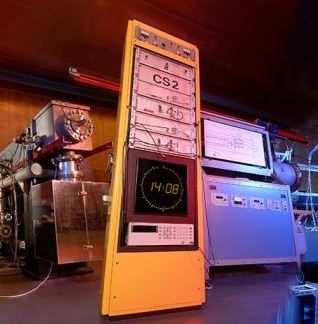
In 1971 Joseph Hafele and Richard Keating arranged for two atomic clocks to be flown around the Earth in different directions. The Theory of Objectivity described by Konstantin Meyl gives better fit to the published data than does the Theory of Relativity from Einstein.
Caesium clocks were sent in planes around the Earth, one travelling westwards and one travelling East. When the clocks were re-united, the times were compared with those of each other and with that of a third clock that had remained stationary.
The two travelling clocks have moved against gravity and have undergone some acceleration and deceleration They have moved from one inertial frame of reference to another and have spent considerable time flying in a slightly diminished gravitational field according to altitude.
According to the theories of both Special and General Relativity then we would expect both clocks to have gained time relative to the stationary clock and we would expect that each travelling clock to read the same time as there is no meaningful difference between their paths according to Einstein.
The actual published results however, show that although the Westward travelling clock did gain time, the Eastward travelling clock actually lost time.
This result was claimed to be consistent with the theories of relativity and even put forth as ‘confirming’ them.
Konstantin Meyl begs to differ and gives an alternative explanation.
Full details can be found in Meyl’s book “Scalar Waves” but this screenshot gives part of his calculations as to the predicted difference between clock times:
Now comparing the measured difference in times with table 1. we find that:
273 – 59 = 214 (Measured difference quoted by Meyl) but 273 – (-59) = 273 + 59 = 232 (Difference calculated from Table 1)
So Meyl has missed out the negative sign and miscalculated. The true difference in clock times is 232 nano-seconds; even bigger than calculated.
To summarize then:
232 ns Measured difference
207 ns Predicted by Meyl
0 Predicted by Einstein.
How was this missed? The answer is that they simply were not looking for it. The experiment was not performed to measure the difference between the clocks but to measure the difference between the travelling clocks and the stationary clock.
Relativity predicts a difference in clock times according to acceleration, and altered gravitational fields so these were the results that interested them.
So what is the explanation? Complicated, but according to the Theory of Objectivity, measurements are made relative to some field and quantities previously thought of as absolute (time, length, speed of light..) are now a function of field strength.
The clocks were flying around the Earth in different directions and so the Eastward flying clock was travelling with the spin of the Earth and was hence flying faster. It was therefore subjected to a greater centrifugal force acting against gravity and this affected the workings of the atoms.
So whereas the theory of relativity gives time dilation as an explanation for clocks going wrong, we have here an alternative mechanism whereby it is length contraction that alters the workings of an atomic clock.
Meyl: “The reason for the measured difference in going is seen in the field and here specially in the different gravitational field. The centrifugal force directed opposite to the gravitational force at least is not the same, because for a westward flight along the equator the speed of the plane should be subtracted from the velocity of rotation of the earth, whereas in eastward direction it should be added.
“For the steering quanta supplied by the caesium resonator now the energy balance is put up and the change of the reference frequency is calculated. With the change in frequency is connected directly a change of the at the two clocks readable times. For a journey around half the earth, where one clock is flown westwards and the other one eastwards, the difference in going should, according to the calculation, amount to 207ns. Interesting of the result undoubtedly is, that the velocity of the planes doesn”t play a role. It is cancelled out.” – Scalar Waves p. 271
In 1901 in Calumet, Michigan, two vertical mine shafts were dug 1.5 km apart and 1.3 km deep. tunnel linking the bottom of the two shafts was constructed and its length was measured. Now since the Earth is spherical we would expect the linking shaft to be 26.5 cm shorter than the 1.3 km.
It was a bit of a surprise then to discover that this shaft actually measures 20.9 cm longer than the 1.3 km measured at the surface.
Konstantin Meyl’s assertion is that the measurement wire has actually shrunk owing to the increased strength of the tangential component of the local (magnetic) field thereby making the measured distance seem larger by comparison. (Scalar waves page 273).
Theoretical calculations suggest a shrinkage of 40.0 cm. Calculations from experimental data give a shrinkage of 40.7 cm . Not exact but still much better than the original expectations.
The measured distance cannot be extrapolated to the centre of the Earth but instead when plotted, converges to to some point way outside of the Earth’s surface.
This is a good confirmation of Meyl’s field theory. We have measurements here made with piano wire and very basic geometry is used to make the calculations. The speed of light is not involved and no fancy interferometers are needed to measure ultra small distances. Classical physics is way off. Meyl is correct.
W are accustomed to using measuring devices for time and length that are assumed to be immutable in nature, giving the same results wherever we are in the universe and in what direction we are oriented. It is not so.
“The newest definition of the metre acts as a blow for liberty and thus marks the abyss, at which we are standing” – Meyl
The HART groupresponse to the ‘no-virus’ argument proposes a model of disease that is, in its simplest form, one of ‘bottom-up’ causality from RNA molecule up to systemic level. This page proposes an alternative ‘top-down’ model.
We will examine the idea of top-down causality and see how it compares with the HART group model in its ability to explain the evidence. This model will provide a credible alternative to the RNA replication model and explain the epidemiology of influenza to a more satisfactory degree.
It is not ‘complete’ by any means and some of the mechanisms are missing but the HART group have indicated that they are open to nuanced debate and are prepared to allow some ‘tolerance’ in the model. Many in the ‘no-virus’ group by contrast have declared an open hostility to any degree of uncertainty, to any form of ‘modelling’ and any evidence that cannot be directly observed.
Modelling, in brief: The idea is to construct a framework of central assertions within which measurements and other evidence can be interpreted as having some meaningful relationship towards other pieces of evidence and towards the model as a whole. The model is asserted at the outset and evidence is tested against it, with any contradictions requiring a review of the whole theory.
Making minor adjustments for each small anomaly leads to an integrity ‘creep’ whereby the structure of the model slowly degrades to a point whereby the initial foundations can become quite meaningless and actually unrelated to the evidence.
The Terrain Model proposed by the ‘Terrain theorists’ has always been one of top-down causality of disease states, with environmental factors such as toxicity leading somehow to actual disease. Lanka, Cowan and Kaufman have said from the beginning that the particles characterised as viruses are really exosomes and are produced as a result of disease rather than being a cause of it.
Similarly, activities of what is described as the ‘immune system’ are really productions of specific proteins to help resolve some sort of deterioration at the cellular level. They are produced by the body, not by the assumed virus.
How do environmental factors actually cause disease? This seems to be not talked about so much with Terrain theorists simply claiming that toxicity leads to a ‘detox’, the symptoms of which are misinterpreted as disease. No actual evidence of the expulsion of toxins has been put forward.
Claims such as “The body needs to expel toxins and so initiates a detox process” suggest an intelligent system that ‘knows what it needs to do’ and ‘initiates’ the appropriate protocol. This is an odd insertion of teleological language into a scientific framework, but not necessarily incorrect.
An extended version of the above model puts in a couple of ‘interpretive matrices’ to indicate what must be necessary to make sense of real world data and translate it to physical processes within the body.
Each matrix is effectively a ‘cognitive system’ in its own right, taking information from one ‘realm’ of reality and converting it to a form suitable for use in another.
Environmental influences impact the body from top down and information is funnelled from the outside macro world into meaningful structure in the micro world in the form of very precise and functional molecular organisation.
This then is the foundational structure of the proposed model:
Top-down causality
Coupling of organism and environment
Information interpreted, translated and scaled downwards
Disease as an altered state of regulation
Altered molecular expression as a consequence of disease – not the cause
It is time to look at some of the questions raised by the HART team.
From the HART group: “First of all, given that all life is based on a system of encoded replication, it would be extraordinary for there not to be viruses that can hijack that system. They have been studied in plants and animals as well as humans.”
This is their foundational principle which forms a lens through which all other concerns are viewed.
Terrain response: The body forms an integrated whole that is organised, stable and robust to all manner of insults. Causality is top down and it would therefore be very surprising indeed if an organised disease state could be forcibly induced by a few complex bio-molecules. The foundation of life is ‘organisation’.
HART group: “An environmental exposure predicted an illness. Although a significant proportion of infections were not traceable to an outbreak, the majority were. Groups of people became ill with similar symptoms after having shared the same environment.”
The HART group claims that this supports their hypothesis of viral transmission but this is a flawed argument as explained here: The HART group. The top down model has environmental influence built in as a fundamental and so the fact that “Groups of people became ill with similar symptoms after having shared the same environment“, far from needing an explanation, now becomes actual evidence in favour of the Terrain Model.
From HART: “A unique RNA sequence was detected in these people.” Also unique protein coded for by RNA and matching antibodies.”
Within our top-down model this can be rephrased as ‘individuals in the same physiological state will produce similar if not identical bio-molecules’. This should come as no surprise as individuals regularly reproduce precisely the same molecules on a daily basis, most of them without the need for an RNA template.
The contentious part of the top-down idea then will be that it is the precise form of the molecules that is a function of the overall physiological state as opposed to the other way around. How can this be?
Information flow in biological systems can be thought of as consisting of bottom-up emergence combined with top down causality.
Molecular activity is coordinated to form translational structures (attractors) via the phenomenon of emergence. These attractors act as interpretive (cognitive) systems to effect meaningful action as a response to environmental input.
Information from the macro scale is received and interpreted according to the current attractor state before being merged into the active regulatory system, with the natural consequence that a specific stimulus may not necessarily result in the same disease state in all individuals. Variation within a norm is thus built into the system.
Contrast this with the viral model where the particle itself is claimed to produce precisely the same symptoms in everybody. This doesn’t happen and some extra addition to the model is required to explain it away.
Classical determinism formulates causality as proceeding from one event to another in a way that is precisely predictable from a theoretical point of view but which in practice will diverge considerably as time goes on owing to noise in the system leading to an accumulation of errors.
Attractor activity however behaves in the opposite manner, with long term stability that is robust to the input of noise. Errors do not accumulate and the result is a convergent causality that can produce a precise result even from differing starting points and despite considerable ‘noise’.
From this point of view then, it is not surprising that individuals could react to the same environmental stimulus with different symptoms and yet still produce precisely the same RNA sequence. This is a now a feature not a bug.
There are precursors to this idea even in mainstream biology today, where the study of epigenetics proposes that organised network activity is held to produce very precise molecular structures and moreover that such activity can be passed on to the next generation in the form of self-sustaining feedback loops (Wikipedia).
From HART: “Lab grown virus. Material thought to contain virus has been collected from patients and replicated in cell culture.”
There was no evidence supplied that such material was capable of causing a disease state. The Terrain model claims that these particles are a reflection of the experimental conditions and so identical lab conditions will result in near identical genome sequences.
Material is produced according to attractor activity which has the properties of convergence to the attractor but variation within the attractor leading to both stability and variation of genome and thereby giving the illusion of viral evolution described by the group themselves. (See Evolution and Inheritance).
Attractors exhibit long term stability with the occasional sudden phase change, possibly in response to a stimulus but not always. This is similar to the way viruses are said to mutate and produce variants which remain stable for a while before mutating suddenly again. This behaviour does not seem so consistent with the actual viral model which claims continuous mutation despite reproducible results. (Strange attractors)
The fact that seasonal influences can affect biological systems in has been demonstrated by Giorgio Piccardi, Vlial Kaznacheev and Simon Shnoll. Cell cultures, rabbits blood, enzyme reactions, precipitation rates and even atomic clock timings were found to have seasonal variations that were measurable and to some degree, predictable
From HART: “Finally,There was an illness which some people regard as both viral in nature, and also characteristic. This is of course subjective and opinions differ on this. Some claim it is unclear how different this actually was from the range of respiratory viral illnesses experienced before.”
Well, “viral in nature” is clearly circular reasoning. More interesting though is how one measures a difference between diseases. Geneticists might be tempted simply to count the differences in sequences, others might look at bio-metrics such as temperature or simple verbal descriptions of symptoms.
If attractors are involved however, we need to think somewhat differently. In this case we would expect difference between individuals but similarity of clusters within a population. Attractor phase shifts can be sudden and unpredictable, with cause and effect seemingly de-coupled. Dose-response relationships may be complex or even non-existent, with apparently large stimuli having no more effect than smaller ones.
It is entirely conceivable that individuals could have very different symptoms, yet generate identical RNA sequences and antibodies.
We see all these effects.
Attractors are characterised by their sub-states so some direct identification of these is necessary to obtain a classification of disease that corresponds to some sort of internal reality. Some progress has been made in this area with the identification of the Core Diseasome.
Summary:
Seasonal variation clearly implies a seasonal cause
The epidemiology favours environment over transmission as a cause
Interesting genome sequences are a result of disease
Attractors enable a direct causal pathway from environment to cell
The claimed evolution of viruses shows attractor-like qualities
The sudden onset and stability of disease state is typical of attractors
Causality is top-down in biological systems
The model described above is a better fit to the evidence than the viral model
The HART group gives some interesting arguments as to why they are rejecting the idea that viruses do not exist. One is a flawed statistical argument and others are observations of genome sequences. None of this explains the epidemiology. This page shows why they are wrong and suggests an alternative model for influenza outbreaks.
The statistical argument is listed at number 1 and is tackled first. The screenshot below is from their website
Note that it is number 1 on their list.
Not everybody got sick as part of an outbreak and that number of people is considered “significant“
People who shared the same environment got sick at the same time – consider then an environmental cause or trigger
The majority of sufferers were part of an “outbreak” i.e. an event where many people got sick.
If an outbreak is defined as a large number of people getting sick at the same time then it isn’t surprising, given the population distribution in a city, that the majority of sick people got sick as part of an outbreak.
Shown here is a city grid of equal sized squares where some squares are densely populated and others not so. This sort of situation is ideal for studying epidemiology if only decent data were available. We can look at how many people in each cell got ill and try to correlate it with population density.
First imagine that some non-infectious pathogen is introduced into some of the cells on a completely random basis. Think of toxic gas being released, 5G death rays maybe or some sort of bio-energy beamed down from space.
We would see then that the chance of a cell showing disease in any of its residents is unrelated to the population of the cell so that a sparsely populated cell is as likely to show disease as one containing many occupants.
In this case then, disease would be correlated to location and since the release of a toxin into a densely populated cell would result in many people being sick we would see in the overall population that the majority of sick people would necessarily come from cells where there were many other sick people.
This is really just saying that the majority of people in a city come from population-dense areas.
This much is obvious. It is also precisely what is described in point 1 of the HART group’s statement above. They even attribute the illness to “having shared the same environment” as opposed to “having been with other sick people“.
Now let us fantasise about infection. If this were possible then we would expect that infection would spread more effectively in densely populated areas. We would also expect an increased likelihood of seeing disease in these areas as there are many more people to introduce the pathogen into the grid square from elsewhere.
Statistical analysis should then show a correlation between cell population and the occurrence of disease in that cell. Recall that in the first case, cells get affected at random and there was no correlation with population density; a 5G death tower does not know how many people there are living nearby.
There is the possibility then that an infection model can be proved or disproved merely by looking at some statistics.
If only somebody had thought to collect some data..
Fred Hoyle (1915-2001) was an astronomer and statistician who looked at the epidemiology of flu by studying incidence of the disease in English public (boarding) schools. Some pupils will board at the school and be in contact with each other 24-7 whilst others will go home at weekends or evenings. [paper]
All these schools have children of the same age groups, eat similar food, are subjected to the same harsh exercise regimen and engage in stereotypical social contact. Schools themselves are organised into ‘houses’ and dormitories, giving a controlled structure to the possible transmission routes.
These are ideal conditions to study incidence of influenza. Hoyle looked at epidemiological patterns as described above and found that, for example, a dormitory full of boys was as likely to demonstrate influenza as a solitary boy sleeping at home with his parents.
Hoyle believed in viruses but still concluded:
Person to person transmission is ruled out as a significant cause of the disease.
The overwhelming cause of the disease comes from ‘elsewhere’.
Low level outbreaks occur completely at random and unconnected to each other.
Larger outbreaks occur in geographical clusters which vary in size from a whole school and its environs to a single dormitory or part thereof.
A virus is ruled out as the actual cause.
Viruses are manufactured within the body in response to an external trigger.
The external trigger is some kind of ‘virion’ that comes from outer space.
[The results do not indicate food poisoning or collective detox.]
The chart below shows that population influenza is best modelled by a simple gaussian distribution with a mean around winter solstice and a 90% interval of only a few weeks.
Observations must be explained and the ‘viral model’ does not explain the epidemiology.
The members of the HART group know this and know that transmission studies have failed, but are still sticking to their model because: “The virus model explains all of the above in a way that no other proposed model can (yet).“
Other individuals have complained of a lack of a better alternative and that viruses are ‘still the best explanation‘ for what they are seeing.
Again, from the HART group: “Scientists form a model that best explains the majority of the evidence. ” So we need to explain the epidemiology.
A statistical model:
Seasonal incidence: Outside of the tropics, populations will succumb to influenza in the two weeks either side of winter solstice
Latitudinal patterns: Finer grained structure is seen along lines of similar latitude (Hoyle and others)
Local outbreaks are delineated by location and are distributed at random
No mechanism is suggested here but we have achieved:
Prediction of timing: over 95% of cases will be in midwinter although how many seems to vary a bit.
Characterisation of outbreaks as being somehow related to location (we can’t even say environment).
Better interpretation of epidemiology: The assumption that clustering implies contagion is incorrect and has been dangerously misleading.
Scope for further research: What is there that is special about certain latitudes and locations?
A model that actually fits the observed data: Other models based upon the flawed assumption of transmission have failed spectacularly.
This seems like a good basis for a model as being grounded in observed reality. We can refine it later and look for biological mechanisms to explain these patterns but the foundation should be as described above.
The HART group, by contrast seem to want to plunge straight in with assumed bio-molecular causes and to worry about the facts of disease later on. This is the wrong way round to do science: the ‘majority of the evidence‘ needs explaining.
The group is asking the virus sceptics to explain various molecular and genomic phenomena. These all sound very interesting but they do not of themselves constitute disease and have not been shown to cause any disease.
Towards a mechanism
The model described above is purely statistical in nature and may well make useful predictions but it gives us no ‘understanding’ and describes no biological mechanism whereby disease might be caused by seasonal change.
Seasonal incidence: This is so precise that the only possible way that this can be achieved by resonant entrainment to some seasonal influence, either daylight hours or maybe the Earth’s magnetic field.
Latitudinal coincidence: This again suggests the Earth’s magnetic field is involved.
Local outbreaks: Tricky. Hoyle suggests virions from outer space, I will suggest cosmic ray showers or eddies (vortices) in the Earth’s magnetic field, but I am certainly open to alternatives.
What else is it that we need to explain?
The HART group is asking to explain things like a unique RNA sequence found in people who appeared to have similar symptoms, Now nobody goes to their doctor complaining about a unique RNA sequence. We don’t need to explain this, we need to explain the symptoms.
The symptoms, even by mainstream accounts, are caused by an altered bio-regulatory state. This state (erroneously referred to as the ‘immune response’) consists of an an orchestrated sequence of events leading to symptoms that include sweating, muscle aches, elevated temperature and lasts usually five days before returning to normal.
I don’t say ‘returning to homeostasis’ because this state is managed by the body itself and is perfectly stable although not sustainable.
It is this state that causes distress and constitutes what we call ‘disease’.
For this process to fit within our model then, we are looking for some way that it is produced as a direct result of the seasonal rhythms and without the intermediary of a viral particle.
This is the research to be done. It sits firmly within the purview of bio-regulatory medicine and not so much virology or genetics.
Top-down causality is common in biology and is implemented via means of attractor systems which interpret external stimuli to effect change at the cellular and even molecular level. Attractors can be highly sensitive to rhythmic input. It is quite conceivable that people in similar physiological states can produce RNA with similar sequences.
Now since most disease is just assumed to be viral in nature it follows that most disease research is performed by virologists who are really geneticists and think almost exclusively in terms of bottom-up causality, that is to say, that a small piece of RNA has the ability to destabilise a system that demonstrates organisation and robustness to perturbation at all levels.
The idea of an attractor is not something that would readily spring to mind to one trained in biology but it is essential for the understanding of living systems. Attractors are the key to top-down causality, providing an interpretive interface between the organism and its environment.
Influenza is just a sudden phase change in an attractor state triggered by some external input. Genetic events are the end point of attractor activity, not the primal cause.
Why do symptoms differ between individuals?
This is behaviour typical of chaotic attractors. Paths will converge to the attractor but diverge on the attractor so no two people will demonstrate identical disease progression. Attractor phase states are general patterns which are not precisely definable or predictable. Attempts to refine diagnosis by increasing accuracy or number of measurements will just cause confusion as there is no meaning in these details.
Since each individual is on their own specific attractor path and in their own ‘state’ at midwinter, it is now expected that not everybody will get ill at solstice. This is natural behaviour for attractors. We would expect that there is a component of disease risk that is actually independent of other health factors; an element of ‘randomness’.
Attractor states are highly stable, making routine treatment somewhere between difficult and impossible. Phase changes can be sudden and apparently non-causal, resulting in what are usually described as ‘miracle’ cures. So miracles do happen and we now have a scientific explanation for them.
From Mae-Wan Ho
Attractors present a problem from the point of view of determinism . Their behaviour is stable and predictable insofar as they will reliably produce meaningful biological patterns that result in a robustly functioning organism. However, this behaviour is not predictable from examination of their parts and not predictable from any finite history of that behaviour. This is a hammer blow for traditional reductionist science; there will always be something incalculable and unknowable where biological systems are concerned.
Summary:
The data comes first, the explanation comes later
The mechanism of genetics is interesting but does not cause flu
Influenza is a disturbance of organisation – not cellular damage
Top down causation is provided for by attractor patterns
The presence of attractors implies a ‘cloud of unknowing’
Konstantin Meyl describes a Unified Field Theory that eluded Einstein. Relativity is hard to understand but Meyl is harder, lacking even the comforting ideas of foundational space and time upon which to anchor the laws of physics. Instead, movement of field forces forms the foundations of physics, with space and time being emergent properties of these movements.
In his famously banned Ted Talk, Rupert Sheldrake mentions that the speed of light slowed down by about 20km/s between 1928 and 1945 before resuming its approved value.
The response of the standards authorities was to simply re-define the length of the metre in terms of the speed of light so as to correct for the difference, thus keeping the speed of light constant as required by the theory of relativity.
This is fine from the point of view of relativity, which views the speed of light as a fundamental constant but does in fact allow both length and time to vary according to local conditions.
So why did they change the definition of the metre and not the definition of the second? Why not consider that time may have sped up which makes it seem that it is taking longer for light to move from one place to another?
What does it even mean that time is going ‘faster’, and what sort of physics is it when we have an actual choice over which variables we consider to be ‘fundamental’ and which are the ones that are derivable from the others?
Time is measured via atomic clocks. The frequency of some sort of oscillation is measured via statistical means and the time elapsed is calculated from this frequency: “After exactly 9,192,631,770 oscillations, a second has passed.”
So we are not measuring time directly and cannot therefore say that it is a fundamental property of the universe. We are defining a ‘second’ loosely speaking as “The number of things that have happened since the last time I checked“.
This got me to thinking that we should be regarding ‘something else’ as fundamental and then defining ‘time’ in terms of that ‘something else’.
We can try regarding ‘frequency’ as fundamental which sounds promising as it is precisely what is measured via atomic clocks; they use the phenomenon of ‘resonance’ to measure frequency. Once we do this we can then calculate elapsed time as above by counting oscillations and dividing by the frequency.
Frequency = Cycles per Second (definition) so Number of cycles = Frequency (multiplied by) Time elapsed (rearranging) therefore Time elapsed = Number of Cycles (divided by) Frequency
The assumed model by which ‘frequency’ is produced however is via vibration (i.e. movement) of atomic particles within space and time, so it seemed to me that we are back to space and time as fundamental. This is intuitively comfortable but doesn’t address the issue of why it is the speed of light that can be fixed as constant if it is space and time that are considered fundamental.
A big chord was struck for me then upon listening to Konstantin Meyl explain his ideas:
I think most people will take space and time for granted as fixed, immutable properties of the universe, within which all activity (movement) takes place but Meyl turns this all around to make things somewhat counter-intuitive but at the same time more consistent.
There is only The Field:
It is this field that completely determines the nature of space and time.
Matter is comprised of toroidal field vortices.
Field strength determines ‘distance’ and the speed of light (field propagation).
Gravity is an illusion, an emergent property of field geometry.
Einstein’s E = mc2 is incorrect
The field is electromagnetic in nature in that is has dual components which create each other via relative movement. Magnetic forces arise from movement relative to charge and similarly, a charge field arises from movement relative to a magnetic field.
Electricity and magnetism are not separate forces in Meyl’s field and are just components of the same entity. Therefore, the field properties arise from movement of the field relative to .. itself.
Meyl: “Without movement, there would be no forces or energy .. nothing”
And: “Which brings us to the question: ‘What is movement?‘”
To clarify (or maybe not), classical physics imagines all movement taking place in an already existing space. It supposes that such a thing as an empty vacuum can exist, does exist and comes ready made with all the requisite properties needed in order to host and propagate electric or gravitational fields.
Konstantin Meyl
Einstein’s relativity is a little more flexible, viewing gravity as a deformation of space itself by the matter contains within it. The matter then moves according to the curves in space created by the matter itself. Space and matter are still separate but act upon each other somehow: “Matter tells spacetime how to curve, and curved spacetime tells matter how to move” – John Wheeler
Within Meyl’s universe there is no separation of space, time and matter; there is only he Field. It is the configuration and movement of this field that creates the stuff we know as ‘matter’. The forces which appear to act upon the matter are really just emergent properties of the field acting upon itself. It is the field strength and ‘direction’ that determines the apparent metrics of distance and time, not the nature of space causing the field to behave differently.
The field itself is the primal cause, not a pre-existing space-time universe or a monstrously crude and fantastical Big Bang a few billion years ago.
Measurements of the speed of light for example can now be seen for what they are which is to say, transformations of various sets of observed field phenomena to some (almost arbitrary) common basis so that a comparison can be made in order to say “This is the same as that” or “This measurement is greater than it was last week” etc.
Ernest Rutherford
The measuring instruments themselves and the human observers using them are all themselves field phenomena and are therefore subject to the same rules and irregularities. This, according to Meyl, is the explanation for the results of the Rutherford experiment whereby the speed of light appeared constant no matter what direction it was travelling in or at what speed the Earth was travelling through space.
Light, Earth, equipment and observer all inhabit the same local reference frame and all are subject to the same influences. As the equipment shrinks so the speed of light slows and the two effects compensate for each other thereby appearing to remain constant. Atomic clocks may well change their behaviour but our subjective experience of time also follows the rules of the Field and so nobody notices.
So when we have laboratory set-ups where subject, equipment and observer are all part of the experiment, how can we do objective science? The situation is similar to that of relativity where there is considered to be no global frame of reference and so all experiments can only reflect local laws and conditions.
Meyl, however, prefers to construct a global (absolute) frame of reference within which to perform calculations. Measurements from a local experiment are transformed to this (theoretical) global framework, where calculations are performed before transformation back to the local experimental conditions.
Importance.
Is all this just theoretical sophistry or is there any practical use for this? Does this help with existing results that currently defy explanation?
One place to look may be experiments that give different results dependent upon whereabouts they are in the universe. We wouldn’t usually expect atomic clocks to be affected by subtle changes in gravitational fields. However, something like this appears to have happened in the experiments of Simon Shnoll, where biological, chemical and purely physical phenomena show results that vary in a cyclic fashion seemingly dependent upon the configuration of the solar system.
Piccardi and Kaznacheev similarly found many anomalies that depended upon season, lunar cycles and even eclipses.
A portion of a leaf can be cut off and will still be apparent when photographed using Kirlian photography techniques. The image is produced by electrical discharge when the leaf is subjected to a strong energy field. A persistent bio-field comprising electro-magnetic field vortices has preserved the details of the organic form (Konstantin Meyl).
“In 1975 V. Adamenko in Russia performed the following experiment. After a part of a living leaf was cut and the remaining part was placed into a high frequency electromagnetic field, a visual image of the whole leave appeared. In other words, a phantom image of the cut part appeared which lived for 10-15 seconds and could be recorded on film. The experiment was reproduced by the Gariaev group and many other laboratories in the world.” – Gariaev et al
In the photographs below from the Garaiev paper, parts of a leaf have been cut out and the remainder has been photographed under an electromagnetic field. The portion of the leaf remove from the top right of the picture was the most recently removed and its ghost image is still visible in the photograph.
Ghosts of the other pieces have faded away.
Konstantin Meyl observed a similar effect: “Students of electrical engineering were able to produce photos of the leaf, using their self built high voltage device in the dark-room, even after the original had been removed( 1991). The potential vortices still present underneath the acrylic remained detectable by their storage effect.”
What is going on? The image shows a typical corona discharge which happens at the boundary of an electrically charged object and the surrounding air. When the voltage gradient from object to air is high, an electrical discharge from object to air and a visible corona can be seen. Textbooks say that what is happening s that the air around the leaf is breaking down, the gas is ionising and electric currents are the result.
The problem with this explanation with respect to the phantom leaf phenomenon is that the same corona effect is visible when part of the leaf is missing so that the corona effect cannot have anything to do with the material substance of the leaf and therefore nothing to do with any sort of gradient from leaf to air or solid to gas.
The corona effect is not ‘fringe’ science and can be observed on power lines where it leads to significant power losses. Meyl is claiming, moreover, that the observed spikes in the discharge (the corona itself) should not be present according to classical physics, but instead a uniform shining should be produced, being the result of a smooth field gradient from high to low potential.
The corona spikes, according to Meyl, are consistent with the idea of vortices forming in the electromagnetic field itself. This sort of formation is not allowed for by the standard (Maxwell) equations and so a new physics is needed.
“In accordance with the text books, the gradient field increases towards the surface of the conductor too, but a consistent shining would be expected and not a crackling. Without potential vortices the observable structure of the corona would remain an unsolved phenomenon of physics.
But even without knowing the structure forming property of the potential vortices, which acts as an additional support as we must conclude, it can be well observed that especially roughness on the surface of the conductor stimulates the formation of vortices and actually produces vortices. If one is looking for a reason why, with high frequency, the very short impulses of discharge always emerge from surface roughness, one will probably find that potential vortices are responsible for it.” – Meyl
Electromagnetic vortices are theoretically self-sustaining to a degree and so the solution to our problem is that living organisms possess a bio-field consisting of interlinked electromagnetic vortices that retain their integrity for a while even when the physical matter supporting them is removed.
The field reflects the shape of the original leaf and when under a high voltage will discharge from any spikes or sharp discontinuities in the outline, giving the characteristic aura that is observed.
Note that a bio-field comprised of light (photons) is not indicated here as photons can only travel at the speed of light and will not stick around for the few seconds needed to take these photo graphs.
We are not ‘beings of light’ but ‘beings of toroidal scalar waves’.
Interestingly and maybe surprisingly, vegetables will retain something of their aura even after a bit of cooking. (Cooked tomato pictured). These vortices contain energy and possibly some useful information so we are eating both electromagnetic energy and biological information.
“Several authors have called this a ‘phantom leaf effect‘ and it has often been misinterpreted as a paranormal phenomenon. In reality this is due to the storage capacity of the potential vortex having been made visible, which has only ended up in the field of parascience, because Maxwell’s field theory did not include a potential vortex.” – Meyl
Of course human beings also have an aura – but what does this mean? We are all sharing fields with each other and with the rest of the ecosystem and we are all eating food which contains living bio-fields. We are all therefore sharing some sort of biological information and presumably responding to it in some way.
What effect do these fields have on our immediate health and what effect have they had on evolution as a whole? When Darwin’s finches flew to a new island and faced new challenges, the rate of evolution seemed to speed up to meet the new challenges, resulting in a collection of very suitable beak shapes very quickly.
Meyl seems to regard the human species as sort of waste product of atmospheric discharge: “All results of the evolution in the biosphere that have arisen between the ‘capacitor plates’ of the earth itself and its ionosphere can be regarded as structured capacitor losses, which also apply to humans“.
The phantom leaf effect: a replication, part 1 – John Hubacher “A normally undetected phantom ‘structure’, possibly evidence of the biological field, can persist in the area of an amputated leaf section, and corona discharge can occur from this invisible structure.“ https://pubmed.ncbi.nlm.nih.gov/25603488/
Several papers present data and arguments purporting to show a correlation between peaks in sunspot activity and pandemic levels of influenza. A crystal clear paper written by statistician Simon Towers shows that this is not the case, that the papers contained several errors of fact and that even when these errors are corrected, the correlation does not exist.
The paper explains in some detail the specific mistakes made by Tapping and Yeung and gives a good general lesson on the sort of mistakes that can be made by those who do not specialise in statistical analysis.
The Tapping paper is important as having been cited by Arthur Firstenberg in his influential book “The Invisible Rainbow”.
Sunspot activity and influenza pandemics: a statistical assessment of the purported association – Simon Towers
As mentioned, there were mistakes made in copying dates etc. prior to statistical analysis. These were corrected by Towers and the resulting data displayed in the chart below.
We see sunspot numbers plotted through the years with influenza pandemics plotted as circles on the chart.
At first sight it might look like there is a good correlation between pandemics and sunspot peaks as many blue circles seem to be at or near peak sunspot activity. However, looking closer, there appear to be as many pandemics at low sunspot years as there are at peak years and this has led some researchers to speculate that either high or low sunspot conditions are somehow causal in pandemic influenza.
Possibly, but if we are now considering a causal relationship instead of merely a correlation, we should now look at the pandemics in 1830 and 1847. Both these occurred near a sunspot year but both occurred before the sunspot peak so it cannot be the case that the pandemics were caused by an event that happened a year later.
What about absolute sunspot values? Maybe there is a correlation not between sunspot peaks as such but between the total numbers of sunspots at any time? Looking at the chart however we see pandemics at high, mid, and low values of sunspots and at peaks, troughs and intermediate years in the cycle so this possibility looks very unlikely indeed.
When is sunspot activity considered to be ‘high’? The Yeung paper looked at times when the number of sunspots exceeded the ’60th percentile’ and found significant correlation ‘p < 0.05’ but this procedure is rightly criticised by Towers.
Why was the 60th percentile chosen when 90% or 95% is more common? The figure of 60 seems arbitrary in this respect. The chart shows the significance of the results when the percentile is varied, with results that are unlikely to happen at random appearing below the dotted line.
What we see is that, as the percentile varies, the significance of the results varies wildly. The outcome of the analysis is not in any way robust to the arbitrary choice of a cut-off point at 60%. The claimed significance is therefore a function of the methodology as much as of the data itself. This is bad practice.
More arbitrary choices are made which, when taken together, amount to ‘cherry-picking’ and are actually controlling the outcome of the study:
How is a ‘pandemic’ defined? (This is subjective)
How are sunspots counted? (Two different methods are available)
What is defined as ‘near’ a sunspot peak?
How is ‘significance’ calculated? (Many statistical techniques are available).
There are additional problems with the analysis:
There is really not enough data for a meaningful result
There is no purported mechanism by which sunspots can cause influenza
Pandemics were identified by counting citations from other researchers who tended to cite each other
Mistakes were made in transcribing data
Data was ‘bucketed’ or ‘categorised’ which again is an arbitrary process and will necessarily discard useful information
Mistakes were made in the authors ‘own calculations
One list of pandemics was excluded without explanation
Cosmic Factors of Pandemic Influenza – A paper (see references) claims that pandemics occur during sunspot minima but only when a large comet comes within 0.03 astronomical units of the sun. This introduces another arbitrary variable into the model (why 0.03?) and again, no credible mechanism for this phenomenon is supplied.
If more variables are introduced into the model then more data is needed to confirm the validity of the model and to distinguish the results from those of cherry picking. This doesn’t happen here and so we have no need to explore this idea further; the results will be meaningless whatever the correlation as the sample size is not large enough.
Summary:
Towers corrected the mistakes of the authors and used the amended data to perform analysis using several established statistical techniques to eliminate these arbitrary choices and thus eliminate bias from the calculations – but still found no significant correlation.
“When corrected lists of pandemic years were used, along with more powerful un-binned non-parametric tests to compare the distribution of sunspot numbers for pandemic years to that of all years, no significant result was obtained” – Simon Towers
Yeung JWK. A hypothesis: sunspot cycles may detect pandemic influenza a in 1700–2000 ad. Medical Hypotheses 2006; 67(5): 1016–1022. https://pubmed.ncbi.nlm.nih.gov/16806734/
Cosmic Factors of Pandemic Influenza – Darejan Japaridze, Natela Oghrapishvil Georgian scientists: Vol. 5 Issue 4, 2023 “The graph shows (Fig. 2) that influenza pandemics usually occur during solar activity maxima, and during solar activity minima, pandemics occur only when large comets approach the Sun within 0.03 AU.“
One of the mysteries of life is the question of how organic forms seem to absorb energy and information from the environment and sequester it permanently in an orderly fashion. This is seemingly in contravention of the Second Law of Thermodynamics which is often interpreted as predicting a general decrease of order in the Universe.
Scientists studying biology from this perspective almost unanimously claim that the body somehow maintains itself ‘far from thermodynamic equilibrium’, meaning that there is something special about living systems that allows them to maintain large reserves of energy and information which is not dissipated but is stored in an organised fashion in either chemical or physical processes and made available for use, as and when needed.
Keith Baverstock interprets thermodynamics and entropy in terms of their original formulation, not as an increase in disorder but rather as a movement towards a ‘least energy’ solution. This represents a de facto tendency towards an equilibrium state which Baverstock claims is now a selectable property in a Darwinian-style evolutionary process.
As an example, first consider a glass of water. The water retains its shape despite lots of Brownian motion of the molecules, owing to the fact that it is constrained within the glass. Now up-end the glass on a flat surface and lift to allow the water to flow freely. The water will fall and spread. This will be initially via gravity but will continue as Brownian motion causes the pool to spread as a statistical average of the sum of the motions of the molecules.
Now since the vibrations of the molecules are assumed to be random, there is a small theoretical chance that they all just happen to collect back together into a small pool and even draw themselves up into a glass shape. In practice though, this doesn’t happen and the water will adopt a configuration that is statistically most likely and energetically most economical; a puddle.
Now place a dry bath sponge in the middle of the puddle. The water will be drawn up against gravity and will be held suspended by capillary action. Furthermore, the shape of the water is not disordered or even tending to disorder. Instead the opposite is true; order is maintained and even increases.
No extra energy has been put into the system and energy is actually dissipated by sound waves as the water bubbles up inside the sponge. So ‘order’ here is accompanied by an energy loss as opposed to an increase, an output rather than an input. A ‘least energy’ state is achieved and maintained as an equilibrium state.
This state is not just a ‘least energy’ state but also a ‘most likely’ state from a statistical point of view.
What has this to do with evolution? Evolution is observed to proceed via a pattern of punctuated equilibrium whereby a relatively stable phenotype will occasionally be subject to a dramatic change to produce a new species before settling down again for a few hundred thousand years.
The outward form and function of animals are controlled by an internal attractor pattern and it a sudden phase change in the attractor that gives rise to new species. Once a new species has been established, minor changes in the attractor can give rise to good or bad traits for natural selection to fine tune the species to its environment.
So now let us imagine that our sponges are in a hot environment which will tend to dry them out, thus killing them and preventing reproduction and the continuation of their lineage. Sponges who manage to adopt a shape that enables the absorption and retention of the most water will have an added Darwinian advantage.
So what exactly is being selected for?
Fitness– the ability to not dry out. Enabled by..
Function – The ability to retain water. Created by ..
Form – an outward shape propitious for the retention of water. Created via ..
A physical ‘least energy’ solution for the relationship between sponge and water.
It is this last property which is the most basic, necessary and fundamental but also the one that is never mentioned by evolutionary theorists.
Organisms are not just fine-tuned to their environment but will also need to refine their own internal developmental patterns in order to achieve optimum performance.
It is no good looking at the fossil record and simply assuming that the environmental conditions were what ‘created’ a particular feature. It must be physically possible and even likely that that feature could come into being. You cannot select for something that has not yet evolved or that is unfeasibly improbable.
Therefore form must precede function and its development is thereby de-coupled from the selection of that form. The outward shape of an organism is not created by the future function or even fitness within the environment, but by the laws of physics that allowed it to happen and the laws of statistics that made it likely that it would happen.
The current theory of random mutations of DNA causing ‘traits’ in an unspecified way gives the impression that almost anything is possible and that certain features will inevitably arise if the need is great enough. Some texts will even present selection itself as a ‘driver’ of evolution, putting the cart before the horse and invoking a ‘final cause’ without regard for the mechanics of how this is achieved.
The idea that development is so incremental that it is practically parallel with selection is just nonsensical sophistry, akin to a conjuror telling you that you are seeing one thing happening when something completely different is going on right before your very eyes.
“The laws of physics must be obeyed” – Konstantin Meyl.
New species then, arise from sudden phase changes in the evolutionary attractor (see: Evolution and Inheritance) and once a species has been established, small perturbations to the attractor will tend towards a low energy solution via natural selection. The species is being ‘optimised’ to its environment. Least energy solutions are the most stable and energy efficient ways of maintaining an organism and both stability and efficiency are certainly necessary and propitious qualities as far as survival of the species is concerned.
Least energy states are probably so stable as to be irreversible. Evolutionary change has stopped and the only way to progress is for another significant phase change from the attractor.
“In summary, we propose that the life process is based not on genetic variation, but on the second law of thermodynamics .. and the principle of least action, as proposed for thermodynamically open systems by De Maupertuis (Ville et al. 2008), which at the most fundamental level say the same thing. Together they constitute a supreme law of physics..” – Baverstock and Rönkkö
One of the conundrums of biology is the question of how the organism as a whole maintains global organisation when there does not appear to be any global plan or ‘map’. Some scientists are convinced that local information eg. DNA is sufficient to maintain global order whilst others see a need for a global communication field.
This page aims to show that the two schemes are not so different and that a global communication field can easily be created and maintained as an emergent property by local energy sources within the cellular structure. This field is of an electromagnetic nature and it will take upon an independent field nature when the field communication speed is far in excess of the cell response time and when the physical laws of the field differ substantially from the operation of the cells themselves.
The following diagrams illustrate the same phenomenon in three different ways.
We have here a visualisation of cell to cell communication via some unspecified means. Cells share information with neighbours, the information is decoded and action is taken which is assumed to be either mechanical or chemical. Response times are restricted by the cell physiology, and communication of the new state is thus of a similar timescale.
The communication system here is conceptualised as a separate ‘layer’, independent of the physical conformation of the cell. This arrangement lends itself very well to the idea that cells communicate via some sort of electromagnetic energy. Light wavelength photons have been suggested as have Tesla waves (scalar waves), both of which can transmit signals up to the speed of light.
We can start to think of the communication between the cells as occurring independently of the inner maintenance of the cell itself,
A different way of looking at exactly the same process. Here the communication layer is presented as a complete unified system of itself that operates according to its own laws, and forms a distributed information field that is available for both read and write operations to and from the individual cells.
An arrangement such as this is possible when the communication medium (electricity) is independent of cellular processes and when the communication speed is in excess of cellular processing speed. So now whenever any significant event happens in any cell, the field is made aware and all cells on the network will be updated simultaneously
The combined electric impulses from the cells now form a conceptually separate ‘organ’ of communication that is independent of both the chemistry and physical make-up of the cells. We now have a genuine morphogenic (or other) field that is created by and maintained by the individual cells but is independent of them.
It can take input from a group of many cells, can perform computations according to the laws of electromagnetism and can output that information back into the cells for appropriate action to be taken.
To field physicists, this sort of arrangement seems obvious and is second nature to their way of thinking but those in the field of biology seem to have trouble getting to grips with these ideas; they don’t understand the concept of a field, never mention electromagnetism and regard the idea of a morphogenic field as unhinged vitalism.
Again, papers by physicists who study living systems will talk about morphogenic fields in an uninhibited fashion but they are seldom referring to the ideas of Rupert Sheldrake and are more likely using the term as a shorthand for the system described here.
How is this implemented in practice?
Intra-cellular water matrix. Information is transmitted via electro-acoustic waves in intra-cellular water. Water in cells forms a continually vibrating lattice of electrically charged water molecules and this medium is perfect for the propagation of energetic oscillations.
Vibrating charges necessarily create an electromagnetic field and electro-magnetic fields likewise will cause a charged particle to vibrate physically. Electrical and acoustic vibrations are therefore inseparable and waves travel at some speed which may depend upon the state of this electro-acoustic ‘gel’.
Molecules oscillate within this environment and the resonant properties of the molecule will in turn affect the cymatics of the water vibration. In this scheme then, the nature of the field is very much coupled to the physical configurations and properties of the molecules contained within it.
Scalar Waves (Tesla Waves) are another possibility. Hexagonal ring structures in complex bio-molecules host toroidal fields which can carry a great deal of information. These fields can modulate the supervening field for very rapid (up to light speed) transmission to other parts of the cell or organism.
Scalar waves are ‘directional’ and are largely self-sustaining by means of energy absorption from neutrinos (Konstantin Meyl). Compare with photon fields (Lorenz Waves) which are radiative (field strength drops off with distance) and ‘lossy’ (energy is dissipated as heat).
With scalar waves however, the electric fields are completely de-coupled from the physical properties of the molecules themselves and form an effective communication layer that is independent of the physical body yet guides physical activity at all scales; a de facto ‘morphogenic field’.
The physical properties of matter are no longer a limitation upon the type of information that can be transmitted, communication is effectively instantaneous and every part of the body is aware in some way of the current state of every other part of the body.
In the Face of a Frog video [here] an electric field is seen to develop over the yet un-differentiated cell cluster that seems to indicate the future positions of the spine, brain and even eyes. The scientists think that this influences the eventual shape of the frog by somehow directing molecular organisation (gene expression).
There are lots of questions here: How exactly is this field measured and what does it mean? If light is being discharged from the cells it surely means that it is not being used within the cells, so is the field actually directing the morphology of the frog or is it just electro-magnetic waste? Is it a result of development rather than the cause?
The Big Questions:
Why is this field frog-shaped?
How are the forces of electro-magnetism organised into a specific shape?
Where is the information stored that determines a frog-like development as opposed to that of a salamander?
Hans Driesch 1867-1941 experimented on sea urchin embryos by cutting them into several pieces during development. He found that each piece developed into a full adult, indicating that each piece contained all the information necessary for a complete organism and that ‘half’ an embryo is essentially the same as a complete embryo from a developmental point of view.
A credible sounding explanation for all of this is that all of the information required to form a complete organism is hosted within electro-magnetic scalar waves. This information is present in each and every cell in the body and in a developing embryo will form an emergent field that spans the whole organism to direct events at the molecular, cellular and global scale.
Information unfolds to organise overall body shape, cellular regulation and molecular interactions within the cell. The field is fractal in nature so that all information is present in every fragment of the field no matter how small and all parts of the field are connected in a meaningful way over the whole organism.
It is this field that is transmitted via the gametes to the next generation, with male and female fields merging in an additive fashion to produce offspring with features similar to both parents at the same time.
The field can easily pass through cell walls unmodified and can be transmitted to the female uterosome without the need for fertilisation in the usual fashion, where it can affect later offspring as is shown by the phenomenon of telegony. There is no such thing as a portion or part of a field as every part of the field is informationally equivalent to the entire field.
The field has attractor-like qualities which ensure that offspring fall into a category of ‘male’ or ‘female’ and rarely a blend of both.
Genes without prominence: a reappraisal of the foundations of biology: “Thus, population genetics is founded on a subset of coding sequences that can be related to phenotype in a statistical sense, but not based on causation or a viable causal mechanism: genetics, as it is understood today, does not have any biological significance.” – Baverstock, Annila
“Within this framework for biology the gene, as it is generally regarded, is a merely mechanistic, not a profound, concept. While gene coding sequences are inherited, they are not the ‘units of inheritance’ discovered by Mendel: those are the processes that contribute to the attractor which represents, at the cellular level, the phenotype.” – ibid
In order to explain the process of human evolution we need first to describe that which we are trying to explain, i.e. what it is that is evolving and which features of this need explaining.
We will find that the adult morphology develops according to very patterned laws. These have the character of an evolving attractor which serves as a template for the phenotype which itself is manifest via a physical toolkit consisting of geometric transformations, least-energy solutions and organised molecular activity. The attractor is able to assimilate exogenous information and respond accordingly, thereby assisting the organism in direct adaptation to the environment and leading to overall harmony in the ecosystem as a whole.
Karl Ernst von Baer (1792 – 1876) noticed several striking patterns in embryological development that are paralleled in evolution though not obviously explained by a random process. Indeed most modern texts will ignore these patterns as being an inconvenience to the ‘elegance and simplicity’ of the neo-Darwinian process.
General features common to a large group of animals appear earlier in the embryo than do specialized features.
The development of particular embryonic characters progresses from general to specialized during their ontogeny.
Each embryo of a given species, instead of passing through the adult stages of other animals, departs more and more from them as ontogeny progresses
Therefore, the early embryo of a higher animal is never like the adult of a lower animal, only similar to its early embryo.
These patterns noted by Von Baer are to be found in similar although not identical form in three different arenas:
The fossil record
Embryonic development
Morphological complexity of existing species
Compare (below) the theory of recapitulation from Ernst Haekel with those of Von Baer. In Haekel’s view, the young bird develops from an egg stage through a fish stage, an amphibian stage etc. This is discredited according to modern embryologists and Von Baer’s Law prevails where separate species are recognisable after only a few days of fertilisation yet the structure of development is very similar in each case.
The continually changing form of the mature adult is assumed by the neo-Darwinists to be caused by the random mutations of DNA but the development of the embryo is certainly deterministic and based upon physical laws. The question arises then: How or why can two complex and very similar processes arise from completely different mechanisms?
Evolution and embryology must have something in common whether it be a physical mechanism or a purely informational template, perhaps, maintained somewhere and used somehow as a reference.
If we look at a developing foetus and assume that it develops according to a more or less pre-determined process and in accordance with well established biological laws, then why do we look for something different when we observe the evolutionary record?
The Whiteway Colony originated as a commune of simple dwellings but as families grew and economic conditions improved, a new bedroom was added or a kitchen extended and the result was houses like the one shown.
The homes are functional and some attractive but none are comparable to a regency villa and few have more than one storey. They have developed in a piecemeal fashion according to local pressures but with no forward planning or sound foundations. They can therefore can never progress much further than this without a complete demolition and redesign.
What we are seeing here is architectural Darwinism and whatever benefits it has, it does not conform to Von Baer’s laws, where first is built up a strong and versatile foundation of backbone, limbs, cranium etc. from which can develop specialist features such as wings, flippers or opposable thumbs.
Von Baer’s laws have produced robust adaptability for sure but they are not expected from a random process that can at most respond to current pressures and is certainly without foresight or planning capability.
Darwin proposed evolution by increment of phenotype but neo-Darwinists go one step further and want to describe that increment in terms of random mutations of a spiral molecule. This just muddies the waters however and gives us extra things to worry about. It increases the difficulties instead of reducing them.
Describing a living organism in terms of the physical properties of molecules is like explaining the structure of a house in terms of the physical properties of bricks and as Rudolph Steiner rather nicely put it: “You don’t learn much about architecture by studying the physical properties of bricks“.
Punctuated equilibrium. Darwin proposed evolution by small increments to the phenotype (see gradualism below) with a slow divergence followed by natural selection to impose some structure in the population and thereby define the separate species.
This is not what is observed in the fossil record however where we see a process of punctuated equilibrium with new species appearing suddenly out of nowhere followed by a long period of relative stability with no significant drift in phenotype.
Once a new species is established there then follows some variation around an average type. Darwinism posits that variation is the precursor to the development of new species whereas the fossil record shows it to be a ‘decoration’ on an already established species.
According to Darwinism new species arise out of random morphological drift followed by selection from these variations to form a new species. However, what is observed is that the sudden establishment of a new species comes first and only then come the minor variations on that theme.
‘Reversion to breed average’ is a phenomenon known to breeders of pigeons, dogs and cattle whereby certain features can be attained by selective breeding but will only last a couple of generations before reverting to the breed average. Interbreeding with wild species is definitely to be avoided and offending pigeons are risking swift ‘termination’.
Darwin accepted in chapter 1 of On the Origin of Species that: “our varieties certainly do occasionally revert in some of their characters to ancestral forms.”
This is inconsistent with Darwinian evolution which is assumed to arise from a process that is directionless, without purpose and lacking in either foresight or memory.
In chapter 2 he argued that species can’t really be distinguished from varieties anyway. First he proposed that “well marked varieties” are “incipient species”; then he accepted that “species are only strongly marked and permanent varieties.” Then he decided that there is “no infallible criterion by which to distinguish species and well marked varieties.” By the end of the chapter he is confident that “varieties have the same general characters as species, for they cannot be distinguished from species.” – Tom Bethell
What is it that is inherited? The classical illustration of evolution at the top of the page gives the impression that some sort of template representing an adult human form is passed on down through the generations and that maladaptive phenotypes are weeded out via natural selection. This is one of the core ideas of Darwinism and it is emphatically false.
In order to achieve a completed adult form, any organism must pass through many stages of development, with the form at each stage remaining functional and even advantageous, whether within a uterus, egg, chrysalis or as a toddler within Nature itself.
What is inherited then is a complete developmental program from gamete to adult, along with instinctive behavioural patterns appropriate to that stage of development.
As an example, think about a toddler learning to walk. The joints, muscles and bones are accustomed to crawling and are not particularly well designed for walking so they must be reshaped by the toddler himself while they are still pliable. He needs to perceive of the need at around the correct time or it will be too late and needs to embark on a self developmental process that is scary and dangerous. He will no doubt be encouraged and comforted by his mother who therefore takes an active part in shaping the final form of her child.
Again, consider nest building in birds. They never even saw their parents building their own nest so it isn’t learned behaviour and it isn’t even a fixed behavioural pattern as many things can go wrong during construction and the bird will adapt its strategy accordingly to achieve the desired goal.
Cuckoos do not build nests so the skills are not simply emergent properties of ‘being a bird’ nor are they somehow imprinted on the developing chick via some bio-field hosted by the parents.
Injuries of any animal must be repaired which is again a structured sequential process akin to development which results in restoration of age-appropriate morphology. If I lose a fingertip then it will regenerate as an adult fingertip and not progress through embryonic and toddler stages first.
So what is inherited is not just a final form but a lifelong program for self-developing and self-repairing morphology plus a whole set of cognitive strategies that mature at an appropriate time and interact with both the surrounding natural environment and species-specific cultural practices.
And all of this information encoded in 20,000 genes?
D’Arcy Wentworth Thompson (1860-1948) pointed out that the variation in shape of fish bodies, say, or the beaks of birds could be accounted for by simple geometric transformations. The Darwinists will ask us to believe that these precise relations between shapes are nevertheless the result of random mutation and natural selection.
The doctrine of Darwinism encourages us to believe, without explicitly stating it, that almost anything is possible given millions of years of mutation and the appropriate environmental selection. However, in the case of these fish, what we see is a sort of parallel evolution where only a limited class of shapes are selected for and the class members are related via a precise geometric law. This is just not credible from a Darwinian perspective.
If we turn now to neo-Darwinism and evolution via DNA mutations, we find that we have not made things any easier for ourselves and we now have the additional problem of explaining how random alterations of base-pairs can result in precise elongations along specific axes. How does the developmental program ‘know’ in what direction to elongate and how does it maintain that throughout the whole developmental process?
Part of the task of science is to explain natural phenomena in a simple and comprehensible fashion as possible and here we have a choice between:
Geometric transformation – simple to understand
Local molecular activity in a noisy Brownian environment (gene expression) entailing precise global and modular geometric transformations – unexplained at present and probably unexplainable even if true.
The laws of physics must be obeyed whatever shape an organism adopts. Wentworth Thompson noted that the physical appearance of many biological forms is dominated almost entirely by physical laws such as a constant-angle spiral or ‘least energy’ shapes arising from the surface tension of cellular walls.
These constructions need no other explanation as to why they are that precise shape as that shape largely arises from the inevitable consequences of natural laws. It is a little inaccurate to say then that the outward form is inherited as it could hardly be anything else and since it cannot vary significantly, it cannot be selected for.
A snail did not have necessarily need to build a shell at all of course but once it started, the choice of shapes was severely limited by geometric restrictions.
Think of these shapes as being part of a fixed physical ‘toolkit’ available to the more general evolutionary process. They do not need to evolve by increment but come packaged as almost completed ‘modules’ in a larger design scheme.
Allometry is the study of the relationship between, and regulation of, the scaling of various body parts during development.
In the chart above we see the relationship between the body size of the fiddler crab and the size of the larger claw during development. As the crab grows there is a clear and consistent relationship which is obtained by carefully controlling the rate of growth of the claw.
This, of itself, is interesting as it means that the growth rate is independent not only of the shape template but also of the physical composition of the claw. It isn’t just a case of putting the right chemicals together and a crab miraculously emerges after a few weeks, but that the chemical reactions are somehow carefully regulated by some other (inherited) process.
Moreover, this control system applies to the whole claw and only to that claw. It seems unlikely then that this is controlled only by local information such as DNA but rather that there is some sort of morphological field that spans a whole claw and that another global field exists to manage a series of separate modules that go to make up the organism as a whole.
This arrangement makes sense in explaining the usual (or unusual!) symmetrical structure of organisms. A combination of modular management with geometric transformation (mirror reversal) is an easy way to visualise this.
Again, try to imagine how this could be achieved by a small molecule that is:
Assumed to be identical in each cell of the body
Actually quite unstable and permanently changing
Features in Darwinism arise out of a necessity, a need to meet some selective advantage, but where is the advantage is such a precise symmetry in outward form when an approximate symmetry would suffice?
Gene expression is the conventional way of explaining evolution, development, morphology and pretty much everything else, so geneticists need to provide a coherent description of how molecular activity somehow organises a final form and they then need to provide some evidence that this is what actually happens.
Unfortunately: “Among the more surprising and, perhaps, counterintuitive (from a neo-Darwinian viewpoint) results of recent research in evolutionary developmental biology is that the diversity of body plans and morphology in organisms across many phyla are not necessarily reflected in diversity at the level of the sequences of genes, including those of the developmental genetic toolkit and other genes involved in development. Indeed, [..] there is an apparent paradox: Where we most expect to find variation, we find conservation, a lack of change“.(Gerhart et al)
(Even the genes involved in development aren’t really involved in development.)
“So, if the observed morphological novelty between different clades does not come from changes in gene sequences (such as by mutation), , where does it come from? Novelty may arise by mutation-driven changes in gene regulation.” Wikipedia
Mice who given electric shocks when they were smelling cherry blossom soon became fearful at the smell even when no shock was given. These mice went on to bear children who were also afraid of the same smell. A ‘characteristic’ has been acquired and passed down to the next generation in Lamarckian fashion. [Dias et al]
We have an example then (there are many others) of the inheritance, not of outward form but of a cognitive pattern (instinctive behaviour) resulting in a measurably altered chemical regulation. There are an arbitrarily large number of cognitive processes available so it seems very unlikely that these could all be represented as digital information on a finite sized chunk of DNA; some other storage format is required.
“Transgenerational epigenetic inheritance is the transmission [..of..] modifications from one generation to multiple subsequent generations without altering the primary structure of DNA.” (Wikipedia ) Methods include “self-sustaining metabolic loops” and “structural templating“
It is of note that cognitive recognition takes place in neural network activity in the brain where electric currents form self-sustaining loops. Also of note is the fact that emotional states such as fear are accompanied again by metabolic network activity.
Telegony: In one experiment, male flies were fed nutritious diets and acquired a larger body size than average. They were mated with immature female flies (no eggs yet) who then went on to have larger than average children even from subsequent smaller partners. Genetic information had been retained and inherited even though no physical substance had been exchanged.
Pigeon breeders are again quite strict with any female caught mating with a wild male for this specific reason. Her breeding value has been permanently compromised and she is now a liability to the flock.
Epigenetic inheritance is common from the female line as information is funnelled down into the ova where it can easily be passed down to the next generation but here we have information from a male passed on with no exchange of DNA.
The information must be held in some informational ‘field’, a self-sustaining loop of energetic activity that can be transferred to the female uterosome where it can install itself as an attractor state hosted by molecular network activity.
The common thread linking all these types of inheritance and evolutionary changes consists of meaningful loops of dynamic network activity that form semi-stable attractor states. These packets of information evolve over time, providing variety of form, and can be transferred from parent (male or female) to children.
The fossil record shows a body type stable over many millennia that is subject to sudden changes. This, and the phenomenon of reversion to mean are immediately suggestive of a chaotic attractor. We can therefore conceptualise this as a morphogenetic template that evolves slowly over time but occasionally demonstrates a sudden phase change resulting in a new species.
The template is not actually for a static adult form however but for a complete developmental program including body shape, inherited behaviour and all manner of metabolic and molecular regulation,
The creation of a living being works by expression of this template via physical matter. This expression will use the laws of physics to its own advantage along with various ‘toolkits’ including ‘least energy’ laws and geometric transformations.
(Note in the following diagram that DNA, being comprised of matter, is at the conceptual bottom of the causal chain – not the top!)
This information is likely to be of a fractal or holographic nature, meaning that every part of the informational field will contain sufficient information to reproduce the entire organism.
Sexual reproduction consists of the confluence of two such informational fields and Keith Baverstock gives the example of a merger of two manufacturing companies producing similar products. The staff are all autonomous and know their jobs well so not much more is needed than to put them together in a big factory with familiar equipment (physical matter) and let them get on with it.
Asexual reproduction simply consists of a splitting of the physical form and a corresponding splitting of the evolutionary field. The splitting is neither here nor there as the field is fractal in nature and both halves will contain all of the information needed to reproduce an entire organism.
Perhaps imagine a whirlpool in a river which grows in size as it accumulates energy, even absorbing other smaller eddies. The shape is preserved yet evolving and when the vortex gets too big it can easily spawn smaller ‘children’ which will repeat the cycle. The vortex is robust to quite large disturbances but can change suddenly and unpredictably; it is an attractor.
The human cognitive system is assumed to be hosted in active neural networks within the brain and so again has the aspect of a self-sustaining attractor.
Information entering via the senses is therefore converted to a neural network format and in the case of mice and cherry blossom this information is further downscaled to a molecular attractor in the gametes and passed on to the next generation.
Information from the environment is funnelled down through an interpretive cognitive system to integrate with the main fractal-like attractor of the organism and persists throughout the generations as a part of the evolutionary line for the species.
The future of humanity according to Darwinism is decidedly bleak, as with the removal of selective pressure we are condemned by genetic drift to accumulate small maladaptive mutations and wander aimlessly into a second rate species.
Darwinism lends support to, and apparent moral justification for, selective breeding and eugenics and no good can come of that. According to this doctrine we have no active participation in our own directionless evolution and must rely upon random chance followed by ruthless pruning of the evolutionary tree to make progress as a species. Darwinism is non-reversible and a rudderless ship is in a bad way.
The Evolutionary Attractor hypothesis presents completely different options.
Evolution is largely by the unfolding of the attractor state and is deterministic although unpredictable. If we ‘do nothing’ we will be stable for some more generations before a sudden phase change causes us to morph into a new species. This may happen with very little warning and in a way that is beyond our comprehension.
Robert O Becker noted that almost all species have arisen at specific points in history when there was a significant change in geo-magnetic conditions. Changes in the Earth’s magnetic field led to sudden phase shifts in the attractor state across all species on Earth.
Selective breeding usually induces only temporary variation of morphology before reversion to wild-type.
We can actively participate in our own cultural and conscious evolution however with the inheritance of cognitive recognition, behavioural patterns and emotional responses.
Adverse responses to drugs or vaccines can also be inherited although it isn’t clear whether the changes are permanent or not. Exposure to WiFi radiation can cause altered gene expression which is again inheritable, possibly inducing a permanent change to the evolutionary genome.
The ship in this case is not rudderless by any means but is steered in part by a continual influx of information into our cognitive systems which helps tune us to our environment. It follows therefore that we should take particular care over the nature of that information. See: Evolution and cognition
The gene: an appraisal – Keith Baverstock “An analysis of the results of the Long-Term Evolution Experiment (LTEE) with E. coli bacteria, grown over 60,000 generations, does not support spontaneous gene mutation as the source of variance for natural selection. “https://pubmed.ncbi.nlm.nih.gov/33979646/
“Within a taxon, most animals share a common body plan (or “bauplan” — German for ‘blueprint” or “builder’s plan”) that comprises a certain number of body parts arranged in a particular way”
“Consequently, the evolution of morphology is arguably the evolution of static allometry, which is in turn a consequence of changes in ontogenetic allometry “
Transgenerational epigenetic inheritance – Wikipedia Transgenerational epigenetic inheritance is the transmission of epigenetic markers and modifications from one generation to multiple subsequent generations without altering the primary structure of DNA. Thus, the regulation of genes via epigenetic mechanisms can be heritable; the amount of transcripts and proteins produced can be altered by inherited epigenetic changes https://en.wikipedia.org/wiki/Transgenerational_epigenetic_inheritance
Genetic assimilation – Wikipedia Conrad Waddington “supposed that the organism’s genetics evolved to ensure that development proceeded in a certain way regardless of normal environmental variations.” https://en.wikipedia.org/wiki/Genetic_assimilation
“A long time ago, we assumed that to make a creature as wonderful and attractive as a human being would take millions of different genes, but in fact, we now know that there are about 32000 – far fewer than we expected. That is not much genetic information for evolution to work with.”
“Even more annoying is to find that around 99% of our genome is what is called ‘junk DNA’, which we got from parasites, repeats, and a lot of it does not work.” – Steve jones
“Evolutionists and geneticists still have a slightly uneasy relationship; there are still arguments about big mutations versus small mutations, how often mutations happen, and why is the mutation rate so low – around 1 in a million. But we know that nearly all mutations are repaired. The question here is – why doesn’t it fix all mutations? We do not know.
Natural Limits to Variation, or Reversion to the Mean: Is Evolution Just Extrapolation by Another Name? “In spite of intensive and long continued efforts, breeders have failed to give the world blue roses and black tulips. A bluish purple and a deep bronze in the tulip are the limits reached. True blue and jet black have proved impossible. ” – [J. Huxley, Evolution: the Modern Synthesis, London, Allen and Unwin, 1942, p. 519] https://evolutionnews.org/2012/04/natural_limits/
Attractors are abstract mathematical concepts that when plotted in 3-D graphics look rather pretty (right) and in biology represent structured patterns of behaviour that characterise all manner of life processes from heart rhythms to gene expression. They are vital for the understanding of disease, healing, inheritance and evolution.
Watch the video below to see some typical behaviour in this animation of the famous Lorenz Attractor.
We just saw several remarkable characteristics:
Rapid convergence to the attractor no matter what the start point
No deviation from the attractor once it is reached
The existence of two distinct semi-stable sub-states
Movement between the sub-states is rapid, with no intermediate states
Behaviour is pseudo-rhythmic or rhythmic with random variations
Precise behaviour is unpredictable but overall behaviour is highly stable
A self-organising character with spontaneous pattern generation
All these phenomena are instrumental in keeping order in biological systems where stable outcomes are paramount despite persistent noise and perturbations.
Heart rate and temperature must return to normal after physical exertion, vitamin and hormone concentrations must be regulated despite irregular supply and non-matching demand and molecular order must be preserved for functional gene expression and cell division.
Cymatic attractors: In the Amazing Resonance Experiment below, a different mechanism produces behaviour with nevertheless similar characteristics. Several discrete states are available and as before, there are no intermediate states. However. here the transition is not random but can be controlled by specific frequencies. The movement of each individual grain of sand is locally random but the sum of all this randomness is a well defined pattern. Disturbing the pattern by dragging a finger through it will have no long term effect; the whole thing will simply re-organise.
Different varieties of attractors are available:
Single point – static attractor
Limit cycle – periodic attractor
Chaotic – Strange attractor
Toroidal – quasi-periodic attractor
Single point attractor: Behaviour will always converge to a single point no matter what the starting point. One example might be the healing of a wound which, no matter what its shape or extent will converge towards a single body shape if possible. The attractor is a dynamic system which has a single goal: the completion of the phenotype.
Another example might be the maintenance of body temperature, where again, a single point goal is to be achieved whether one has just run a marathon in hot weather or swum through an icy lake. The goal is the same; to maintain a constant body temperature. Here though the body has the option of varying the goal in the case of a fever, say, where a new goal is set by some other process and a higher temperature is maintained for a prescribed length of time.
Limit cycle attractors: Here, a process, whether it be regulation of metabolite levels, neural network activity or organised molecular activity (gene expression) will tend towards a cycle of activity, i.e. a stable dynamic state as opposed to a static fixed state.
One example is a cell cycle, of growth, regulation and division where everything must happen like clockwork and any deviation from the correct procedure must be met by either immediate correction or termination of the whole process. This works at least in part by means of feedback systems and checkpoints to validate the whole process. We have here a closed loop control system.
Another example might be maintenance of diurnal rhythm where the same cyclic pattern must be attained no matter what slight deviations have been made along the way.
Another image of the Lorentz attractor showing two clear pseudo-cyclic sub-states. A dot placed at random anywhere in this diagram will quickly gravitate towards one of these loops at random.
In other cases, randomly placed elements within a loop will cycle within that loop and remain there until some disturbance pushes them within range of another cycle.
Attractor ‘wells’: In this image of the famous Julia Set the black dots (barely visible) at the centre of the grey areas represent the goals of fixed point attractors and the grey areas themselves are the attractor wells or catchment areas of those sub-states. Any process caught in these areas will inevitably make its way to the fixed point at the centre.
So we can have a situation where biological processes are happily running and remain stable to local ‘noise’ but may sometimes be disturbed so much that a phase-change occurs and they are now exhibiting different, yet still stable behaviour, whilst obeying the same set of organisational rules.
We have discovered a way for the same physical substances conforming to the same physical laws to demonstrate markedly different modes of existence and execute very distinct biological functions.
Think of the importance of this with regards to say, gene expression (protein construction), where the end point of cellular activity must be well defined yet at the same time independent of the precise physical composition of the cell. If the cell contains the same atomic elements from one moment to the next then how can its function vary so much and why is it so organised, so apparently goal-oriented? From whence does the difference originate?
Another way to visualise the concept of attractor wells is seen in the diagram below where we have cell (blue) in its usual functioning state and another (red) in a deviant attractor state (cancer, say) . The normal attractor state is in a deep and hence stable ‘well’ but the red cell has somehow found itself in an alternative state which fortunately here is an inherently unstable state – depicted here as a shallow well. (Diagram from Naarala et al)
In the normal course of cellular life, the contents are subjected to many mechanical and energetic disturbances meaning that unstable states will likely not survive very long and that the cell will make its way back to the main attractor by use of other unstable states as ‘stepping stones’.
A ‘3D’ visualisation of the state-space below highlights the idea that normal ‘resting’ states are likely to be low-energy states requiring minimal upkeep whereas deviant states are high energy states requiring additional input and adding to their hopefully already unstable nature. So there is a natural tendency then to move towards a healthy state and a tendency to stay there as this is now a state of both least energy and greatest stability. (Diagram from Uthamacumaran)
Note that the diagrams show attractor behaviour in terms of paths in 3D or 2-D space but this is just an abstraction for illustrative purposes. In reality, the spatial dimensions shown are representative of various parameters of the mechanics of molecular activity: temperature, the concentration of Calcium ions, the rate of production of a particular enzyme for example.
The illustrations are two dimensional depictions of three dimensional processes but in reality the number of dimensions is much higher with one estimate being at around 100,000.
Cancer: As suggested by the previous diagram, cancer is now thought by some to be a result of altered gene expression brought on by a sudden change in attractor state at the sub-cellular level. Such a state change can be triggered by a relatively weak stimulus below the level that would normally be expected to cause physical damage.
“The view of carcinogenesis advanced here sees such mutations as the consequence of an underlying and more fundamental epigenetic process that leads the system into a specific domain of the state space associated with malignancy, via a series of randomly adopted variant attractors” – Baverstock
The cell has wandered (as in the diagram) away from the main attractor state and into an alternative mode of functioning where growth and reproduction are unrestrained.
Stem cell differentiation. A fertilised egg will repeatedly divide into identical cells which only after many such divisions do begin to differentiate into nerve or muscle cells etc. How does this happen then? If each cell contains the same physical substance and the same information, how do the differences arise?
The answer must be that somehow all the information required to make a complete organism is present in the cellular attractor of the cell. It is this attractor that is responsible for phenotype and the the progression of this attractor that organises development of the organism from egg to foetus and from toddler to adulthood.
Many disease states and healing patterns display attractor-like qualities:
Sudden onset of many stereotypical symptoms (state-change)
Onset sometimes with no apparent cause
Stability of state, whether disease or health, to large perturbations
Persistent disease state long after the cause has disappeared
Miracle cures from spa water, acupuncture, supplementation, horse-paste, etc.
Spontaneous remission with no apparent cause
Unstable oscillatory behaviour – bipolar disorder for example
Synchrony with seasons (although attractors are only pseudo-periodic they can be entrained to resonate at certain frequencies – Strogatz)
Hormesis (non-linear dose-response curve)
State-dependent response to stimuli (different people will respond differently to the same medication)
Allergic reactions
Evolution is by random mutation and incremental changes in phenotype according to Darwin. However, what is observed in the fossil record is a process of punctuated equilibrium.
What we actually see is that once a species has been established, it will remain stable for many millennia with only minor variations. Major changes are not the accumulation of minor changes but are seen as sudden changes in the phenotype upon which further minor variations will be superimposed.
Variations in dairy cattle for example arise through selective breeding and will revert to ‘breed average’ if not maintained carefully. “Our varieties certainly do occasionally revert in some of their characters to ancestral forms.” – Charles Darwin Chapter 1 of “On the Origin of Species”. This is not consistent with Darwinian evolution but perfectly in tune with attractor behaviour.
Evolution then has the character of an unfolding attractor that gains physical expression via organic life forms. The long term stability with minor variations is indicative of a stable attractor subject to minor perturbations. The sudden emergence of a new species is typical of an attractor phase-change.
Since according to evolutionary theory it is the phenotype that is selected for and since the phenotype is the expression of a multi-dimensional attractor, we must now consider attractors themselves as inheritable entities: “Variant attractors are a source of evolutionarily selectable variation in addition to genetic variation” – Baverstock
So all the information required to make a new life is somehow collected together in the gametes and passed on to the next generation. This is similar to Darwin’s pangenesis hypothesis but instead of the information being stored in physical particles (gemmules) it is stored in the behaviour or configuration of a multi-dimensional attractor.
“Exosomes are extracellular vesicles generated by all cells and they carry nucleic acids, proteins, lipids, and metabolites. They are mediators of near and long-distance intercellular communication in health and disease and affect various aspects of cell biology.” – NIH
So small extracellular particles are carrying biologically meaningful information and if biology is organised around attractor states then the exosomes must be carrying information that constructs or modifies the attractors driving cellular processes. But of all biology is organised by attractors then the information within the exosomes is itself an active physical realisation of an attractor.
This does not resemble the transference of digital (genetic) information so much as the merging of an operating system update.
The same process then happens with both exosomes and inheritance. Keith Baverstock gives an analogy of two manufacturing companies that merge into one. All the staff with similar but slightly different skills and abilities continue to perform their usual functions with slight adaptations and the factory keeps running with a very similar but not quite identical product. So rather than encode digital instructions for a new product and pass them from factory to factory, just move some staff around.
Other forms distant cellular communication exist without any apparent exchange of physical substance. Various solutions have been proposed including acoustic vibrations and bio-photons. This maybe so but the information itself needs to be of a biologically meaningful nature and that now means that an attractor state is somehow transmitted.
Summary. Self-sustaining attractor states are the basic units of biological organisation and are identified with biological communication and organisation at all scales from cellular to organism wide. They are instrumental in gene-expression, inheritance, evolution, embryonic development and maintenance of form and function. Dysfunction leads to characteristic patterns observable in disease states, regulatory disorders and cancer.
Cognisance of these patterns is essential for the appreciation of non-linear dose responses (hormesis) and indeed the relationship between any external stimulus and the resulting effect on the body.
Miroslav Hill (1929-2018) performed an experiment whereby cellular cultures were subjected to toxins and were seen to develop resistance to these toxins over several generations. To his surprise he found that sibling cells in a separate culture also developed some resistance to the toxin even though they had never been exposed to it.
The results were interpreted by Hill as a result of some sort quantum entanglement between sibling cell cultures enabling a distant correlation of information between the two.
The experiment is cited by Rupert Sheldrake as evidence of a more generalised morphogenetic field connecting all biological life over separation in both time and space.
A cell line was established (see above) with the white circles representing untreated healthy cultures and the grey circles representing the children of healthy cells that were separated off on a regular basis and poisoned with thioguanine. To start with the cultures either died or a cytopathic effect was observed.
After a few generations however the cultures demonstrated extended lifespans indicating that some beneficial adaptation had taken place. Note from the diagram though, that these cultures are not descended from already poisoned cultures but from healthy cultures that have never seen the poison and were kept separated from the other cultures by means of sealed containers and a distance of several metres.
The experiment was repeated with similar results using different toxins and again using high temperatures as a stressor.
The inference drawn was that the stressed cultures are adapting to the toxins and somehow influencing the main healthy cell-line as shown.
In the diagram, the time sequence is preserved to show that the grey cells are children of the white circles and are communicating with their co-existent sibling cultures (again in white).
How is this influence taking place? Hill suggests that the two sets of cells are displaying quantum entanglement so that when something happens to one culture, a response is seen in the sibling culture. He doesn’t like the idea of a physical signal travelling between the two: “If one tried to explain the adaptive response in terms of signals, the signals would have to travel from the exposed to the unexposed cultures. The results are instead discussed in terms of adaptive states and the non-separability of cellular states due to quantum entanglement of cells“.
Quantum entanglement is preferred over information transfer as an explanation because nothing really ‘travels’ from one point to another and so it doesn’t matter how far apart the two samples are or what physical obstacles are in between them; these things are irrelevant. We have, in addition, the fact that only sibling cells seem to be affected suggesting an existing ‘connection’ of some sort between the two cultures.
Rupert Sheldrake gives a slightly different interpretation (shown) which is that the poisoned cultures are communicating with each other through time and space so that each new test culture is also receiving information from a previously poisoned culture (see above) . The culture has been discarded but the memory of the adaptation persists in some universal field and is passed on via morphic resonance.
A similar experiment is described on the somewhat eccentric Chronodon website as shown in the diagram below where four related cell lines were created with A1 and A2 being sibling cultures and B1 and B2 also being siblings but only distantly related to A1 and A2.
The B2 culture was given a weekly dose of non-lethal levels of tetracycline in an attempt to build up resistance.
Each week samples were taken from all four cultures and given a lethal dose of the drug (shown in red). The results (in orange) show lethality in the control cultures A1 and A2 but marked resistance in the B2 culture and also in its sibling culture, B1.
Genetic mutations were observed to increase with exposure to toxins. The chart below shows the mutations found in response to poisoning (red), a similar but less marked response in the sibling culture (blue) and almost no mutations in the control sample.
The two responses are clearly related .. but how?
Mutation rates should be unaltered in the B1 cells but they seem to be influenced by their siblings even though the experimenters again took care to eliminate chemical or electromagnetic signals by the use of sealed jars separated by a distance of some distance.
“The inescapable conclusion seems to be that a signal was passed from the stressed populations specifically to their sibling population, which contained closer kin than the control population. Thus, the signal appears kin specific. The signal is also mysterious as it can cross solid barriers over a distance of at least one metre for perhaps up to twelve hours or more after the populations have been separated – twelve hours corresponding to the period of sub-lethal stress.“
No definite conclusion is reached but quantum entanglement is again discussed.
Bio-photon emission is thought by some to be responsible for many distant cellular interactions including the mirror cytopathic effect but both teams in the experiments above were careful to rule out the role of this type of radiation in the effects seen, so we have a completely new candidate for transmission of biological information.
Moreover, the effects seen here are not of a destructive nature, they do not lead to a deterioration of cellular structure but rather an increased adaptability. We are not seeing a mere interference with cellular communication or a disruption of cellular order but instead the reliable transmission of genuine biological information that:
Produces a predictable and beneficial effect
Modifies both behaviour and genetic structure
Increases survivability
Is quantifiable via the number of genetic mutations
Is inheritable
Is therefore significant from an evolutionary viewpoint
In other words we have evolution not by random mutation and selection but by mutation that is directly caused by the environment and adaptive to that environment. Information (a toxin) has been introduced into the cell, has been interpreted and a meaningful response has been formulated, implemented and communicated to relatives.
Time for a genuine bio-field? Both authors are suggesting a quantum connection to explain not only the communication at a distance but the apparently targeted nature of the information. It seems that not all cultures are the recipients of the information but only those that are close relatives.
This is difficult to explain in terms of current knowledge so clearly some ‘out of the box’ thinking is needed.
Quantum entanglement however is on a particle by particle basis so it would seem that this mechanism assumes a bottom up approach to cellular functioning whereas there is a lot of evidence suggesting that top-down causality is more likely. In other words, the individual particles are guided by some global organisational principal rather than that organisation being composed of the separate activities of independent particles. Baverstock
Quantum entanglement seemingly implies that the necessary information can be transferred on a molecule-by-molecule basis and that the activity of each molecule performs the same function in the sibling culture as it did in the original. So again we have the idea that biology is merely the sum of its own atoms.
What really needs to be communicated or shared between siblings is a package of dynamic network information, a modification or update to the cellular operating system. How this is going to happen is highly unclear but it is this sort of thing that will eventually be recognised as the mechanism necessary for evolutionary inheritance and the continuity of species.
“The Restoration of Vitamin C Synthesis in Humans” (Levy) claims that we use much more vitamin C than we eat and that we are therefore making it in our bodies but in insufficient amounts. The process has been impaired in some way but can be restored via supplementation with olive leaf extract.
Evidence that humans can synthesise ascorbic acid:
The concentration of ascorbic acid in the umbilical blood of infants can be up to four times greater than that in the mother’s blood – De Souza
Concentrations in the brains of foetuses can be eleven times that of adults
Research on breast-fed babies showed that vitamin C blood levels persisted at a level 200% higher than that of the mother, and that there was no correlation with the vitamin C levels measured in the breast milk. – Salmenperä
The vitamin C blood levels in the breast-fed infants were also noted to maintain themselves at the same or higher concentrations than the vitamin C-supplemented infants fed by bottle
In infants in a Bantu community in South Africa, researchers demonstrated that despite extraordinarily minimal amounts of vitamin C intake (3 to 8 mg/day), the symptoms of scurvy or vitamin C deficiency were never seen. – Andersson et al
An adult female continued to show high blood levels of vitamin C as the vitamin C intake was progressively decreased. – Cummings
Another woman went 149 days without any significant dietary vitamin C intake, and she never developed any deficiency symptoms.
The recommended daily intake of vitamin C is 50 to 100 mg but the Levy paper claims, without reference unfortunately, that the body uses ten to one hundred times this amount. In addition to this, we have the accepted fact that there is no storage of any substantial amount of the vitamin in the body which leads to the inevitable hypothesis that we must be synthesising at least some vitamin C in our bodies even as adults.
Vitamin C synthesis usually occurs in the liver where glucose is converted to ascorbic acid according to the following metabolic pathway: D-glucose → D-glucuronic acid → L-gulonic acid → L-gulonolactone oxidase (GULO) → L-ascorbic acid
The problem is with the production of the GULO enzyme, which happens naturally in almost all mammals but appears to be defective in adult humans to a greater or lesser degree.
The vitamin C requirements of humans seem to vary greatly within the population and this is assumed now to be because we are all synthesising ascorbic acid to some extent and it is variations of this ability that is giving rise to the observed differences.
What appears to happen is that foetuses, infants and children are manufacturing sufficient amounts of vitamin C but this ability is lost in childhood, leaving an adult population having to obtain the nutrient via dietary sources.
Since synthesis is usually in the liver, the paper suggests that toxic intake during childhood in developed countries is somehow responsible for damaging the liver, thereby impairing the manufacturing process. Against this maybe is the fact that Guinea Pigs and many apes have also lost the ability to synthesise.
Restoration of the synthesis is achieved in part at least by the supplementation of olive leaf extract which contains a polyphenol hydroxytyrosol (HT). Volunteers showed increases in blood concentrations of between 5% and 200% the day after the first dose and increases were still seen 10 days after stopping the dosage.
The mechanism by which this is happening is unclear but there are indications that the synthesis is still happening in the liver and that the HT is somehow facilitating the production of the GULO enzyme. So we do not have a new production method but rather a revitalisation of the existing process.
Alcohol induced oxidative stress in volunteers who were taking Olive Leaf Extract produced the reaction shown right. As alcohol levels shot up so did the vitamin C levels plummet as the vitamin was used to combat the oxidative stress.
However, as the alcohol levels subsided, the vitamin C levels then displayed a sharp rise despite the fact that no extra vitamin C had been consumed. So interpretation is that the body is responding in a dynamic fashion by creating extra ascorbic acid as and when needed. This then seems preferable to continuous supplementation which would not respond in the same way and, moreover, would supply extra ascorbic acid when not needed, thereby necessitating regulation or excretion of excess.
The authors of the paper therefore recommend lifetime supplementation of Olive Leaf Extract together with cortisol to facilitate absorption: “The fight or flight response to increased oxidative stress clearly demonstrates that vitamin C and cortisol are actually designed by nature to interact together to optimize the antioxidant impact needed to resolve the disease-causing oxidation that always results from toxins, infections, and stress” – Levy
An investigation of the rarity of infantile scurvy among the South African Bantu. The British Journal of Nutrition 10:101-105. Authors: Andersson M, Walker A, Falcke H (1956) https://pubmed.ncbi.nlm.nih.gov/13315928/
The idea that we live in a ‘causal’ universe seems to be widely accepted and sits well with the model of Newtonian Physics. However, the idea is ill defined, seems to rule out free will, is at odds with many other aspects of contemporary physics and is not so useful in complex multifactorial systems such as we find in biology.
“Causality is influence by which one event, process, state, or object (a cause) contributes to the production of another event, process, state, or object (an effect) where the cause is partly responsible for the effect, and the effect is partly dependent on the cause. ” – Wikipedia
This may sound straightforward but all that has really happened is that the word causality has been replaced by a sentence including words such as influence, contributes, responsible, production and dependent.
The concept relies heavily upon the idea of an event as being a separate identifiable unit of the physical universe whereas in actuality the whole of reality progresses as a single unified whole. Moreover what is ‘influence’ if not a synonym for ‘causality’ which is the very word we are trying to define?
Again from Wikipedia: “Causality is an abstraction that indicates how the world progresses. As such a basic concept, it is more apt as an explanation of other concepts of progression than as something to be explained by others more basic. For this reason, a leap of intuition may be needed to grasp it.” Excellent. Causality is an abstract concept that is neither defined nor required in science.
Erwin Schrödinger writes in his book What is Life? that “Physical laws rest on atomic statistics and are therefore only approximate“. Atoms are in a continual state of random vibration (Brownian motion) and so it is not possible for any meaningful relationships between them to be formulated as a physical law and order can therefore only arise from the statistical behaviour of a large number of atoms.
“All the physical laws that are know to play an important part in the life of organisms are of this statistical kind; any other kind of lawfulness or orderliness is made inoperative by the increasing heat motion of the atoms.”
Schrödinger was instrumental in the formulation of Quantum Mechanics which is said to provide the most accurate description of physical reality that we have. However, it is rooted in the idea that matter consists of many alternative potentialities in the form of superimposed waves, one of which is selected purely at random to participate in reality and interact with the rest of the universe.
Quantum physicists declare that “The universe is quantum” thereby asserting that randomness is foundational to reality and all else is just the most likely outcome of many random events as explained by Schrödinger himself.
Where is the place here for causality?
Statistical causality. The Galton Board gives some indication of how order can arise from chaos. Each individual ball follows a path determined by independent random events but the ensemble always produces a bell curve.
The curve is slightly different each time and the differences are not predictable but the overall approximate shape is predictable and is the same each time owing to the ‘laws’ of statistics. Note that these laws now are purely mathematical and do not even depend upon the laws of physics, indeed, according to Schrödinger they are at the very roots of physics.
The Galton board is similar to the situation in biological systems whereby a noisy environment causes completely random Brownian motion that is unpredictable at the atomic level but somehow gives rise to a highly ordered and functional cellular structure.
Does this qualify as ‘causality’? Not how most people would think of it.
Newtonian causal systems are divergent in the sense that a small inaccuracy in hitting a billiard ball, say, can lead to multiple possible outcomes of increasing difference, but statistical causality such as described above, are convergent in that they will inevitably reach the same outcome, via an infinite number of possible paths – differences decrease in this case.
This is why Schrödinger claims that life forms are the size that they are. Atoms themselves are too unstable to form coherent life at the atomic scale – you need enough of them to be able to form a large scale statistical system before self-organisation is feasible.
Statistical convergence can be described as goal-oriented behaviour or a final cause. The motions of the individual elements are random and therefore cannot be described as causal but since the outcome is guaranteed it seems as if order and organisation proceed from the outcome itself i.e. the outcome is the cause of the preceding activity.
“The final cause of a change or movement. This is a change or movement for the sake of a thing to be what it is. For a seed, it might be an adult plant; for a sailboat, it might be sailing; for a ball at the top of a ramp, it might be coming to rest at the bottom.” – Wikipedia
Aristotle 384–322 BC described four distinct types of cause and Wikipedia asks “What are the causes of a table?”
Material cause – the wood itself
Formal cause – the design of the table
Efficient cause – the work of the carpenter
Final cause – the purpose of the table (dining)
The idea of a final cause seems to have fallen out of fashion in science but is still present in the everyday thinking and language of even scientists themselves. Consider: “Giraffes evolved long necks in order to reach high branches” or: “Inflammation is the body trying to achieve homeostasis”.
Many commentators have said that in fact the idea of a final cause is actually essential for an understanding of biology at all levels from gene expression and cell division at the molecular level, to blood pressure regulation at the organ level, to psychological goals at the behavioural level and to the need for adaptation at the evolutionary level.
Consider D’Arcy Wentworth Thompson’s dismay at Darwinian explanations for the evolution of species: “We have reached a teleology without a télos, an adaptation without design, a teleology in which the final cause becomes little more, if anything, than a mere expression or resultant of a sifting out of the good from the bad, or of the better from the worse, in short of a process of mechanism.” – On Growth and Form (1917)
Causality in everyday language. If I light a fuse on an old cannon the heat will cause ignition of the gunpowder, causing an explosion which in turn will cause the the ball to be ejected from the cannon whereupon friction with the air will cause the ball to slow down and gravity will cause it to fall to the ground.
This is all fine and is typical of the way language is used in practice. But if we try to formalise the idea of causation here we are in trouble as all I have done is to describe what is happening and add in the word ’cause’ every so often. There are a multitude of different mechanisms at work here and so a multitude of different ’causes’. I have used the word ’cause’ to apply to seemingly unrelated phenomena.
There is an infinite variety of events happening in reality and so a potentially infinite variety of causes. So if we really want to use the idea of causality we must try to find a way of deciding which of those we want to describe as ‘causal’ or else the word is just meaningless. We need to find some common feature of all the different causes.
In classical mechanics the common factor is usually the intuitive but nevertheless abstract concept of ‘energy’ which is said to be conserved but is transmuted from one form to another to effect physical change. So for example, electrical energy may be converted to kinetic energy within an electric motor in order to cause movement.
Model specific causality. Why does an apple fall to the ground? Science gives several explanations:
It is pulled down by gravity (Newtonian physics)
It follows the curve of space-time (Relativity)
Potential energy is converted to kinetic energy (Lagrangian mechanics)
So we have three different theoretical models of reality giving three very different versions of causality for this specific example.
Most importantly, these scientific frameworks do not in any way attempt to prove causality but rather serve as definitions of causality. Each model gives a precise mechanism for describing the behaviour of the apple that can be quantified and tested in an experimental setting to give credence to the model.
This seems to be the only sensible way forward if we really want to define causality in a formal manner. It is defined by a specific mechanism which itself lies within a specific theoretical framework.
Do we even need to do this though? Can we not just say that an apple will behave a certain way in a gravitational field? Where is the need to use the word ’cause’ here?
Causality is relative to point of view. The case of The Barnsley Fern is clearly a matter of final causation if all we see is the outward physical form but once the generation mechanism is known, statistical causation expressed via a template seems the more appropriate and more fundamental source of the organisation.
Causality in General Relativity. The theory of relativity boils down to a bunch of equations describing structured interactions between mass, space and time. ‘Fields’ exist within all space which is represented as a continuum. The idea of an event does not sit well within this framework and hence the notion of causality as normally thought of is not supported.
” Strictly speaking, the notion of an event is an idealization, in the sense that it specifies a definite time and place, whereas any actual event is bound to have a finite extent, both in time and in space.” – Wikipedia
Having said this, Wikipedia goes on to talk about events as though everything is fine, but because it is relativity, things get a bit odd. “In both Einstein’s theory of special and general relativity, causality means that an effect cannot occur from a cause that is not in the back (past) light cone of that event.” – Wikipedia
The complication comes from the fact that the intuitive notion of causality includes the idea that cause always precedes effect. However, within the framework of relativity there is no universal time, clocks run at different rates in separate locations and the notion that events happen in a strict time order is just not supported.
There is a concept of causality here but it is very specific to the theory and far from intuitive.
Correlation is not causation and we all know about that but as the video of the double pendulum shows, causation does not necessarily lead to correlation either. We can clearly see a mechanical connection between the two levers which we interpret as causation but if we didn’t know about that then how would we determine causality?
The philosophers want to somehow define causality as being independent of the mechanism, independent of a theoretical framework. But how to do this? What do you have if not an observed (or theoretical) mechanism?
We are left with correlation and time ordering. However, time ordering is complicated in Relativity and the Stanford Encyclopedia of Philosophy even wants to allow for backward causation , so eliminating the need for cause to precede effect!
Multi-scale causality. Here we see a stream whose water flows in a particular pattern and is said to be composed of many water molecules interacting with each other. One view is that the flow of water can be explained by the interaction of such molecules and that therefore causation is from bottom up reductionism).
This is not how physicists calculate the flow of water in a pipe however. Instead they will use the Navier-Stokes equations which treat water as a continuously flowing medium with properties not present in individual water molecules such as density, viscosity, pressure and temperature.
There is no mention of molecules in these equations and the fact the equations treat water as a continuum means that it is actually impossible to describe them in terms of molecular movement.
The characteristics of the water flow are determined by the shape of the river bank, thereby implying top-down causation as opposed to bottom up. Each individual water molecule is pushed around by its neighbours whilst at the same time continuing to obey the laws of physics by maintaining electron orbits etc.
This happens everywhere in physics and biology that the laws are different at each physical scale of reality and only loosely related to each other. In the world of physics then, causation tends to confine itself to a particular scale of reality whether it be planetary, human, cellular or molecular. The strong nuclear force is simply not relevant to the motions of the planets.
Biology is different, with organised networks devoted to conducting information (causality) from the macro down to the micro and back up again, with sensory processing, gene expression etc. This could be said to be one of the major defining properties of living systems.
Complexity, causation and ‘agency’. In one experiment, bacteria with a defective lac-z gene were exposed to lactose and immediately went to work constructing a viable genome and then expressing it to make the correct proteins for digesting lactose. The fluid genome. Does this count as causation?
We see this all through biology that a complex effect can result from a simple cause but is it really a useful way to think about this, that a simple molecule can cause a complex sequence of meaningful goal-oriented events culminating in a beneficial modification to a functioning organism?
Is it not better to regard the bacteria as an intelligent adaptive system capable of interpreting external inputs and itself initiating the relevant genetic modification and expression in order to achieve it’s aims?
Intelligence, agency, adaptation, interpretation seem concepts more appropriate for the development of an understanding of the problem. If the object being affected has more degrees of freedom than the cause itself, if it has a choice over which effect to manifest then the idea of ’cause’ isn’t particularly useful. From this point of view, the more complex system is the causal agent, making it’s own ‘decisions’ from multiplexed input.
David Bohm’s view was that everything we see lies in the domain of the Explicate Order which is the visible expression of events within the Implicate Order and that any causality we see is likely an illusion constructed by our senses and that any scientific endeavour is constrained by the limitations of measurement techniques. David Bohm
From Bohm’s perspective even the movement of an object through space may be an illusion. He asks us to imagine that it may be a series of almost instantaneous manifestations of similar looking wave forms which appear at slightly different places as time progresses, thereby giving the illusion of movement.
Intense discussions amongst scientists as to which scientific models are valid and which delineate true or real causes are now seen to be mere vanity as all we ever see is the surface of a greater dimensional unfolding of a universal pattern, the large part of which is hidden from us. We see waves in the sand, formulate laws to describe them and then imagine we have discovered ‘causality’.
“I do not know what I may appear to the world, but to myself I seem to have been only like a boy playing on the sea-shore, and diverting myself in now and then finding a smoother pebble or a prettier shell than ordinary, whilst the great ocean of truth lay all undiscovered before me.” – Isaac Newton
Summary
Causality is a useful concept for functioning in everyday life
The idea of causality within a specific theoretic model is sound but not strictly necessary.
Philosophical notions of absolute causality (mechanism agnostic) are pure pipe dreams.
Biology seems to run on statistical causality (structured randomness).
Regulation of newly evolved enzymes. I. Selection of a novel lactase regulated by lactose in Escherichia coli – PMID: 4598756 – B.G. Hall, D.L. Hartl https://pubmed.ncbi.nlm.nih.gov/4598756/
Biological organisation can be understood as an interlinked system of closed-loop control systems which can be characterised independently of the physical composition of the organs and molecules of which they are comprised.
These systems are well studied in the areas of engineering and cybernetics but are equally applicable to biological systems where similar patterns emerge. The closed loop control system is a specific type of network system (as studied by Bio-regulatory medicine) with an added feedback loop which gives the whole system purpose and stability to perturbations via complex and quasi-intelligent behaviour.
Control systems are essential to the understanding of:
Homeostasis as a definition of health
The understanding of disease as dis-regulation
A correct assessment of dose-response relationships
Rhythmic behaviour of biological systems
The phenomenon of goal-oriented behaviour
The solution to the problem of stability in the presence of disturbances
Control systems are portrayed in slightly different ways but all contain the same basic elements.
Input to the system (eg. heat from sunlight)
The system – responsible for performing some biological function (cooling down)
Disturbance or noise input into the system – (exercise)
Output – a desired result from the process (correct body temperature)
Feedback from the output back into the system (controller)
It is this last item, feedback, that gives the system its complex characteristics and makes it ideal for biological regulation. In temperature regulation for example, we can imagine that the body somehow monitors all the heat coming in from the outside and calculates all the heat generated by the body to work out how much energy needs to be lost to maintain a constant temperature. This is just not practical however as small errors will be made which could accumulate over time and result in over-heating and death,
The way to proceed then is for the body to monitor its own temperature and adjust heat loss accordingly.
Biological Control Systems: Systems Biology of Diseases and the Design of Effective Treatments – Babatunde Ogunnaike – paper
“Control is everywhere in biological systems; in fact, physiological life as we know it is not possible without control“
Feedback control systems exist at all scales of biological organisation:
System wide regulation – nervous, cardiovascular systems..
Cellular processes – growth regulation, cellular division, DNA repair..
Molecular processes – gene expression, protein synthesis, metabolite regulation..
Biological processes are obviously complex but if they can be characterised as a control system then things are simplified and the system can be studied according to already existing principles.
Disease, from this perspective, is a malfunctioning control system and depending upon which part of the system has gone wrong, typical patterns of malfunction will be observed.
“A short term but significant departure of physiological variables from normal limits is referred to as an ‘illness’ where recovery occurs when the perturbed variables are returned to within normal limits. ‘Chronic illnesses’ are characterized by long term departures from normal limits, but with the affected variables still within nonlethal limits. Death occurs when critical physiological variables fall outside non-lethal limits and are not restored within a reasonable period of time.” – Ogunnaike
An example of diabetes is given whereby the two types of disease are caused by malfunction in two different parts of the control system:
Type 1 diabetes: Non-functioning controller (pancreas not producing insulin)
Type 2 diabetes: Faulty sensor (insulin resistance) leading to bad feedback
Diagnosis is by a perturbation of the system (administration of glucose) and examination of the output (blood glucose levels) for a characteristic response. Knowledge of the bio-chemistry here is irrelevant as the dose response relationship gives sufficient information for diagnosis.
Platelet count control. The chart shows the dose-response curve when a patient with a low platelet count is administered a dose of romiplostim. The platelet counts increases as desired but, crucially, only after a time delay of about 14 days.
The requirement is for a stable elevated platelet count but what happens in practice is that doses are administered every two weeks and an oscillating platelet count is the result – see below left. The reason is obvious given the response curve; the second dose is supplied at the peak of the curve but the current dose will not take effect for another two weeks.
We can turn this into a closed loop system by adding feedback in the form of platelet measurements taken every two weeks which inform the dose to be administered. Unfortunately this doesn’t help at all because the measurements are always synchronised to the peak of the response curve which results in:
An artificially high level measured resulting in a low dose administered
Dose administration at the ‘wrong ‘time in the rhythmic cycle
The establishment of a wildly oscillating count pattern
This problem is very well known in engineering circles and is responsible for all sorts of problems including otherwise well constructed bridges for example that become dangerously unstable when even pedestrians walk across them.
The solution though is equally well known which is simply to ensure that the feedback is out of phase with the characteristic frequency of the system. Above right we see the effect of performing the exact same procedure but on a weekly basis instead of bi-weekly. A damping effect is seen on the response curve and the desired stable target output is achieved.
Note that even daily variations in platelet count are now negligible despite doses occurring only one a week. The system is controllable with remarkably little intervention.
Complex stable systems are now easily constructed by connecting together multiple control systems in various ways.
The fact that each individual sub-system has the tendency to stabilise makes them eminently suitable as building blocks for larger systems and practically guarantees stability of the system as a whole.
Even a few simple connected components can give surprising output. Physicists will typically test the system for its response to spike inputs (single dose) and wave-form inputs (roughly equivalent to regular doses) and can easily expect the following patterns as a result:
Spike input → Spike output
Spike input → Spike output with delay
Spike input → Spike followed by a smooth decay curve
Spike input → Spike followed by oscillating decay curve
It is clearly not possible to deduce the whole output response from just one measurement in many of these cases. Moreover, extreme caution needs to be taken even when performing a large number of experiments as in some of the above the output is not statistically correlated to the input even though the relationship can be said to be ‘causal’.
A temperature control system is shown here as a collection of connected feedback control systems and we can imagine such a structure in the human body. Of importance is the existence of a single input (bottom left) representing the desired temperature and all the rest of the diagram will automatically adjust to that goal.
This is a neat solution then to the problem of dynamic stability whereby the body needs to maintain a constant temperature whether standing in the snow or jogging in summer heat but occasionally will need to readjust to a new temperature. In the case of a fever state, say, it will need to attain and maintain a higher yet stable temperature again in the presence of other physiological variations.
Many disease states show typical patterns of temperature variation and we can now see why – it is because the system for maintaining temperature is independent of almost all other input so the same physiological system is in effect no matter what the disease.
Blood pressure is controlled by a control system (right) which at first sight looks to be too complex to understand but upon closer examination reveals itself to be stabilised by a single metric, the signal from the baroreceptor neurons which measures blood pressure in the arteries.
This is the single point of feedback in the entire system and information from it will be used by the cardiovascular centre to adjust the whole system to an appropriate output pressure. Treatments for high blood pressure reflect this fact by, for example, acting upon the signal from these receptors to control the measurement of the pressure rather than acting upon the heart directly [MedlinePlus].
Note however that the system as a whole is unlikely to be either observable or controllable via this parameter alone. We can deduce hardly anything about the rest of the system by just measuring blood pressure and nor can we expect to control the inner state of the system as a whole. Attempts to fix the problem by blocking the baroreceptor signal are really just wall-papering over the problem and hoping for the best; the system is now trying to run on less information than it was before the intervention!
In attempting to fix the problem by altering the baroreceptor signal, an implicit assumption is made that this is the part that has gone wrong, that the rest of the system is in good working order and can somehow adapt to the incorrect information.
It may well be that the desired outcome (lower blood pressure) is achieved but the root cause has not been addressed.
Cell division is a highly organised process that uses information from multiple checkpoints to provide feedback. Proteins are responsible for monitoring the progress of the cell cycle, making decisions as to the integrity of the process and terminating it if necessary. The same mechanisms are present in almost all organisms from bacteria up to humans.
So closed loop control systems are at the very basis of physical life processes from the cellular up to the organ wide scale. Moreover, they can also be seen as forming the basis of consciousness and behaviour as without feedback no action or thought has any particular ‘meaning’ and cannot therefore be preferred over any other.
Shiva Ayyadurai has noticed parallels between elements of Ayurvedic medicine and the various components of closed loop systems and has even gone so far as to suggest a novel way of characterising personality types by the degree to which they are strong or weak on processing, feedback, robustness etc.
Dr Shiv’s Rosetta Stone of Siddha and Ayurveda:
Engineering Input Output Transport Conversion Storage Goal Controller Sensor Disturbance
Different sources have slightly different formulations of Ayurveda but the concept of a modular hierarchy of control systems is ever present:
“The three humours; Vata dosha, Pitta dosha and Kapha dosha are collectively called as Tridoshas and they control the basic physiological functions of the body along with five sub-doshas for each of the principal doshas.” – NIH
Dr. Shiv has also pointed out that the whole of human society actually runs on a closed loop system with behaviour being driven by ‘policy’ and financial incentive and feedback being provided by the many monitoring organisations run by world governments.
Supplementation and medication. There seems to be an overwhelming impression that the functions of pharmaceuticals are largely independent of each other, that there is such a thing as a ‘safe’ dose and that a higher dose has a more pronounced effect whilst at the same time acknowledging phenomena such as allergic reactions and tolerance to repeated doses. Confused.
The view of the body as a collection of connected intelligent systems helps to clarify the situation somewhat. All inputs to this system are interpreted by that system as a whole and the effect observed will be the response of the system as a whole. The overall character of the regulatory system in general is to stabilise in the presence of various disturbances or to put it another way, to resist medication in normal circumstances.
No part of the system is really independent of any other part and if we don’t know the precise function of a substance within the network then we cannot sensibly predict the effects and even large scale studies are just ‘black box’ science. Experimenters are treating the body as if it were a sealed box, inputting data at one end whilst making observations of outputs at the other and then trying to work out what is going on in between.
In the specific cases of vitamins D and C the supplements (D3 and ascorbic acid) which are held to contain the ‘active’ ingredients turn out to have toxic effects whereas the whole-vitamin complexes obtained naturally via sunlight or oranges have the desired effect of maintaining the required network subsystem as a whole. Vitamin D levels
Final thoughts.
Network systems are not necessarily controllable or observable from a finite subset of observations so it may well turn out that there is a component to health and disease that is simply not accessible to us.
Dose and response can be causally related even though there is no statistical correlation between them.
Their omnipresence and interconnectedness suggests that the characterisation of closed loop control Systems as the Basic Units of Biological Organisation is not too fanciful.
The DNA delusion is the idea that a string of nucleic acids is responsible for almost all inherited features of an organism and moreover, that this is an established scientific theory supported by experimental evidence. Nothing like this is remotely true and the confusion arises from the conflation of two related but nevertheless different hypotheses.
The historical roots of the problem lie in the fact that there are two separate ‘theories’ of inherited characteristics which both use words such as ‘gene’ ‘, ‘genome’, ‘genotype’ and ‘phenotype’. Sometimes the words mean the same thing and at other times they have different meanings, thus allowing conflation of two separate conceptual frameworks and enabling discussions of the two as if they form a single coherent and proven theory.
William Johannsen (1957-1927) coined the terms phenotype and genotype in 1909 and referred to a gene as that ‘something’ which was responsible for inherited characteristics. No biological mechanism was identified, a gene was simply some repository of information that would find its ‘expression’ in the formation of a new organism looking fairly similar to its parents.
“No hypothesis about the nature of this ‘something’ should be postulated or supported by it .. The word ‘gene’ is completely free of any hypothesis ; it expresses only the established fact that in any case many traits of the organism are determined by specific, separable, and thus independent conditions.” – Wikipedia
Johann Friedrich Miescher (1844-1895) had discovered DNA in 1869 but after Crick and Watson characterised it as a double helix in 1953, scientists began to speculate that this could be something to do with inheritance and evolution. DNA became, without any evidence, to be described as the ‘Book of Life’ or a ‘Blueprint for life’.
In their excitement, scientists began to describe segments of DNA now as ‘genes’ and to explain that the way that proteins were created from DNA as ‘expression’.
“Gene expression is the process by which information from a gene is used in the synthesis of a functional gene product that enables it to produce end products, proteins or non-coding RNA, and ultimately affect a phenotype.” – Wikipedia
The problem here is that DNA sequences are described at best as ‘data’ as they don’t become ‘information’ until they are interpreted as having ‘meaning’. The interpretation process happens outside of the DNA strand itself, seems to be at liberty as to which portions of the DNA it chooses or discards and is even free to interpret the same piece of DNA in different ways depending upon many factors which are again outside of the DNA molecule itself.
The concept of information is somewhat abstract. You cannot see information and so the characterisation of DNA base pairs as ‘information’ is very much a matter of interpretation itself and rather prejudices the reader in favour of the thesis that is being put forward.
Since genes are ‘expressed’ differently according to context, one valid interpretation of this is that the DNA code of a gene is just ‘nonsense (just a sequence of CGAT bases) until it is interpreted functionally‘ – Denis Noble
Denis Noble (1936-) “Many of the problems with the Modern Synthesis in accommodating the new experimental findings have their origin in neo-Darwinist forms of representation rather than in experimental biology itself“ “The concepts therefore form a biased interpretive veneer that can hide those discoveries in a web of interpretation.“
In his paper “Evolution beyond neo-Darwinism: a new conceptual framework” Noble regards the problems neo-Darwinism as essentially un-fixable as the whole theory has become experimentally unfalsifiable and “All parts of the neo-Darwinist forms of representation encourage the use and acceptance of the other parts.” So any part of the theory really depends on the other parts and no single part has been or could be proved independently of the others.
“Neo-Darwinism is a gene-centred theory of evolution. Yet, its central notion, the ‘gene’, is an unstable concept. Surprising as it may seem, there is no single agreed definition of ‘gene’. Even more seriously, the different definitions have incompatible consequences for the theory..” – Noble
“Of course, no-one now thinks that there is a simple 1:1 relation (between genes and traits) , but the language of direct causation has been retained” – Noble
“In fact, it can be shown that, in the case of some of the central concepts of ‘selfish genes’ or ‘genetic program’, no biological experiment could possibly distinguish even between completely opposite conceptual interpretations of the same experimental findings” – Noble
Calico cats. It is claimed by some sources that every cell of the body contains the same DNA and that this DNA is responsible for determination of the entire phenotype. In the case of calico cats however this cannot be the case as we can see three different colours of fur ‘determined’ by the same genes.
The explanation given is that the DNA somehow contains sufficient information to create all three colours but that other developmental and ‘epigenetic’ factors are responsible for the geographic distribution of the colours. To put it more clearly, DNA is not the determinant of the coat pattern.
Similar considerations apply to eye colour: Heterochromia
XX/XY chromosomes. There is a strong statistical correlation between say XY karyotype and a male phenotype but correlation is not causality. In the paper by DelaChapelle a patient with XX chromosomes had a male phenotype, could function sexually and could produce sperm. The sperm were not viable and he had some feminisation of body shape.
In this case then something has ‘gone wrong’ with development and this is reflected in the karyotype. What we can say however is that most the information required to create a male human being is not dependent upon a Y chromosome. So where is this information held or how is it generated?
“Human ‘XX males’ are sterile males whose chromosomes seem to be those of a normal female.” – Page et al. (If the end result is a male then what is it about the chromosome that is particularly ‘female’?)
Control of sex development “Most of the knowledge on the factors involved in sexual development came from animal models and from studies of cases in whom the genetic or the gonadal sex does not match the phenotypical sex.” – Anna Biason-Lauber
Sexual development is in two stages:
Sexual determination – gonad development at 3 weeks
Sexual differentiation – phenotypical development influenced by hormones from the gonads
“Generally speaking, factors influencing sex determination are transcriptional regulators, whereas factors important for sex differentiation are secreted hormones and their receptors.”
Interesting that there is actually no mention of genes, chromosomes or DNA in this sentence. It is observed that women who take testosterone do in fact develop masculinised features but nobody believes that testosterone contains sufficient information to create a male phenotype so it must be the case that both phenotypes are possible regardless of karyotype. Chromosomes are therefore responsible for neither sex determination nor differentiation.
From the paper we find also that a female phenotype can arise from XY chromosomes: “Patients present with normal female external genitalia, streak gonads, and XY karyotype“
DNA damage can result from both normal metabolic activities and environmental factors resulting in tens of thousands of individual lesions per cell per day. Many of these lesions cause structural damage to the DNA molecule and can give rise to mutation and altered gene expression. Wikpedia
To rephrase: “Human DNA is continually changing“.
In fact identical twins have different DNA by the time they are born and they will continue to diverge throughout life. Each of us has potentially different DNA in each cell of our body. (Stefan Lanka)
The characterisation of altered DNA as ‘damage’ suggests that there is a semi-stable ‘known’ sequence of DNA that has been altered and that can therefore be ‘repaired’. But if DNA is the definitive repository of genetic information then how can this be so? Where is the backup data kept?
Organisms are very good at buffering themselves against genomic change.” – Noble. In other words, we maintain our structural integrity somewhat independently of the content of our DNA.
So how do DNA forensics work? We can infer from watching CSI that some part of the changing genome is stable enough to represent a single individual after being extracted from dried up blood. This sequence is sufficiently different from other people for identification but similar enough to family members to recognise them as such. Amazing.
“The forensic laboratory has no control over the amount of evidence left at a crime scene or the insults to which the biologic material may have been subjected. The analysis performed therefore must be validated carefully and documented extensively before use. Also, the interpretation will often be scrutinized more stringently than routine clinical testing.” – Weedn
A Human chimera is someone with a distinct subset of cells that have a different genotype from the rest of the body. (Wikipedia) .So a female for example can incorporate cells from a male twin and live quite happily without realising it – until they get a DNA test that is..
The Dutch sprinter Foekje Dillema was expelled from the 1950 national team after she refused a mandatory sex test in July 1950; later investigations revealed a Y-chromosome in her body cells, and the analysis showed that she was probably a 46,XX/46,XY mosaic female.
In 1953, a human chimera was reported in the British Medical Journal. A woman was found to have blood containing two different blood types. Apparently this resulted from her twin brother’s cells living in her body. A 1996 study found that such blood group chimerism is not rare.
In 2002, Lydia Fairchild was denied public assistance in Washington state when DNA evidence appeared to show that she was not the mother of her own children. A lawyer for the prosecution heard of a human chimera in New England, Karen Keegan, and suggested the possibility to the defence, who were able to show that Fairchild, too, was a chimera with two sets of DNA, and that one of those sets could have been the mother of the children.
In 2002, an article in the New England Journal of Medicine described a woman in whom tetragametic chimerism was unexpectedly identified after she underwent preparations for kidney transplant. The transplant required the patient and her immediate family to undergo histocompatibility testing, the result of which suggested that she was not the biological mother of two of her three children.
The DNA content of semen from an assault case in 2004 matched that of a man who had been in prison at the time of the assault, but who had been a bone marrow donor for his brother, who was later determined to have committed the crime.
In 2008, a man was killed in a traffic accident that occurred in Seoul, South Korea. In order to identify him, his DNA was analyzed. Results revealed that the DNA of his blood, along with some of his organs, appeared to show that he was female. It was later determined that he had received a bone marrow transplant from his daughter.
Another instance of treatment-related human chimerism was published in 1998, where a male human had some partially developed female organs due to chimerism. He had been conceived by in-vitro fertilization. (Note the assumption here that the female development was caused by the XX chromosomes in contrast to the sprinter who had plenty of XY chromosomes but still retained a female body type.)
Evolution is said to be via random mutations of DNA and ruthless natural selection of the resulting (inherited) traits.
However, the thing that is selected for is essentially phenotype and this does not now appear to be very closely coupled to genotype, with transcription, translation and other epigenetic factors being equally or even more important. For Darwinian selection to work then, what is now needed is for these factors to be inherited somehow. We need transcriptional mechanisms to be somehow encoded in a stable form and to be passed down the generations – but DNA is assumed to be the genetic material.
Or as Denis Noble has put it: If we don’t have a model connecting genotype to phenotype then we don’t actually have a theory of evolution.
Mae-Wan Ho and her husband Peter Saunders have written extensively about genetics and evolution, reaching similar conclusions to Denis Noble: “Much of the problem is that neo-Darwinism appears completely invincible to falsification by observations and experiments, so much so that many doubt if it is a scientific theory at all” – Ho, Saunders
Macroevolution of form and function is ‘decoupled’ from the microevolution of gene sequences; there is no simple mapping from gene to phenotype
Useful genetic mutations are not produced at random. Instead the same non-random gene sequences are repeatedly produced by external stimuli.
The intrinsic dynamic structure of the epigenetic system is the source of non-random variations
Information flows from top down and from the cytoplasm to the genes – the opposite way to that of the Central Dogma
Natural selection plays little or no role in evolution especially in the evolution of major novelties
Epigenetic novelties are common to all individuals in a population – evolution happens to everybody at once and not to a few select individuals
Fluidity of the genome means that environment and organism are inseparable. Hence no variant is random with respect to the environment
Physical and chemical forces that generate biological patterns are independent of natural selection and require their own explanation
Morphogenesis is probably due to electrodynamic forces not ‘hox’ genes
Telegony is a process by which traits from a previous mate can be passed on to children of later mates. In one experiment, female flies who had mated with oversized males were able to pass on that characteristic to offspring of subsequent partners. So inheritance here is decoupled from the physical presence of DNA. See: Telegony
Summary
The almost magical properties that have been attributed to DNA actually preceded the description of the molecule and many have not been verified experimentally.
The picture painted by school text books, TV dramas and celebrity scientists is a long way from reality and is not supported by researchers or academics.
It seems to be typical of many papers on genetics that you can simply cross out all the references to genes and no real information is lost. Scientists stick to the idea that DNA contains genetic information and that all that needs to happen is that the instructions are followed correctly to get a complete human. However, on reading their own papers the impression is created that DNA hardly matters at all.
DNA is not the determinant of phenotype.
“Therefore, nucleic acid cannot possibly contain our inheritance! Ideas such as epigenetics (the theory of flexible heredity) are only desperate attempts to somehow justify and keep alive the old model of a material heredity in the form of genes.” – Stefan Lanka
But if DNA is not the material substance of inheritance then we are left with two burning questions:
What is the mechanism of inheritance?
What is DNA for?
We don’t know how life began and we don’t know how humans evolved, how development takes place or even how order is maintained once we reach adulthood. We don’t know how traits are inherited, how they are encoded or in what substance they persist.
Molecular Biology of the Cell (5th ed.). New York: WH Freeman. p. 963. Lodish H, Berk A, Matsudaira P, Kaiser CA, Krieger M, Scott MP, Zipursky SL, Darnell J (2004).
A study of related molecular interactions found a modular collection of interconnected regulatory networks that could be used for diagnosis, characterisation and possibly treatment of disease. An inflammation network was considered to be instrumental in healing processes and a common disease signature was identified. The networks form an effective cognitive system.
Bioregulatory systems medicine: an innovative approach to integrating the science of molecular networks, inflammation, and systems biology with the patient’s autoregulatory capacity? – Alyssa Goldman et al
Main themes
A health/disease continuum characterised by network states
Modularity of sub-networks
Communication of biological information across multi-scale networks
Stability in response to a perturbation
A dedicated inflammatory network
Inflammation as an auto-regulatory healing response
Existence of a common disease state signature – the diseasome
The authors found organised networks at every scale of biological reality from the molecular up to the organism level, whose correct functioning is essential to maintain healthy homeostasis. These are largely self-regulatory systems which are stable to perturbations from both internal and external sources. Communication by various means exists within and between networks, the system as a whole forming an adaptive learning system responsible for maintaining orderly operations within the body.
The Core Diseasome.
Disease, within this formulation, is dysfunctional regulation:
“Disease occurs when an individual’s autoregulatory abilities are compromised. We encounter this scenario when accumulated stresses overpower the autoregulatory abilities, thereby impinging tissue robustness. These persistent perturbations can manifest as disease over time“
Suthram et al identified 4,620 functional modules in the human protein network and found that a subset of 59 of them were dysregulated in at least half the diseases studied thereby representing a common disease state signature. “Fourteen of the significant disease correlations also shared common drugs, supporting the hypothesis that similar diseases can be treated by the same drugs,“
Janjić and Pržulj found a subnetwork of the human Protein-Protein Interaction network whose ‘topology is the key to disease formation‘. The network was rich in ‘genes associated with disease and known drug targets‘. They labelled this network the Core Diseasome. “We show that the topology of the Core Diseasome is unique in the human PPI network suggesting that it may be the wiring of this network that governs the mutagenesis that leads to disease“
So a common regulatory state is identified that is associated with many known diseases and is responsive to many existing drugs. It therefore makes sense to incorporate knowledge of this state into characterisation and diagnosis of disease.
Inflammation as a healing response: “Bioregulatory systems medicine embraces inflammation as an extension of the autoregulatory capacity of the body capable of restoring a healthy tissue’s functional state. Inflammatory mechanisms are switched on by various stressors that aim to eliminate initial stressors and adjust to a changed environment by establishing new homeostatic set-points“
The inflammatory response is often mistaken for the disease itself but is regarded here as orchestrated by the innate healing system of the body as an attempt to restore homeostasis. Inflammatory pathways operate as a communication system between a cell and its own micro-environment and from there they can bubble up to the higher levels of the system.
The inflammatory process is initiated by the body and is in general not dangerous as it can be resolved by the body and it is only chronic inflammation that will eventually lead to disease. Treatment should focus not upon alleviating symptoms by suppressing inflammation but rather supporting the process in a controlled manner in order to stimulate resolution.
Biological information. Central to the bio-regulatory model is the requirement that there exist communication channels within a network and between networks. Communication takes many forms and can be found at every scale of biology and, importantly, exists between networks at different scales so that the molecular can meaningfully impact the cellular and vice-versa.
Various mechanisms of communication are proposed:
Bio-chemical and bio-physical signals
Non-coding RNA
Extracellular matrix characterised as an information highway
Prion transfer
Genomic dark matter
These seem rather vague and any mention of dark matter is a clearly way of trying to avoid saying that “We really have no idea!”. The central problem is that information concerning the regulatory state of a cell, say, must eventually be translated to information concerning a molecular reaction and then back again to stimulate a network response somewhere else. The molecule and the network are worlds apart in both the scale and the nature of the information that each requires.
From the paper: “Participants believed that these molecular machineries support the notion that a cell’s interaction with its immediate environment is in fact a coherent pattern, and is not a disordered or otherwise chaotic flow of molecules as some might assume. This coherence is thought to be sustained in part by a computational matrix that directs action within and across molecular networks“
That’s better! We still don’t know what format this information is in or even how to represent a ‘network state’ but here is an acknowledgment that some sort of coding scheme (computational matrix) is necessary and presumably some physical (or otherwise) apparatus to effect that translation.
What is being described here is a distributed organisational system albeit on the cellular scale. The task is to take multiple inputs and construct a mapping that creates multiple outputs, where there is no single dependence of any output upon any single input; a truly multi-causal system. Not only this but the communications system must somehow translate between different types of information often held at different physical scales; physical changes at the molecular level must somehow filter up to the level of an organ and back down again.
An engineering control system with non linear coupling is what we are looking at. These are well known to engineers and theoretical physicists and can be simulated by mathematical equations, wiring diagrams, computer software or even sometimes buckets of water,
The net result is the same whatever the implementation, so the behaviour of the system can be studied independently of the physical substance that it is made of. Such systems show behaviour that is typically complex but usually displaying several characteristic patterns:
Amplification: A small input can sometimes result in a large output
Stability: The system can return to a set point after a large disturbance
Hormesis: A non-linear dose-response relationship
Hysteresis: Time lag between cause and effect
Synchronisation: Networks can sometimes respond to rhythmic input by resonant entrainment , resulting in rhythmic behaviour themselves
Pattern recognition: The response to an input can be different if that input has been seen before
Adaptation: The system can learn to self-stabilise when subjected to repeated insults
Attractor dynamics: Certain states are preferred and perturbations of the system quickly return to one of these states
Dynamic stability: A state as described here is not a static but a dynamic configuration, a stereotypical pattern of behaviour
Controllability and Observability: Two key concepts in control systems engineering are controllability and observability (Wikipedia). Roughly speaking a system is said to be observable relative to a set of outputs if the entire internal network state can be inferred from those observations and controllable if any desired network state can be achieved by manipulation of the inputs available.
Now clearly a system that is not observable cannot be used for diagnosis as ignorance of only part of such a network means ignorance of the whole network. Similarly, any network that is not controllable is untreatable by definition.
Adaptive cognition. The bio-regulatory systems take as input, information from the external world and from other internal networks. They interpret that information, retain it and respond to it as a network. The network is now permanently changed and any new input will necessarily be interpreted according to this new configuration.
The network thus has a memory, it has adapted and future responses will reflect that adaptation somehow.
In the case of alcohol for example, initial exposure to small amounts can have serious consequences but adaptation soon dampens the response to minimise immediate damage. In the case of allergies however, the response is enhanced in future exposures but can be trained out of the system (Energy Medicine – James Oschman).
Similarly, responses to psychological stress can be strengthening or weakening and this can depend upon whether they are experienced earlier or later in life, so part of who we are consists of how cultural practices are assimilated and stored within the system.
The regulatory systems then are configured to a large degree by what happens to them during their lifetime, they consist in large part, of information from outside of themselves (food, diurnal rhythm, physical exercise, disease..) that has been interpreted as meaning and stored in a network configuration.
This is otherwise known as ‘cognition’.
Naturopathy. The relationship to naturopathy is now clear The regulatory systems form an interconnected and ‘intelligent’ healing system, the nature and complexity of which tend to discourage intervention, as being unpredictable, but to encourage enablement, that is to say the removal of impediments to the natural functioning of the networks.
“The complexity of a systems approach challenges common reductionist thinking, and paves the way for medicine that works with rather than against the inherent interconnectivity of biological organization.“
“Bioregulatory systems medicine embraces this interconnectivity among networks as the global autoregulatory network, and posits that the state of an individual’s autoregulatory network is a key determinant and indicator of patient health“
‘Terrain theory‘ is now being proposed as an alternative to so-called ‘germ theory’ but with no clear picture of what the terrain actually looks like. Whatever description eventually emerges will need to include the ideas outlined above or we are just left with a herbalists check list: “This is good for that and this other may cure something else..”,
The ‘terrain’ is an intelligent system of biological networks and all interventions must be considered within this framework.
Psychosomatic and placebo effects. Disease is characterised here as a network state and such a state is described as having cognitive abilities, but cognition also happens in the brain and if we believe neuro-scientists is associated with molecular networks of its own, namely neural networks.
Now if there exists some common format for cognition itself then we have a possible mechanism for sophisticated communication between mental and somatic states, in other words, thoughts and health are using a similar language structure which is that of a network state.
Network-based elucidation of human disease similarities reveals common functional modules enriched for pluripotent drug targets – Suthram et al https://pubmed.ncbi.nlm.nih.gov/20140234/
This post will briefly describe the Barnsley Fern fractal and will suggest that something akin to this is actually suitable for genetic inheritance with the fern template being analogous to the genetic information and the generation mechanism being a solution for the general stability problem in biological systems.
British mathematician Michael Barnsley first described the fractal in 1988 in his book Fractals Everywhere. The shape is generated via purely mathematical means but with the final shape resembling an organic form. Varying the parameters will result in variations of shape and a method exists for producing cross breeds of two different species.
Barnsley’s paper describes the process in detail but to simplify we start with a template illustrated right by the red and blue triangles and then apply a fixed rule for generating the shape a single pixel at a time. The rule involves moving a determined distance but in a random direction for each pixel. See Numberphile
Variations in the original template will give variations in phenotype (right) but the dots are drawn in a completely random order and this order has no impact on the final outcome; the same shape is always generated. We have a morphogenesis that is short term random but long term deterministic; a pattern found throughout biological systems.
Barnsley found a way of combining two templates to create hybrid offspring that displayed traits of both parents. Here a fern and a lettuce are paired to produce four different looking offspring.
The stability problem in biology is just that the interior of a cell is a highly volatile environment with proteins in continual state of rearrangement and with DNA caught in an endless cycle of damage and repair, with actually millions of errors every time it is replicated which are actually repaired somehow by the rest of the cell.
So how, in this environment, does the cell maintain order, both physical and regulatory? Using DNA as an example, we have short term instability with long term predictability. This pattern of behaviour is apparent from the molecular level up to the cellular and all the way up to the scale of an entire organism.
‘Goal oriented behaviour‘ or teleonomy is one common way of describing this. The cell wants to reproduce and will do so despite being subjected to all sorts of vibrations and other energetic perturbations at the molecular level. The exact molecular movements involved in any transaction at this level are unpredictable but the end result is inevitably the same.
So many different paths will converge upon same result despite persistent random disturbances. This is an inversion somewhat of the usual cause and effect process whereby an initial impulse could lead to many different outcomes dependent upon tiny accidents along the way (the sliding doors effect). The end effect here seems not so much to depend upon the precise events that precede it but rather in spite of them to some degree. The important consideration appears to be the end goal instead of the initial causes.
We appear to have short term chaos but long term order.
The Barnsley Fern (here with extra colours to create a third dimension) exhibits similar behaviour in that the end pattern is always the same despite a considerable input of noise into the system. The fern forms a stable attractor in mathematical terms and will always reproduce precisely as long as the template remains intact.
To recap then, the system consists of several components:
A stable template whose variations will result in a variety of shapes
A rule for generation i.e. a fixed law of nature
Morphological expression via a noisy (random) system, variations in which have no effect upon the outcome whatsoever
A method for combining two templates to create hybrid outcomes
The illusion of goal directed behaviour
Creation of a natural form from a very simple mathematical template
Note that the original template is not obviously identifiable from the final shape and very likely it is not derivable from it.
The parallels with nature are so striking that it is appropriate to suggest that something of this character is in place as a guiding principle for organising biological forms.
The template here is the gene (not necessarily DNA), the compressed information field that somehow is passed down through generations and whose combinations with others at reproduction is responsible for individual variations.
The random noise is the Brownian motion of molecules within the cell which is seen now to have no compromising effect upon the final shape
The template is able to generate shapes outside of its own boundaries and so to organise on a global scale rather than just a single cell at a time
Long term evolution has the character of attractor evolution rather than evolution by increment, with the fossil record showing stability of species for millennia followed by a sudden emergence of a new stable phenotype
The stability problem is solved
Goal oriented behaviour is seen here as an illusion, an inevitable outcome of the algorithm. The outcome is always the same so it can’t really be described as a goal as there is no foresight or intention involved.
Inheritance
We now have a clue as to what it is that is actually inherited from one generation to another. Currently we are stuck wondering as to how a complex shape is passed down through the generations and how such a shape may be implemented but the Barnsley Fern gives us something to think about at least.
The pattern of goal oriented behaviour (and its inheritance) is so common to biology that it has been described as the central problem in biology (Jacques Monod) but we now have some idea as to what mechanisms to look for and how they might be encoded in a transmissible ‘gene’ .
How would this be implemented? Admittedly this is highly unclear but consider the following:
“The Holy Grail in this area, as outlined some years ago by Orgel, remains unchanged- the establishment of a general biology, a biology that is not necessarily linked to the specific biomolecules from which biological complexity is structured (nucleic acids, proteins, lipids, etc.), but one that will be based on the chemistry of the class of molecular replicators.” – Pross
So it is thought by an expert in the field that the physical structure of bio-molecules is insufficient or even irrelevant in explaining biological organisation.
Global organisation indicates a global morphogenetic field – discuss!
The Implicate Order of David Bohm is a generalised version of this idea. Here the template resides in the Implicate Order, hidden from our perceptions whilst the generator mechanism is almost precisely how Bohm describes the Unfolding of the Wholeness. All we are presented with in the Explicate Order (the physical world) is the final fern shape.
The way this would work is that some super fast process continually operates to maintain the final form and as the template evolves over a lifetime, the generation process reflects that and expresses the shape as best it can given the noise and imperfection of the physical world. The impression given then, in the timescale of our perceptions is that of a stable, self-healing morphology that slowly ages over time.
Scientists, according to this model, are studying an epiphenomenon of an altogether different reality to the one which they are presented with. They are happy when they find patterns here and there that can be declared as laws but the organisation of the whole will remain elusive as long as they look to the physical properties of matter to somehow organise the physical matter itself via its own properties.
Peter Gariaev photographed leaves under a strong magnetic field and found that even after removing part of the leaf, a ghost image remained for several minutes before disappearing. Here a piece of leaf at the top right has been removed but still appears in the photograph.
Other parts of the leaf were removed earlier and their ghost images have disappeared. So for a short while then it appears that some sort of bio-field is still present and is managing to manifest in energetic form via amplification from the applied magnetic field.
Relationship to Naturopathy. The existence of such a scheme clearly supports a naturopathic approach to health. The body here is not so much self-healing but continually regenerating according to some hidden mechanism drawing on some unseen information contained in a possibly read-only script.
The job of the healer then is to maintain the physical condition in as receptive state as possible to allow the regeneration to take place.
The difference here is that whereas naturopaths view the body as a self-healing system, we now have a separation between the body itself and the guiding information that is responsible for maintaining that body.
Any interventions in this system can only affect the physical body. In the above example, causality is clearly a one way process as no possible alteration of the outcome can alter the original template. The process represents a sort of causal event horizon, a new Central Dogma where information can only flow one way.
“Telegony is a scientific theory of heredity holding that offspring can inherit the characteristics of a previous mate of the female parent; thus the child of a woman might partake of traits of a previous sexual partner. ” – Wikipedia
This is a long rumoured phenomenon, with Lord Morton’s mare being a famous example. The mare was mated with a zebra and when later mated with a black stallion, gave birth to foals that showed some striped characteristics in their coats.
According to the Talk Page in Wikipedia, animal breeders will not breed from a pigeon or dog that has mated with a wild specimen because of the assumed effect on subsequent generations.
We need control studies and a scientific explanation:
In Revisiting Telegony, Crean et. al. mated immature female flies with male files who were larger in size because of a highly nutritious diet. When these females later mated with normal size males, the offspring were larger on average than a control population.
“Newly discovered non-genetic mechanisms break the link between genes and inheritance, thereby also raising the possibility that previous mating partners could influence traits in offspring sired by subsequent males that mate with the same female (‘telegony’). In the fly Telostylinus angusticollis, males transmit their environmentally acquired condition via paternal effects on offspring body size. We manipulated male condition, and mated females to two males in high or low condition in a fully crossed design. Although the second male sired a large majority of offspring, offspring body size was influenced by the condition of the first male.” – Crean et al
So we have the characteristic of size, an acquired characteristic (not inherited) which is then passed on to a subsequent generation apparently without being coded into DNA first.
Charles Darwin 1809-1882 of course did not believe in neo-Darwinism or inheritance via DNA as the ideas had not been formulated in his lifetime. However: “It is certain that ovaria are sometimes affected by a previous impregnation, so that the ovules subsequently fertilized by a distinct male are plainly influenced in character” – Darwin and Murray, 1868.
Darwin certainly believed in the inheritance of acquired characteristics and espoused the idea of Pangenesis which is that information is collected from every part of the body and bundled up into small particles (gemmules) which circulate around the body and end up in either the spermatozoa or ova, thereby enabling the transfer of information to the next generation.
This sort of idea is needed for the inheritance of acquired characteristics. A modern interpretation would need to suppose a two way exchange of information between DNA and the rest of the body so that somatic changes could be encoded back into the germ line for subsequent inheritance.
Prior to the ascendancy of the scientific establishment, it was thought that the inheritance of desirable features had something to do with maintenance of a pure ‘bloodline’. Don’t laugh..
Pyotr Sopikov (1903–1977) performed repeated blood transfusion from black Australorp hens to white Leghorns with the result that the chicks of the white birds started to develop black feathers. The effect increased over the generations and eventually a new stable cross-breed was created.
Many other researchers reproduce similar results and found that not only physical characteristics but also behavioural traits and immune responses could be induced in chicks by blood transfusion into the parents prior to egg laying. – Liu
Inherited plumage changes
Increased weight gain in offspring
Increased reproductive success
Increased productivity
Results reproduced by Russian, Swiss, French and other scientists
Similar results with rabbits
The offspring of stressed chickens had reduced learning abilities – Liu
Induced and specific immune responses were inherited
Repeated grafting of aubergine plants resulted in a new variety
Xenia. In the picture, each sweetcorn kernel has been fertilised by a different pollen grain from a multitude of different plants and each seed will go on to form a new plant with possibly hybrid characteristics.. So here we have an immediate transfer of genetic information and an inheritable effect before inheritance has even taken place! – Wikipedia
Various mechanisms have been proposed:
Nucleic acids – functioning as Darwin’s gemmules
Proteins functioning as genes – inherited prions again acting as gemmules
Contactless information transfer from the semen to the immature ova of the fly
Foetal genes in the mother’s blood from a previous pregnancy affect the current embryo
Altered uterosome – Genetic information from the sperm somehow infiltrates the walls of the uterus and changes the genetic structure, passing on the information in subsequent pregnancies – Nejabati et al
Wave genetics – genes are field-like structures and transfer information via resonance to the physical structure of the female, leaving a permanent imprint on the genetic apparatus of the female – Gariaev et al
Peter Gariaev 1942-2020 specifically identifies genetic information as wave-like in nature as opposed to classical theory which envisages a particular ordering of DNA base pairs, or as above, a specific conformation of a prion protein. This is natural for a physicist and solves the problem of having to say how the information is stored.
The point is that molecular biologist are fixated upon a physical storage medium such as nucleic acid or proteins for information storage but less specific on how it is moved around the organism. A prion for example is a malformed protein whose shape can propagate to other proteins, thereby initiating some king of information transfer. The mechanism by which this happens though is never specified. If information is moving from one molecule to another than there must be some time in between when it still exists but is not hosted by any physical substance. The answer will be some kind of field structure whether electromagnetic, electro-acoustic or ‘other’.
“The Wave genetics considers telegony as a real life example of DNA phantom effect, and views it as a striking confirmation of Wave genetics principles. In this case the first male leaves his wave signature i.e. he “imprints” his DNA phantom in the genetic apparatus of the female. It appears that this phantom is more powerful than DNA phantoms of other males.” – Gariaev et al
Observations
The need for genetic information to be distributed to all parts of the body, for it to be mutable and for changes in any part to be registered in the sperm or ova ready for the next generation suggests a distributed field structure whose nature is unknown as are the media in which it propagates and the mechanisms by which it interacts with the physical substance of the organism.
A morphogenetic field of some sort is suspected with possibly holographic properties, meaning that all parts of the field contain information about all other parts of the field.
There is much discussion over the mechanisms by which information is inherited but less over what it is that the information represents and how it is encoded. The inheritance of ‘blue eyes’ for example is not just a bit of blue dye passing from mother to child but an entire goal oriented production process that is somehow encoded, preserved and communicated?
There are many ways that cells can communicate with neighbouring cells but what about cells with which they have no physical contact? A mounting body of evidence suggests that this is in fact possible and that it can affect not just the individual cells but the behaviour of an entire organism.
The exact mechanisms by which this happens are not known but suggestions include:
The signals appear to be so weak as to be almost impossible to measure and many experiments are difficult to reproduce. The strength of the effect sometimes shows seasonal and latitudinal variation and it has been suggested that since human bodies emit bio-photons, even the presence of the experimenter could be a confounding factor in results.
Alexander Gurwitsch (1874–1954) was the first to demonstrate what he called mitogenic radiation when he placed two onion roots close together but separated by a sheet of quartz. One onion root seemed to promote growth in the other but the effect vanished when the quartz was replaced by glass, thereby suggesting ultra-violet light as a signalling mechanism.
Experiments are always set up with one group of cells as an inducer of the effect and another as a receiver, with the inducer and receiver being kept apart physically and by some sort of separator. Quartz separators will permit ultra-violet light to pass through but glass separators will not. Metallic separators can similarly determine the success or failure of the experiment.
Vlail Kaznacheev used as an inducer, a cell culture that had developed a cytopathic effect owing to poisoning with mercury chloride. A similar cytopathic effect was seen in the receiver when a quartz separator was used but not a glass separator.
Kaznacheev also used a coxsackie ‘virus’ culture as a pathogen and obtained a similar transmission of a cytopathic effect from one sealed container to another .The effect again vanished when a glass separator was used.
Ultra-violet light is therefore suspected, bur see Concerns at the end of the page.
Seasonal influence. The effect was at its strongest in the summer months, at its weakest in mid-winter and was affected by solar activity. Results were furthermore shown to be dependent upon the latitude of the laboratory, indicating a possible link to the Earth’s magnetic field.
Guenter Albrecht-Buehler found that cells in one place could copy the physical orientation of those in a distant culture. The information could pass through glass but was prevented by a by a thin metallic coating on the containers so again, electromagnetic signalling is suspected.
The electromagnetic signals are so weak that it doesn’t seem correct to think of them doing direct damage to the cells or physically moving them around, rather that these signals are somehow disrupting the organisation of the cell in the case of the Kaznacheev experiments, or in the case of cellular orientation, the signals contain sufficient information for the cells themselves to interpret this and behave accordingly. Albrecht-Buehler has described this as a primitive form of cellular ‘vision’.
The radiation-induced bystander effect is the phenomenon in which unirradiated cells exhibit irradiated effects as a result of signals received from nearby irradiated cells. Wikipedia The effect has been seen on not only cells but entire organisms.
Rainbow trout were exposed to low doses of ionising radiation and then placed in a tank with other healthy fish for two hours after which they were killed and dissected. The organs showed damage typical of exposure to ionising radiation even though no such exposure had taken place. A chemical messenger in the water is suggested as the mechanism in the paper but photon signalling was not ruled out. – Mothersill et al.
This is of concern in radiotherapy treatments for cancer where irradiation of a tumour could result in the surrounding tissue showing adverse effects. The effect could even pass to other people for example nurses or family members.
Coherence. Budagovsky et al. found that whole human blood could be used to stimulate the germination of radish seeds using a quartz separator. The effect was reduced however if the cuvette was frosted as opposed to clear. The inference was that the bio-photons form a coherent (phase ordered) signalling field which is disrupted by the frosting.
Beloussov et al. demonstrated interactions of fish eggs and embryos via UPE
Jaffe discovered that marine plants polarize the growth of distant fucus eggs by means of UPE up to distances of at least 10 mm
Galle et al found that UPE had an effect on the population density of fruit flies
Callahan wondered how insects could be attracted to each other over long ranges and hypothesised that certain insect exoskeleton structures serve as antenna for infra-red radiation emitted by excited attractant molecules.
Burlakov found that light from older fish embryos could retard the growth of younger specimens when a quartz separator was used
“Becker was another scientist that worked on the role of EMF in insect biology. He showed that the behaviour of insects such as termites is dependent on mutual EMF interactions during gallery building. In his numerous experiments, termites acted differently when colonies were separated by an aluminium plate compared to non-conductive plates. These behavioural changes were observed across different species of termites, suggestive of trans-species communication” – Cifra et al
Control experiments. Given that tissue cultures are affected by ultra weak photon emission (UPE) we must now consider the actual experimenter as a source of such photons. Furthermore, in the case of control experiments we should take care that samples are not placed too near to each other in a laboratory lest transmission between them add an extra confounding factor.
For tissue culture experiments to be valid they should control for all possible biological sources of UPE along with geomagnetic variations, solar activity and latitude along with EMF from outside or within the laboratory including mobile phones, the laboratory apparatus and lighting system.
Concerns
Because of the behaviour with glass and quartz separators and because of the measured presence of weak ultra-violet there has grown an assumption that these effects are caused by such photons in specific cases and other wavelengths of electromagnetic radiation in general.
This phenomenon has earned the term Ultra Weak Photon Emission (UPE) with individual photons being referred to as bio-photons. The strength of this ultra weak radiation has been compared to a single candle at a distance of over ten miles away!
The idea of ‘coherence’ has been proposed as a possible way of detecting such a field but even so, the strength of environmental noise in the form of sunlight etc. is many millions of times that of the signal. So how does the organism separate signal from noise?.
We are left then with lots of experiments suggesting this mechanism whilst at the same time theoretical concerns seem to make it highly unlikely. Michal Cifra has suggested the exploration of alternative mechanisms, pointing out that there has been no serious consideration of the effects of ultrasonic acoustic waves.
Bystander effect (radiobiology) – Wikipedia “The demonstration of a bystander effect in 3D human tissues and, more recently, in whole organisms have clear implication of the potential relevance of the non-targeted response to human health.” https://en.wikipedia.org/wiki/Bystander_effect_(radiobiology)
John Campbell is a popular commentator on all things medical who is now starting to wake up to the various forms of medical fraud and incompetence. He still believes in the existence of viruses and is still convinced of the need for and the benefits of, vitamin D supplementation, encouraging higher and higher doses for his followers.
There is no hard evidence that D3 supplementation is beneficial for health and no evidence that the population as a whole is vitamin D ‘deficient’ – so how does Campbell contrive to give the opposite impression?
Here we take a critical look at a single video and find it lacking in credible argument or relevant evidence. There are various vitamin D ‘pushers’ on Twitter and YouTube all using the same techniques and making the same mistakes:
Correlation is not causation
Low levels of D are the result of disease not the cause
Arguments from evolution are not evidence
Levels do not depend on latitude
Skin pigmentation does not affect D3 production
D3 supplementation is not the same as sunlight exposure
There is no scientific rationale for current definitions of ‘deficiency’
The pitch. The video is ostensibly a look at a paper (McCullough et al) which describes a 7 year study that concludes only that long term Vitamin D supplementation is ‘safe’, but the closing comments of the video reveal it to be a call for increased consumption of oral supplements by policy change and individual choice.
From the video at around 13:00: “There is no question at all in my mind that health authorities around the world should increase the recommended amount of vitamin D” and “I can’t tell you what to take .. I am currently taking 8000IU per day“.
These comments amount to an encouragement to take vitamin D supplements and to doubt advice given by the health authorities.
The Hunter Gatherer Argument. “Vitamin D3 is a secosteroid hormone produced in the skin in amounts estimated up to 25,000 international units (IUs) a day by the action of UVB radiation” – McCullough et al
“Given we are supposed to be producing 25,000 IU per day..” – John Campbell
Campbell’s remark is highly deceptive for several reasons:
John has moved from what is to what he thinks ought to be, but you can’t move from an ‘is’ to an ‘ought’. – David Hume
Campbell’s statement makes implicit assumptions about the supposed perfection of human adaptation to our environment thousands of years ago but at the same time concludes that we have lost that connection somehow and need to compensate for it by artificial means, i.e. oral supplementation. We are seeing here an appeal to a naturopathic argument to encourage correction by allopathic medicine. Ugh!
The paper states that 25,000 IUs is the maximum amount of D3 produced in the skin and since we know that production rates are seasonal we can conclude that for most of the year, we will be producing far less than this.
Africans living near the equator are deficient in vitamin D – Kagotho et al
Rural workers in India have ‘low levels’ of vitamin D – Mangin et al
Rising 25(OH)D levels automatically inhibit further production of D3 – Bogh et al
Naturopathy
So if we look again at what is, we find that a mechanism exists to actually prevent maximal production of 25(OH)D , which is the quantity that is usually measured. From a naturopathic viewpoint then, the supplementation as described in the study, is an attempt to actually disturb the body away from its natural processes and rhythms; the body will actively resist supplementation.
The above view is actually supported by the study which found that it takes 12 months of supplementation to raise the concentrations of 25(OH)D to the desired value. John Campbell, in the video has a different interpretation: “It took a year to get to the levels that the body wants it to be“. Again an assumed statement with no justification supplied and seemingly at odds with actual reality; how can it be said that the body wants levels to be high if it tries as hard as possible to keep them within seasonal limits?
Vitamin D levels normally rise and fall on a seasonal basis in accordance with sunlight exposure.
Take a look at the chart and try to understand what it means to force the levels up for a whole year to reach and maintain, at a ‘plateau’, levels that are actually higher than those naturally achieved in the northern hemisphere and way above those of an equatorial African! When did they start to push the levels up? In summer? In winter?
“Correlation is not the same as causation – but sometimes it is!” is a favourite saying of Dr John and he uses this idea to its fullest in this video by citing many cases of correlation between disease and low concentrations of 25(OH)D. I am guessing he has not read Mangin et al which lays out a strong argument that much, if not all of the time, it is the disease that is causing the low levels and not the low levels causing disease.
At 4:50 in the video, we have “Deficiency is strongly linked to increased risk for a multitude of diseases several of which have been shown to improve dramatically with either adequate UVB exposure to the skin, or to oral supplementation“. This is horribly ambiguous and introduces a (deliberate?) conflation between sunlight exposure and D3 supplementation, trying to imply that they have the same effect. They are not the same thing at all with sunlight exposure conferring additional benefits such as vitamin A production, which will just not happen with oral supplementation of D3.
Even if sunlight exposure is causal in improving health this cannot automatically be attributed to increased vitamin D concentrations and therefore cannot be used to justify supplementation.
“Vitamin D3 (cholecalciferol) is a seco-steroid hormone” – McCullough et al
“They say vitamin D is a hormone produced in the skin which is true.” – Campbell
“Only 1,25-dihydroxyvitamin Dcalcitriol can function as a hormone” – Goddek et al
Summary. We have not looked in detail at the referenced paper but the video really is a horrible mash up of cherry picked irrelevancies, linguistic tricks and logical fallacies with the design of creating a specific narrative which seems on first viewing to be valid but falls apart upon closer examination.
The scientific arguments are weak and the evidence is ambiguous. We are asked to believe that rural Indians, equatorial Africans, white Europeans and native Inuit have all lived for thousands of years with inadequate nutrition owing to insufficient sunlight exposure!
John seems like a nice guy with a genuine desire to help but he has used the term ‘vitamin D deniers’ in another video which is a very lazy way of disparaging those who disagree with him.
Must try harder.
Addendum. In this video John finally comes clean about the lack of studies that show the efficacy of vitamin D supplementation .. and yet continues to encourage vitamin D supplementation!
“There’s lots of studies that show correlations between various diseases like Alzheimer’s disease, heart disease, diabetes and many others, with vitamin D deficiency. But there’s not the evidence that shows that if you supplement with vitamin D these go away or are prevented” – John Campbell
“Currently, the role of vitamin D supplementation, and the optimal vitamin D dose and status, is a subject of debate, because large interventional studies have been unable to show a clear benefit (in mostly vitamin D replete populations). This may be attributed to limitations in trial design, as most studies did not meet the basic requirements of a nutrient intervention study, including vitamin D-replete populations, too small sample sizes, and inconsistent intervention methods regarding dose and metabolites.” – Amrein et al
Daily oral dosing of vitamin D3 using 5000 TO 50,000 international units a day in long-term hospitalized patients: Insights from a seven year experience Authors: Patrick J McCullough, Douglas S Lehrer, Jeffrey Amend https://www.sciencedirect.com/science/article/abs/pii/S0960076018306228
Vitamin D production after UVB exposure depends on baseline vitamin D and total cholesterol but not on skin pigmentation – Bogh MK, Schmedes AV, Philipsen PA, Theiden E, Wulf HC. https://pubmed.ncbi.nlm.nih.gov/19812604/
Vitamin D deficiency 2.0: an update on the current status worldwide – Amrein et al “Currently, the role of vitamin D supplementation, and the optimal vitamin D dose and status, is a subject of debate, because large interventional studies have been unable to show a clear benefit (in mostly vitamin D replete populations). This may be attributed to limitations in trial design, as most studies did not meet the basic requirements of a nutrient intervention study, including vitamin D-replete populations, too small sample sizes, and inconsistent intervention methods regarding dose and metabolites. “ https://www.nature.com/articles/s41430-020-0558-y
The vitamin D system forms a complex, adaptive control system. where concentrations of 25(OH)D3 are tightly regulated by the body in order to buffer against a highly variable input and thereby deliver a controlled supply for further processing. The assumption that the system as a whole is controllable by oral supplementation is misguided in the extreme.
This page will look at the structure of vitamin D production and will look at the response of the body to seasonal variations in sunlight. From this perspective alone we can tell that levels of the hormone are a reflection of external input but not determined by it. There is no need to delve into molecular biology here, the subject is easily understood as a mechanism to transform an oscillating energy supply into a steady trickle of chemicals.
We will show that the following are evident from the data alone and that supporting evidence exists for the mechanisms involved:
The observed rise and fall of measured levels is not a reflection of current sunlight levels but rather the accumulation of activity in recent months
Production rates are regulated at by a negative feedback mechanism which maintains levels by actively inhibiting production almost all of the time
The function of 25(OH)D3 within the system is that of a storage buffer, an accumulator
The diagram below, taken from a video by Ivor Cummins ‘D is for Debacle‘ shows the variant 25(OH)D3 at the heart of the vitamin D production system. It is produced in the liver from D3 which is, in turn, produced in the skin by the action of ultra-violet light acting on cholesterol. Concentrations of 25(OH)D3 are referred to as ‘vitamin D levels’.
It is this substance that is almost exclusively measured as an indication of overall status. Interventions, including supplementation, are attempts to manipulate this value and success is defined as the achievement of a stated target concentration.
Levels of the ‘active’ form of vitamin D, 1,25(OD)2D3 are said to remain very stable and are therefore almost never measured. Since the results are always the same they cannot give any information as to health status.
So ‘levels’ are not measures of the volume of D in the body but rather the concentration of the substance in the blood.
The chart below shows how the average concentrations of 25(OH)D3 vary according to the seasons.
At first sight, it might be thought that levels correlate with sunlight hours and indeed some influential health gurus have tried to argue precisely this. However, even a cursory examination shows that this is not the case and that the rise and fall of vitamin D levels lags behind the seasonal light variation by approximately 3 months or a quarter of a phase.
Seasonal variation in serum vitamin D concentrations (mean (95% confidence interval)) among 7,437 white British (1958 British birth cohort) at age 45. Dark red bar = male, red bar = female. – Royal College of Physicians [article]
This time lag is easily explained by viewing the system as a reservoir or buffer system. The input to the reservoir is a sinusoidal curve caused by the variation in D production as a result of the seasons, but the observed curve is a cumulative effect of 25(UH)D3 that has been stored up over the past few months.
In such a system we should expect that at maximum sunlight hours in mid-summer we do not see maximal levels but rather maximal production. This should show up on the chart as the levels rising at a maximum rate in summer i.e. a maximally rising slope on the graph in mid June. This is precisely what we see.
The slope on the chart peaks in September not because that is when UV levels are at their peak (they aren’t) but because this is when production of vitamin D is precisely balanced by depletion. Levels then fall as the rate of usage exceeds the rate of production and levels off again in spring when finally light levels rise and production again matches depletion.
Gender differences. The chart shows clear differences between men and women within the population that are small but significant. So are we really going to argue that men and women as a group are exposing themselves to sunlight in a consistently different way throughout the hemisphere or is the difference caused by physiological factors?
Rural workers in India who exposed their face, neck and torso for long hours each day were found to have lower vitamin D levels than Europeans but still remained healthy whilst dark skinned Inuit populations maintain healthy levels despite very little sunlight for half the year. So levels do not automatically depend upon hours of sunlight.
Africans living near the equator have levels so low as to be classed as ‘deficient’: “The cut-offs for vitamin D deficiency have been debated for decades and the current cut off is derived from a Caucasian population. Studies done among black African adults in Africa are few with vitamin D deficiency ranging from 5 to 91%.”- Kagotho et al
25(OH)D3 is often referred to as ‘storage D’ and this does seem to reflect its function within the system as a whole. The body is subject to a highly fluctuating energy input in the form of sunlight but prefers a slow and steady supply of the hormone, so there must be some mechanism to effect this transposition and 25(OH)D appears to do the trick.
Look again at the chart above. The small black ‘T’ bars denote the variation of the population and show that 95% of the population have levels within these values. We all know people who shield from sunlight because of a skin condition and all know people who strip off every summer to maximise their exposure, sometimes even using tanning beds in winter. So even within a population we will have individuals with vastly differing inputs in the form of ultra-violet light, but vitamin D levels still remaining within quite a narrow band. Once again, measured 25(OH)D does not correlate with sunlight exposure in this respect.
Levels cannot rise indefinitely over the years and cannot drop indefinitely so they are regulated somehow in the long term.
Negative feedback. Levels do not appear to build up but are maintained somehow by the body as a somehow preferred seasonal pattern despite varying individual habits and possible variations in sunlight from year to year. A negative feedback loop is indicated; the system is somehow monitoring itself and restricting production according to some criteria.
It turns out that the skin itself forms a self-regulating system of production, producing less 25(OH)D the higher the existing levels:
“The increase in 25(OH)D level after UVB exposure was negatively correlated with baseline 25(OH)D level (P<0.001) and positively correlated with baseline total cholesterol level (P=0.005), but no significant correlations were found with constitutive or facultative skin pigmentation.” – Bogh et al
So long term stability is achieved by short term monitoring and by restriction of production. It is noted in several papers that:
Vitamin D levels do not appear to correlate with latitude
Stable levels vary between different skin types
There is, however, no correlation with skin tone
Migrant populations have no problem maintaining healthy levels
It is as easy to live above the arctic circle as it is at the equator
These seemingly puzzling phenomena are now quite nicely explained. The feedback mechanism provides instant adaptation to almost any environment. The skin is so good at production and the body at storage that regulation is achieved largely by inhibition.
Summary so far
25(OH)D3 levelsthen are not a simple reflection of recent sunlight but instead form a sophisticated buffering system whose function is to mediate between the variability of sunlight and the requirements to produce constant levels of 1,25(OH)2D3 all year round. Annual levels are maintained within a safe zone by storage in the liver and fatty tissues and by actual suppression of production during the summer months.
Vitamin D as a Control System. Systems such as this are common in electrical engineering and are rather well studied. They can be represented in an abstracted form as a diagram (right) and there are many useful concepts and theorems that could prove useful in the field of bio-regulation.
Two key concepts are those of controllability and observability. A system is said to be ‘observable’ if its behaviour can be deduced from observation of a limited number of measurements and is said to be ‘controllable’ if the system can be controlled via a limited number of inputs.
The assumption that the vitamin D system as a whole is observable via 25(OH)D3 is clearly misguided as we are looking at a quantity which largely reflects variable external factors such as skin type and season.
Likewise, the idea that the system is controllable by raising levels of 25(OH)D3 is way off the mark as the system specifically operates so as to insulate the rest of of the network against changes in these levels.
Supplementation from this point of view is an attempt bypass the regulatory system of the skin, thereby forcing the levels out of their customary seasonal rhythm and safety zone. Now since the whole system seems designed to work in a particular way so as to actually prevent this happening, this is unlikely to have the desired effect.
The body is accustomed to receiving a continuous supply from the skin but popular health gurus are recommending large quantities of D3 to be input to the body in a single dose. Patients are reporting on social media that this is having negligible effect on their levels (not surprising since the system is specifically designed to buffer against this happening) and are then getting advised to raise the supplementation even further.
In a complex system such as this the rate of dosage, timing, route and are all likely to be salient factors in the response, as are skin type and the status of other vitamin and mineral levels. However, people are treating the body as if it were a car engine and D3 were simply ‘metabolic fuel’.
Low levels are the result of disease not the cause of it (Mangin et al) and long term pressure on the system cannot be beneficial long term.
How are levels calculated?
This is actually a highly non-trivial question as after concentrations are measured, a calculation is made in an attempt to correct for seasonal variations and some sort of estimate for an annual average is presented to the patient.
In the chart below from an Australian population, the diamonds represent individual’s hours of sunlight exposure, the solid black squares are the population average 25(OH)D3 levels and the continuous black line is an estimate for the population average. The T bars again are the 95% confidence intervals.
Relationship between mean daily solar exposure and serum 25(OH)D.
The estimate for the population average is a sine curve and individual measurements are assessed with respect to this reference.
One problem is that because of the modulation of the levels by the control system, the population average is not actually a sine curve. This is evident in June, above, where 95% of the population has measured levels of 25(OH)D3 that are above the estimated average!
So what does it mean to have low vitamin D?
Without further information we can’t say anything at all. There are too many causes and only one variable measured so we don’t know which of the causes it could be: seasonality, liver disorder, chemotherapy, skin type, cholesterol levels, many inflammatory disorders, or bad calculation of an average. In the case of the African population the problem is that a calculated norm from a largely white population in a seasonally varying environment has been transferred unmodified to a dark-skinned population within the tropics.
Vitamin D production after UVB exposure depends on baseline vitamin D and total cholesterol but not on skin pigmentation – Bogh MK, Schmedes AV, Philipsen PA, Theiden E, Wulf HC. https://pubmed.ncbi.nlm.nih.gov/19812604/
Advocates of Genetic Engineering claim that they are merely accelerating evolutionary processes and that this necessarily means that the resulting ‘franken-foods’ are in fact ‘substantial equivalents’ of natural products and that a degree of safety can therefore be assumed. Of course none of this is actually true.
It was once thought that genes were the ‘blueprint for life’ and that subtle manipulation of the DNA could produce pretty much any desired feature in an organism. Scientists fantasised that their alterations to the genetic code would remain stable throughout the lifetime of an individual and that the resulting phenotypic traits would be transferred to the next generation to maintain the advantageous modifications. Under this scheme, the genetic modifications could be applied independently of each other and would remain confined to a single hereditable line and certainly not spread to other species.
It seems though that amongst the scientific community it has been known for the last 40 years or so that there is no simple mapping between DNA base pairs and the physical characteristics of an organism. So there is no gene for height, nor for ‘musical ability’, ‘herbicide resistance’ or ‘drought tolerance’. (Ho, Noble, Levin, Lanka, Wikipedia..) In other words, the whole premise upon which the GMO industry was founded has turned out to be false and it is unlikely therefore that any good can come out of it.
“GMO free – Exposing the hazards of biotechnology to ensure the integrity of our food supply” Mae-Wan Ho, Lim Li Ching.
In this book, Ho and Ching show that the practices of the GMO industry are self-serving and dangerous, with the scientific theory proving to be a resounding failure even according to their own narrative.
GM crops have failed to deliver the promised benefits
GM crops are posing escalating problems on the farms
Extensive cross-species contamination is inevitable
GM crops are not safe and the regulatory framework is inadequate
GM foods also raise serious safety concerns
Dangerous gene products are incorporated into crops
‘Terminator’ crops spread male sterility to other species
Broad spectrum herbicides are highly toxic to humans and other non-target species
Transgenic DNA in food is taken up by bacteria in the gut
Transgenic DNA survives digestion and is found in the genome of mammalian cells
Transgenic DNA contaminates the bacteria in the soil
The GMO industry has demonstrated a history of misrepresentation and suppression of scientific evidence
Safety standards are, by the industry’s own admission deliberately vague and ambiguous in order to accommodate a continuously developing technology. They are theoretical and ‘relative’, with no absolute reference. Studies unsympathetic to commercial concerns are stopped prematurely and the results never published.
The principle of Substantial Equivalence enables a product to be declared ‘safe’ if it can be argued that it is somehow similar to a naturally occurring organism in some way that may or may not be related to safety concerns.
This principle is ill defined and permits the following scientific abominations:
Application of the least discriminating tests
Avoidance of detailed molecular characterisation of the transgenic insert
Comparison of irrelevancies to establish ‘equivalence’
Comparison of the transgenic product to favourable non-transgenic organism
Comparison of transgenic product to fictitious ‘composites’ by cherry-picking individual characteristics from different varieties of the same species!
Transgenic contamination is unavoidable. With safety zones of 100m around crops, trans-gene transmission by insect pollination and wind-blown particles is measurable, widespread and inevitable.
“There can be no co-existence of transgenic and non-transgenic crops” – Ho, Ching.
Broad spectrum herbicides are used which are poisonous to neighbouring crops, wild animals and the human population. The toxins find their way into the soil and soil bacteria.
Modifications of the genetically engineered crops somehow find their way into the local weed population which in turn becomes more resistant to the herbicides, necessitating increasing doses of these chemicals.
The GMO industry is driving glyphosate sales.
“The consistent finding from independent research since 1999 is that GM crops have failed to deliver the promised benefits of increasing yields or reduction of herbicide or pesticide use”
“GM crops have cost the US $12 billion in farm subsidies – “Ho, Ching.
In some cases, pests have developed resistance to multiple toxins and have even adapted to use some toxins as nutrition, thereby becoming an even greater nuisance than before the adoption of the new technology.
Gene ‘editing’ is performed by the introduction of new genetic material into the organism with the assistance of a ‘vector’ which could be a cellular toxin or even an electric current but never tweezers.
Another way is by micro-projectile bombardment of the DNA to force mutation.
These methods are crude and brutal in the extreme compared to what happens natural evolution, where the cellular cytoplasm and DNA are kept in tune with each other and develop together, often towards specific ‘goals’ – see The fluid genome for two examples.
The instability of transgenic lines has plagued the industry from the beginning and this may be responsible for a string of major crop failures.
“Genetic Engineering can in no way be equated with conventional breeding or mutagenesis.” – Ho, Ching.
“GMO free – Exposing the hazards of biotechnology to ensure the integrity of our food supply” Mae-Wan Ho, Lim Li Ching.
“Meaning of Life & the Universe: Transforming” – Mae-Wan Ho Chapter 4: Epigenetics and generative dynamics ISBN-10. 981310886X ; ISBN-13. 978-9813108868
Some questions from 2022 have been answered fully and there are considerable gaps in others. This page is a summary of some of these and a ‘to do’ list for 2023.
Influenza is largely a phenomenon of biorhythms and can be described almost entirely in terms of seasonal resonance. Almost all influenza deaths are in the two weeks either side of winter solstice and no intervention has ever altered this. There is no known ’cause’ as such but the pattern of sickness and death seems predictable and inevitable. 5G and vaccine toxicity increase mortality.
Indications of chaotic behaviour in biological systems mean that some things will simply not be predictable in individual instances but will form patterns on a population-wide scale. Resonant effects alone can de-couple immediate cause and effect making analysis incomprehensible to normal humans.
Vitamin D supplementation is somewhere between useless and fatal. Morley Robbins
Homeopathy has several plausible explanations but the simplest is that the dissolved particles are still present in the final preparation Jayesh Bellare
Cancer is a failure of cellular growth regulation caused by a detachment from the rest of the morphogenetic field owing to the fact that the tissue is operating under a different frequency set to that of the rest of the organism. This was predicted by Fröhlich in 1940 or so and proved by Geesink and Meijer as recently as 2020 by measuring the frequency signature of tumours Fröhlich condensates
The cell begins to use a parallel metabolic system based upon anaerobic consumption of glucose (Otto Warburg) and growth is unrestrained Morley Robbins
Favourable and Unfavourable EMF Frequency Patterns in Cancer: Perspectives for Improved Therapy and Prevention “Carcinogenesis fits in a frequency pattern of electromagnetic field (EMF) waves, in which a gradual loss of cellular organization occurs. Such generation of cancer features can be inhibited by adequate exposure to coherent electromagnetic frequencies. However, cancer can also be initiated and promoted at other distinct frequencies of electromagnetic waves. Both observations were revealed by analyzing 100 different EMF frequency data reported in a meta-analyses of 123 different, earlier published, biomedical studies.” https://www.semanticscholar.org/paper/Favourable-and-Unfavourable-EMF-Frequency-Patterns-Meijer-Geesink/91dedcbfd395725e4eddd73025472707a43d67c5
Chi or Qi is probably a toroidal flow of (amongst other things) electro-acoustic and colloid vibration currents around the body. This is surprising and since the currents are hard to measure, use no obvious physical ‘wires’ and have no discernible source or even destination, it isn’t surprising that they have remained elusive. Several scientists though have noted self-organising currents in the skin, muscles, bones and brain and been puzzled as to their cause and origins.
Electricity, however, always flows in a circuit (circles) and if the body is full of circular paths, they must have a global organisation (not cross over each other for example) and a power source. Organisation cannot be isomorphic to a sphere because of the hairy ball theorem so a multi-hole torus is indicated, with vortices at the chakras. https://en.wikipedia.org/wiki/Hairy_ball_theorem
ESP. I still haven’t seen decent evidence of this. The most scientific approach is via the Ganzfeld Protocol but the Shnoll Effect casts doubt upon the existence of truly random number generators. The Shnoll Effect
Telekinesis. Several apparently intelligent and respected scientists believe in the authenticity of people like Ted Serios but all demonstrations I have seen or read about by him or others have the hallmarks of conjuring tricks eg. showy attention seeking, obvious gimmicks and macguffins, overbearing personality and absolute need to control the conditions of the experiment. https://www.youtube.com/watch?v=b5UPxPsdoTY&t=2325s
Free energy videos are all conjuring tricks. They all bear the hallmarks and this is the simplest explanation for what we see. The only hope for free energy seems to be to tap into the tiny quantum fluctuations of the vacuum field maybe via the Casimir effect. The the only apparatus to do this with any efficiency so far is something called an ‘organic life form’ and even there it is used more for information and organisation rather than for ‘fuel’.
Intentionality experiments provide no scientific definition of ‘intentionality’ and no purported mechanism by which they can work and so do not fall under the classification of ‘science’
Tuning fork therapy is popular but there is no clinical evidence for its effectiveness – Eileen Day McKusick:Tuning the human biofield
Consciousness is more interesting and it turns out that quite a lot can be said about it from the point of view of conventional physics and there is actually considerable agreement from the ‘esoteric’ crowd. Cortical activity does not actually correlate with cognition so probably consciousness is ‘somewhere else’. Possibly the zero point energy field is the ‘substrate of consciousness’ or maybe a fourth spatial dimension.
The nature of consciousness is probably ‘holographic’ and ‘frequency like’ rather than ‘space-like’ and ‘time like’ so it is analogous to a Fourier transform of external reality. Wherever and whatever it is, both information transfer and causality are bi-directional. If any form of ESP exists then this is the mechanism by which it may work but it won’t be what people think it is and at the moment it isn’t at all clear what sort of experiments to do. If anyone solves the problem it will be the quantum physicists.
Morphogenesis. Michael Levin thinks that cellular networks self-organise and control morphology via voltage gradients. The central problem is that there does not appear to be enough ‘information’ lying around to describe an entire organism. Many physicists say that some sort of ‘template’ must exist, again, maybe somewhere in the zero-point field, the substrate of consciousness. Morphogenesis
Acupuncture is undoubtedly good at anaesthesia but there seems to be no clinical evidence that it is effective at anything else and even in the case of anaesthesia, the mechanism is unknown and so experiments can only prove correlation and not causation. Probably it is part of a larger system of medicine dating from a lost civilisation and will only make sense if and when the larger context is re-discovered. Acupuncture Research: Strategies for Establishing an Evidence Base – MacPherson, Hammerschlag et al.
5G is obviously dangerous but it is possible to challenge local installations on legal grounds. You need some guidance though else you will end up losing and paying exorbitant court fees. Members of the Michael Mansfield legal team may be willing to help in the UK. EMF and Biology
Climate Emergency declarations (UK) can and should be challenged on the grounds that no public consultation has taken place locally, so the whole rollout is illegal. Even the mere threat of prosecution of the officers involved (not the local councils but the actual individuals) has been shown to have an immediate shock effect.
Flat Earth. All flat Earth videos are full of obvious nonsense that intelligent people could easily debunk if they actually wanted to. They are however, well produced, with nice CGI graphics and professional voice-overs. The scripts are near identical so I think a lot of money is being spent here in an organised fashion and the whole thing is a deliberate (and successful) attempt at misinformation. The globe Earth crowd are complacent about their convictions and don’t seem to see the need for proper proof. Flat Earth – Round Earth
Birkeland currents are an efficient method of energy transfer at all scales of the universe from intergalactic clouds to flow of blood within the arteries. The Richat structure The Heart is not a Pump
The Heart is not a Pump[page] The heart is not primarily a pressure pump as commonly thought but imparts rotational and electromagnetic energy into the blood which is later released and converted to flow, making the blood appear to propel itself around the vascular system. Electromagnetism and Blood[page]
Cytopathic Mirror Effect[page] Cellular cultures placed in a sealed chamber and separated by a quartz window are found to communicate via either electromagnetic or electro-acoustic signalling and to modify their behaviour according to such signals.
5G and Covid[page] There are many statistical correlations between the 5G rollout and the onset of ‘Covid” outbreaks. Many experts are now convinced of a causal link and a mechanism for disease is proposed via disruption of the Voltage Gated Calcium Channels.
Do viruses exist?[page] Contrary to what most people think, there is no proof of the existence of any pathogenic virus; not flu nor covid nor AIDS, measles, chickenpox, syphilis.. This page gives a short introduction as to how the misconception came about and is maintained by bad laboratory technique.
Healing Frequencies[page] The main carrier of information in biological systems is electro-acoustic waves and both electromagnetic waves and ultrasound waves are converted to this ‘format’ and so both have the same effect. Some frequencies have healing effects and others promote disease states. The healthy frequencies all lie on a Pythagorean Harmonic Scale.
The Biofield Hypothesis[page] This page summarizes the idea that the electrical systems in the body are not independent but integrated into a connected whole which forms the Biofield. If true, this would provide a scientific basis for the various types of ‘Energy Medicine’.
Transmutation [page] Can base elements really be changed to other elements outside of a nuclear reactor. Conventional physics says not but many experiments by respected scientists suggest that it is in fact possible and does in fact happen within living cells on a daily basis.
Graphene Oxide [part1][part 2] Is there really any good evidence of graphene oxide in the vials? Water, when in contact with biological matter can take on a variety of geometric shapes which can prove deceptive without specialist knowledge.
Stefan Lanka has said that the water inside the human body is ‘Pi water’. It is said to be a completely different substance to H2O ‘bulk water’ and he believes it to be the primordial ‘aether’ from which all substances on life originate. This page finds some support for this idea in the theories of Konstantin Meyl and in experimental results on biological transmutation.
Stefan Lanka
“There is a substance that is a fundamental part of the realization of life and that is the so-called “water membrane” or surface tension of water.” – Lanka
“This membrane, which is wrongly defined as the 4th phase of water, is the substance that water itself creates when it comes into contact with gases, solid surfaces, dissolved substances or when whirling movements are generated.” – Lanka
“Dr Peter Augustin assumes that this substance is a substance in its own right: the primordial substance of life, from which all elements, molecules and biological life arise.” – Understanding Pi Water – Dr Stefan Lanka
“The water is the most essential element , it is where the heart makes the surface generator, creates the vortex i.e. the arterial, you can hear it tied off and when it gets released , the body of vortex gets through , so when it opens up you just hear a whisper.“
“The veins take this thick substance ,converts it into heat , the volume increases by 50% as forms water when releases energy from this thick substance” – Lanka
Konstantin Meyl has described all fundamental particles as stable vortices in an electromagnetic field and from this it is natural that water itself should readily form vortices at the macro scale, These vortices are capable of capturing energy from solar neutrinos which are themselves comprised of field vortices
Several interesting things can happen when neutrino energy is incorporated into water vortices:
Simple heating – the vortex energy from the neutrino contributes to the water molecule vortices which is termed as ‘heat’
The splitting of H2O into separate Oxygen and Hydrogen molecules
The transmutation of larger atomic structures
Water vortices are created the blood by the heart and are instrumental in circulation and so we must consider that this serves an additional purpose of making these vortices available for neutrino absorption and that therefore much of the above effects actually happen in the bloodstream.
So the neutrinos are driving the blood around the body to some extent, are making extra oxygen available by splitting water and are enabling the creation of extra minerals such as calcium, potassium and lithium. Heat is created and this is a form of stored energy that can be released later in the form of vortex activity to further aid blood flow where necessary.
Transmutation. The claim that Pi water is the source of all molecules and life itself is the statement that is perhaps most at odds with conventional science, which holds that the nucleus of the atom cannot be altered except by the application of massive energetic forces as found in a nuclear reactor. However there is evidence that this does in fact happen in biological systems: Transmutation
Furthermore, the theories of Konstantin Meyl hold that atomic physics is incorrect in its claims to a ‘strong nuclear force’ anyhow so that there is no such force holding atoms together and therefore no need for huge amounts of energy to effect elemental transmutation.
Stefan Lanka then is stressing the importance of water vortices as instrumental in blood flow, harnessing energy and creating substances necessary for life and this is supported by contemporary physics. The ‘heat’ he refers to is synonymous with vortex energy at the molecular level.
Lanka has stated that the blood drives itself around the circulatory system fuelled by ‘cosmic energy’ and we can now identify this energy as coming from solar neutrinos: Blood flow and scalar waves
“Surface formation from the liquid water creates energy and all things and structures emerge from it. “Water is life “ is a true statement.” – Lanka
“The water surface facilitates the formation of potential vortices, because of the high permittivity. Thereby the vortices absorb single water molecules and carry them away.” – Konstantin Meyl: From Vortex Physics to the World Equation.
Many many tightly controlled experiments seem to demonstrate some sort of ability to transfer thoughts, predict the future or to manipulate decisions made weeks or even years in the past.
This post suggests that some of these at least may be explained by non-random patterns in the data arising from some sort of cosmic synchrony: The Shnoll Effect.
The experiments demonstrating ESP share many similarities in common:
Weak correlation needing many experiments to demonstrate an effect
The ‘same’ level of correlation in all experiments
No real ‘meaningful’ transfer of complex information – mostly guessing coin tosses
Metal and acoustic shielding makes no difference
Subjects can be spatially or even temporally separated and still get an effect
A random number generator is often involved somehow
Some people are consistently better than others
Sometimes it doesn’t work at all
I am going to suggest that the transfer of information is an illusion similar to the illusion of viral transfer
The Shnoll Effect studied by Russian physicist Simon Shnoll (pictured right), suggests that even events at the atomic level such as radioactive decay are ‘tuned’ to planetary cycles and since the random number generators are based on exactly such effects we can guess that they are not in fact random but have subtle but specific biases.
Simon Shnoll
We know that when human subjects try to guess random numbers they will also exhibit certain biases. They will avoid any perceived patterns such as repeated characters for example ’99’ or ‘999’ even though these should occur occasionally in random streams.
So we should expect that these two non-random streams would have some small correlation which is possibly what we are seeing. People who habitually use certain guessing patterns will consistently out-perform others.
This theory fits all the observations made above. Some people will be disappointed by it but the Shnoll Effect suggests that something even more interesting is taking place, which is that all the parts of the Universe are constantly re-tuning themselves from planetary orbits down to atomic decay patterns.